Marc Jacobs
American designer who defined 1990s grunge, ran Louis Vuitton from 1997 to 2013, and remains creative director of his own house.
Marc Jacobs has led his namesake house since the 1980s and remains its creative director after its 2026 sale to WHP Global and G-III Apparel Group. He also spent sixteen years at Louis Vuitton, where he introduced ready-to-wear and invited artists to work on the Monogram canvas. His own label, Marc Jacobs, has moved from the 1990s grunge collection to bags such as The Snapshot, without losing his taste for a well-judged jolt of colour or scale. (LVMH; G-III Apparel Group, SEC Form 8-K)
Jacobs has always been alert to clothes already being worn outside fashion. At Perry Ellis he recut flannel shirts and thermal underwear in silk and cashmere. At Vuitton he let Stephen Sprouse scrawl graffiti over its carefully guarded Monogram. The familiar thing changes material or setting, and suddenly the eye has to look at it again. (L'Officiel USA; Dazed)
A teenage apprenticeship on 8th Street
Jacobs was born in New York City on 9 April 1963. By fifteen he was enrolled at the city's High School of Art and Design and working the stockroom of Charivari, an influential SoHo and Upper West Side boutique, where he met the designer Perry Ellis, who became an early mentor. He studied at Parsons School of Design from 1981, and his 1984 graduate collection of oversized hand-knit sweaters won the school's Chester Weinberg and Perry Ellis Gold Thimble Award and its Design Student of the Year prize; Charivari bought the collection to sell. (Biography.com)
In 1986 Jacobs founded his own label with business partner Robert Duffy, and the following year the Council of Fashion Designers of America gave him its Perry Ellis Award for New Fashion Talent, making him the award's youngest recipient to that point. (CFDA; Biography.com)
The collection that got him fired
In 1988, Perry Ellis hired Jacobs — by then in his mid-twenties and already running his own small label — as the company's chief women's wear designer, following a run of poorly reviewed collections since the founder's death in 1986. Jacobs's first collection for the house was shown for Fall 1989. (UPI; nss magazine)
His Perry Ellis tenure culminated in the Spring/Summer 1993 collection shown in November 1992, remembered simply as "grunge." Cheap second-hand flannel shirts were translated into plaid-printed silk; thermal waffle-knit underwear reappeared in cashmere; a floral granny dress in the style Kurt Cobain occasionally wore onstage was reimagined in floaty chiffon, worn over untied Doc Martens and duchesse-satin Converse. Christy Turlington opened the show to L7's "Pretend We're Dead"; Kate Moss and Kristen McMenamy closed it. Buyers and Perry Ellis's licensing partners recoiled at clothes that read, to them, as expensive versions of what their own children already owned for nothing, and Jacobs was dismissed within months, the in-house collection shut down entirely. (L'Officiel USA; The Fashion Law)
The verdict was not unanimous, even at the time: the CFDA named Jacobs its Womenswear Designer of the Year for the same 1992 season that ended his employment, and history has been kinder still, treating the collection as the moment a downtown subculture's clothes entered the vocabulary of luxury fashion rather than as a career-ending mistake. (Biography.com)
Reinventing a trunk-maker
By January 1997, LVMH had taken a majority stake in Jacobs's own label and, that same month, named him the first creative director in the 143-year history of Louis Vuitton — a company that until then sold only luggage and leather goods and had never put a designer's name on ready-to-wear. The double appointment tied Jacobs's business and Bernard Arnault's group together for the next three decades. His first collection for the house, shown in Paris on 9 March 1998, introduced Louis Vuitton's first ready-to-wear line; his mandate covered both women's and men's collections. (The Fashion Law; European Fashion Heritage Association)
Jacobs built the house's new identity substantially through collaborations with visual artists working directly on the Monogram canvas, itself previously treated as untouchable. Stephen Sprouse's neon graffiti, scrawled across the pattern in 2001, was the first authorised defacement of the Monogram in the house's history and sold out on sight; after Sprouse's death in 2004, Jacobs revived the collaboration as a 2009 tribute collection, adding a rose motif taken from one of Sprouse's original sketches. Takashi Murakami's Monogram Multicolore, launched in 2003, and the cherry-blossom and eye-motif prints that followed remained in production, with periodic new variations, for the rest of Jacobs's tenure. Both partnerships established a model — a heritage house treating a living artist's imagery as a limited-run luxury product — that most large fashion groups have since copied. (Dazed; PurseBlog)
Jacobs and Louis Vuitton parted ways after his final show, held on 2 October 2013 for Spring/Summer 2014, ending a sixteen-year run that had made him one of the most consequential designers ready-to-wear had seen since the 1990s. Nicolas Ghesquière took over the house's women's collections that November. (NPR; Forbes)
Rebuilding his own house
Free of the Louis Vuitton schedule, Jacobs turned fully to his own label, and it went through the roughest years of its history. Marc by Marc Jacobs, the lower-priced diffusion line launched in 2001, had grown to generate as much as 80 percent of the brand's retail revenue, but its runaway growth had also flattened the distinction between the main collection and its cheaper sibling. The company discontinued the line in March 2015, folding it into a restructured main collection sold at a wider range of price points and renamed The Marc Jacobs; Robert Duffy, Jacobs's business partner and the company's president since its founding, left the same year. Continued weak sales forced further store closures in 2016, including locations in Paris, Milan and London. (Hollywood Reporter; FashionUnited; Glossy)
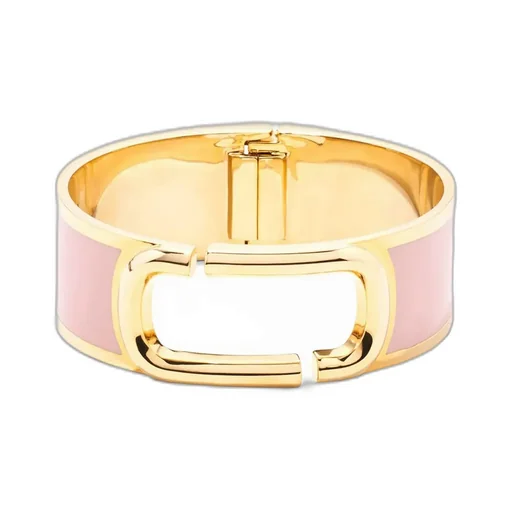
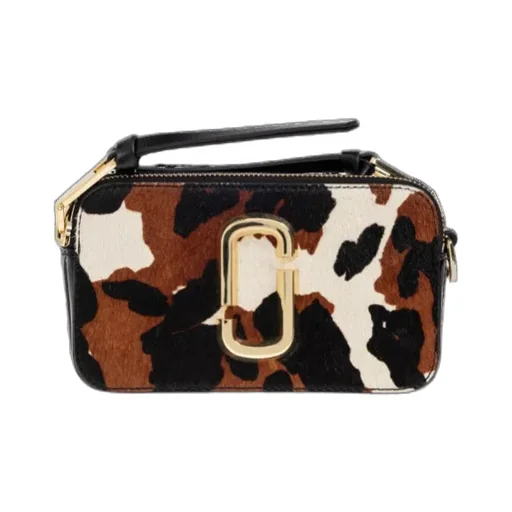
The recovery had a single, recognisable object at its centre. The Snapshot, a small camera-style bag introduced on the Spring 2016 runway, carried a new interlocking double-J hardware clasp and became the label's best-selling accessory within months of release, doing for the rebuilt house roughly what the Rockstud did for Valentino: giving a house code an object people would buy again and again. (Bustle)
Heaven and the return of the logo
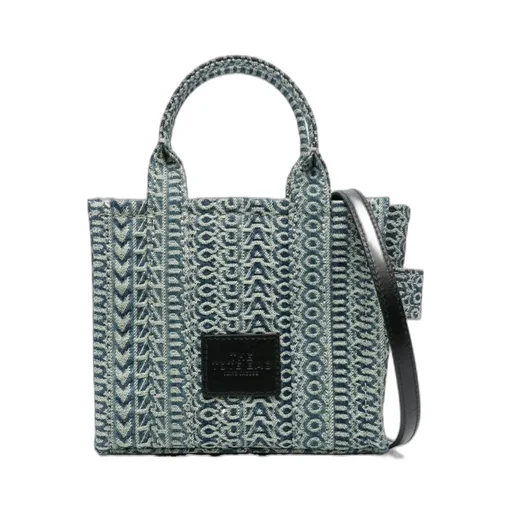
Jacobs's most recent decade has leaned into maximal branding rather than away from it. A 2022 identity redesign by the studio Triboro kept the label's original script logotype but wrapped it in an extended grotesque display pattern and neon yellow, explicitly rejecting the pared-back "blanding" then common across luxury branding in favour of what the designers called logomania — a treatment now carried across canvas goods such as The Monogram Tote, patterned edge to edge with the interlocking-J print. (BP&O)
In September 2020 Jacobs launched Heaven, a lower-priced, gender-fluid line developed with the stylist and digital editor Ava Nirui and aimed squarely at a Gen Z audience raised on internet subculture rather than runway seasons; it built a cult following through collaborations, including a 2025 capsule reviving the shuttered Paris label Y/Project. Nirui left the venture in early 2026 after nine years with the company, a departure that leaves Heaven's next creative direction unsettled. (Hypebeast; Hypebeast)
On the main runway, Jacobs's Fall 2024 show — six minutes of cartoonish, oversized silhouettes staged at the New York Public Library under the note "Joy, Period" — was read by trade press as a return to form after several quieter seasons, evidence that thirty-eight years after founding his label, he remained capable of setting rather than following a mood. (WWD)
New ownership, the same job
The 2026 sale changed the company behind the label. WHP Global took charge of licensing, while G-III Apparel Group took on wholesale, retail and online operations. Jacobs remained creative director through the handover and still held the role as of September 2026. (LVMH; Euronews)
Reading a Marc Jacobs label
No single tenure date proves who designed a given piece, because retail delivery outlives a creative appointment: garments from Jacobs's final Louis Vuitton show sold in stores into 2014, under a label already reporting to Nicolas Ghesquière's incoming studio, and the 2001 Sprouse graffiti and 2009 rose tribute sit under the same collaboration name a full tenure-length apart. Season codes and runway dating, not a designer's start and end years alone, are what actually place a Louis Vuitton piece from this period. (NPR)
Within his own house, the line a piece was sold under carries real information and is easy to lose in casual resale listings. Marc by Marc Jacobs (2001–2015) was the accessible, youth-oriented diffusion line, produced at a different price point and often a different factory tier from the mainline collection it sat beneath; collapsing a "Marc by Marc Jacobs" tag into a generic "Marc Jacobs" listing, or the reverse, erases exactly that distinction. The Marc Jacobs (2015–present) is its direct successor, covering the accessible end of the current business, while the namesake Marc Jacobs label carries the runway collections and higher-end lines. Heaven, launched in 2020, is a further separate design language again — polysexual, internet-native, priced beneath the main house — and is a recent enough line that pieces from it should not be read back into the main collection's history.
Hardware and branding are a faster way to place a piece in time than any of that. The plain script wordmark used since the label's founding predates the interlocking double-J clasp introduced with the Snapshot bag in 2016; anything carrying the neon-accented, extended-type "logomania" treatment postdates the Triboro identity redesign of April 2022. None of these markers substitute for a season code, but together with the line name on the label they narrow a garment's date far more reliably than memory of "when Marc Jacobs was good" ever will.
References
- LVMH. "LVMH and WHP Global Announce Definitive Agreement for the Acquisition of Marc Jacobs." 14 May 2026.
- G-III Apparel Group, Ltd. Form 8-K, Exhibit 99.2. U.S. Securities and Exchange Commission, 1 September 2026.
- Euronews. "Marc Jacobs parts ways with LVMH after nearly 30 years." 15 May 2026.
- Biography.com editors. "Marc Jacobs." A&E Television Networks.
- CFDA. "Marc Jacobs." Member profile.
- UPI. "In a surprise move, the Perry Ellis Co. announced..." 27 December 1988.
- nss magazine. "When Marc Jacobs was designing for Perry Ellis."
- L'Officiel USA. "The Perry Ellis Runway Show That Got Marc Jacobs Fired — Grunge, Spring/Summer 1993."
- The Fashion Law. "Marc Jacobs: From Punk Prodigal to Louis Vuitton's Womenswear Wonder."
- European Fashion Heritage Association. "Louis Vuitton: the Marc Jacobs years."
- Dazed. "A brief history of the Louis Vuitton x Takashi Murakami collaboration."
- PurseBlog. "Vuitton: Stephen Sprouse Tribute Collection."
- NPR. "Designer Marc Jacobs Says 'Au Revoir' To Louis Vuitton." 2 October 2013.
- Blue Carreon. "Marc Jacobs Leaves Louis Vuitton Following His Spring 2014 Collection." Forbes, 2 October 2013.
- Hollywood Reporter. "Marc by Marc Jacobs Is Shutting Down."
- FashionUnited. "Marc Jacobs discontinuing Marc by Marc Jacobs." 20 March 2015.
- Glossy. "'It cut itself off at the legs': What happened to Marc Jacobs."
- Bustle. "Marc Jacobs' Snapshot Is A Beloved Designer Bag With An Under-$400 Price Tag."
- BP&O. "New Brand Identity: Marc Jacobs by Triboro." 14 April 2022.
- Hypebeast. "Marc Jacobs Brings Back His Subversive Nature With Polysexual Line, Heaven." September 2020.
- Hypebeast. "Ava Nirui Exits Heaven by Marc Jacobs." January 2026.
- WWD. "Marc Jacobs Fall 2024 Ready-to-Wear Runway, Fashion Show & Collection Review."
- 生年
- 1963年4月9日
- 学歴
- Parsons School of Design, Fashion design (1984)
- 受賞
- CFDA Perry Ellis Award for New Fashion Talent, 1987CFDA Womenswear Designer of the Year, 1992CFDA Womenswear Designer of the Year, 1997CFDA Menswear Designer of the Year, 2002CFDA Geoffrey Beene Lifetime Achievement Award, 2011CFDA Womenswear Designer of the Year, 2016