
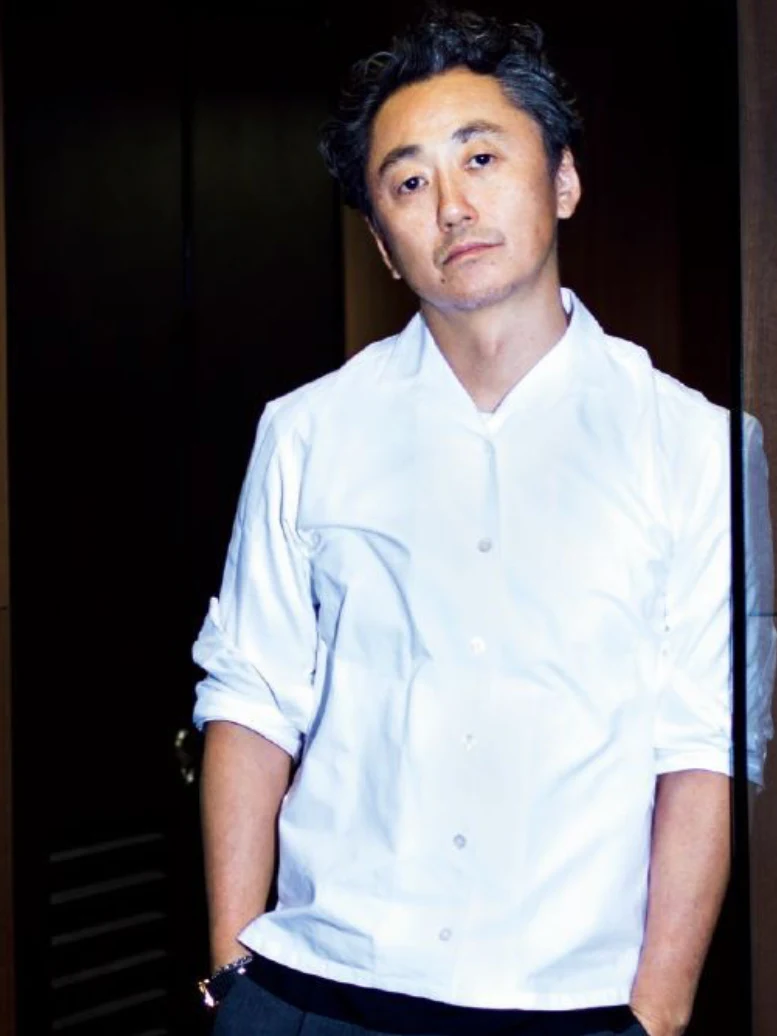
Junichi Abe
Japanese designer who founded kolor and shaped its layered, materially precise clothing before leaving its design role in 2025.
Junichi Abe founded kolor in 2004 and designed it for two decades, but he is no longer the label's designer. The Autumn/Winter 2025–26 show in Paris on 25 January 2025 was his last. Two days later the company named Taro Horiuchi as its new designer, beginning with Spring/Summer 2026. Abe's farewell letter said that he would remain inside kolor in a supporting capacity; it did not give that continuing relationship a formal title. (FASHIONSNAP; FASHIONSNAP)
That distinction is useful when reading both old and new kolor. Abe established the vocabulary—familiar menswear pulled out of alignment by an unexpected fabric, fastening or layer—but the label now has another author. His work was rarely built around a single spectacular object. Its force came from balance: the exact point at which a conventional coat could absorb a track-jacket insert, a clashing check or an extra hem and still feel resolved rather than merely hybrid.
From a kimono shop to the pattern room
Abe was born in Yamagata Prefecture in 1965 and grew up in Tendō, where his family ran a kimono shop. His mother had attended Bunka Fashion College, although Abe initially assumed that he would study at university and eventually take over the family business. After high school he instead spent roughly a year in London. Vintage clothes, records and club culture mattered more to that trip than formal study; when he returned to Japan, he entered Bunka and graduated from its apparel design course in 1988. (Numéro Tokyo; Sugino Fashion College, Fashion力 no. 51)
His first job was at Y's planning. He subsequently became a womenswear patternmaker at Comme des Garçons, where his work included patterns for Junya Watanabe's early collection. Patternmaking is the engineering between a drawing and a garment: it decides how flat pieces of cloth create volume, weight and movement around the body. Abe's later reluctance to separate silhouette from fabric makes sense in that context. A material is not a surface chosen after the shape; its fall and resistance help generate the shape. (Sugino Fashion College, Fashion力 no. 51; Vogue Japan)
In 1994 Abe and three former Bunka classmates started PPCM. The collective lasted a decade. When it dissolved in 2004, Abe founded kolor in May and showed the Spring/Summer 2005 collection that July. This sequence is sometimes reduced to “founded in 2005”, the year the clothes reached their named season, but the company and first presentation belong to 2004. (Sugino Fashion College, Fashion力 no. 51; FASHIONSNAP)
Making the ordinary slightly unstable
kolor began with clothes that could enter an existing wardrobe without announcing an avant-garde programme. Abe worked through the recognisable structures of a blazer, cardigan, trouser or parka. The intervention might be quiet—a knit cuff where tailoring expected a shirt cuff—or it might pull several garments into one. In interview he described his concern as the total balance among pattern, material and sewing. None of those elements was meant to win at the expense of the others. (Numéro Tokyo; Vogue Japan)
His fabric combinations often brought different social languages into contact. British checks and soft tailoring met nylon sportswear; a substantial wool outer layer opened to reveal mesh, ribbing or a technical zip; conservative navy, brown and grey were disturbed by orange, burgundy or an oddly synthetic blue. The colours worked relationally rather than as isolated seasonal swatches. A difficult shade became convincing because Abe placed it beside another that changed how both were read. (GQ Japan; Vogue Japan)
This is also why photographs of a single kolor piece can be misleading. The extra panel, exposed lining or apparently superfluous zip often makes sense only when the garment moves or sits among the collection's other layers. Abe said his team might begin from a vague internal “ruler” rather than a literal theme, using an old film or another abstract prompt to establish a shared atmosphere. The collection emerged through fittings and adjustments, not through illustrating a paragraph of show notes. (Vogue Japan)
Production remained part of that design intelligence. Abe cultivated long relationships with Japanese factories and makers able to negotiate his mixtures of natural and synthetic cloth, tailoring and casual construction. “Made in Japan” is too broad to explain the result: the more useful point is continuity between a designer, a pattern room and specialist manufacturers who learned how kolor wanted unlike materials to meet. (Pen Online; Coronet)
Paris, Pitti and kolor BEACON
kolor opened its Aoyama flagship in 2009 and received the 30th Mainichi Fashion Grand Prix in 2012. Its international chronology needs a little care. The company was already presenting menswear in Paris by 2007 and womenswear there by 2008, while Autumn/Winter 2012–13 marked the move of its principal collection presentation to Paris. Those statements describe different stages—sales and presentations, then the main runway platform—not competing founding dates. (Sugino Fashion College, Fashion力 no. 51; FASHIONSNAP)
In June 2013, kolor was the main guest at Pitti Uomo for Spring/Summer 2014. Abe loosened the sober image that overseas buyers had attached to the brand: Hawaiian and floral patterns, vivid colour and relaxed sports elements made the collection unusually open and celebratory. The invitation did not invent kolor's international audience, but it gave Abe a stage large enough to show that technical layering did not have to mean severity. (OPENERS; WWDJAPAN)
The secondary line kolor BEACON, launched for Spring/Summer 2013, gave him a freer, more item-led space. BEACON frequently amplified the accessible parts of the main vocabulary—sweatshirts, outerwear, patched trousers and graphic interventions—without functioning as a simple inexpensive copy. Its best pieces still depend on proportion and construction; the humour is simply closer to the surface. (FASHIONSNAP; OPENERS)
Collaborations extended the same logic. The tenth anniversary brought projects with Porter, Puma and Cruciani, while adidas by kolor joined Adidas performance technology to Abe's asymmetric cuts and layered colour. A 2022 Ultraman project was more overtly referential, but even there the source entered through fabric, silhouette and placement rather than being limited to a logo. (WWDJAPAN; Fashion Press)
The last Abe collection
The final Autumn/Winter 2025–26 show did not behave like a retrospective. It continued the work: tailored coats were interrupted by technical components, hems doubled and fabrics met at oblique seams, while deep brown, navy, rust and muted blue carried the mature colour sense Abe had refined over twenty years. The significance came from the note placed on each seat, where he told the audience it was his final show as kolor's designer. (FASHIONSNAP; FASHIONSNAP)
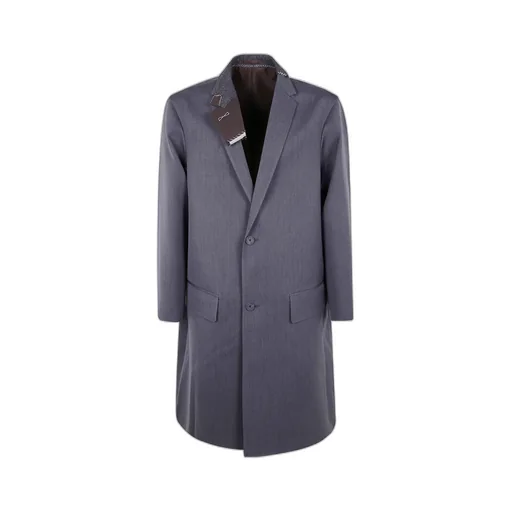
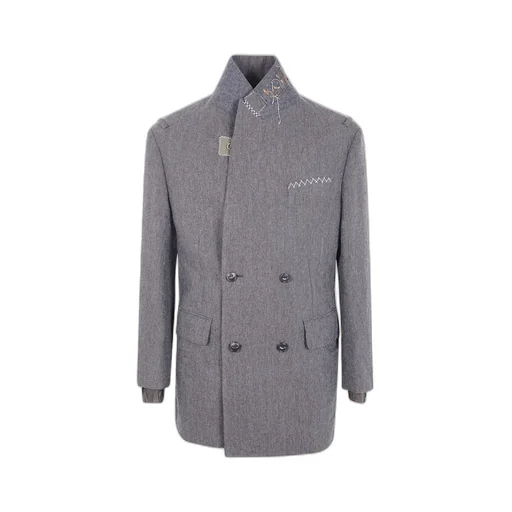
The change followed a business transition: Coronet, an Itochu subsidiary, took over kolor's business on 1 November 2024 while retaining existing staff. Horiuchi's appointment in January 2025 therefore created creative succession inside a recently changed corporate structure. Treating every later garment as an Abe design would erase that succession; treating the label as wholly detached from him would ignore his stated support role and the studio vocabulary he built. (FASHIONSNAP; FASHIONSNAP)
Reading a kolor label
Recent kolor style codes usually begin with a two-digit year and a season letter: S for spring/summer or W for autumn/winter. A code such as 25WCM... therefore points towards Autumn/Winter 2025, while recent BEACON codes commonly use a B in the line segment. The exact internal segments vary across garment categories and older seasons, so a code is evidence to compare with the official store and collection imagery, not a complete universal decoder. (kolor official store; kolor)
For older pieces, construction is a better guide than any single motif. Look for conflicting materials resolved cleanly at the seam, an ordinary archetype altered at pattern level, and a colour combination that feels wrong in isolation but stable on the body. Those habits distinguish Abe's kolor from generic “deconstructed” menswear. From Spring/Summer 2026 onward, the label belongs to Horiuchi's tenure; similarities may reflect continuity of studio and manufacture, but authorship should follow the season.
References
- Akiko Takata. “「kolor」デザイナー阿部潤一 × 編集長 田中杏子.” Numéro Tokyo, 4 May 2021.
- Sugino Fashion College. “阿部潤一インタビュー.” Fashion力, no. 51.
- Mitsuko Watanabe. “編集長×気鋭デザイナー対談。kolor阿部潤一が語るものづくり.” Vogue Japan, 2020.
- GQ Japan. “阿部潤一が語るkolorの服作り.” 21 October 2018.
- Pen Online. “阿部潤一が追求する、日本のものづくり.” Accessed September 2026.
- OPENERS. “kolor|デザイナー阿部潤一インタビュー.” Accessed September 2026.
- OPENERS. “kolor、ピッティ・ウォモで2014年春夏を発表.” Accessed September 2026.
- WWDJAPAN. “阿部潤一が語る、ピッティとkolor.” Accessed September 2026.
- FASHIONSNAP. “kolor阿部潤一がデザイナー退任.” 26 January 2025.
- FASHIONSNAP. “kolorの新デザイナーに堀内太郎が就任.” 27 January 2025.
- FASHIONSNAP. “kolor 2025年秋冬コレクション.” January 2025.
- Coronet. “kolor.” Accessed September 2026.
- WWDJAPAN. “『アディダス バイ カラー』最新作をスニーカー賢者が評価.” 9 February 2017.
- Fashion Press. “カラー:kolor.” Accessed September 2026.
- kolor. “Official online store.” Accessed September 2026.
- Native name
- 阿部潤一
- Education
- Bunka Fashion College, Apparel Design (1988)
- Awards
- Mainichi Fashion Grand Prix, 2012