
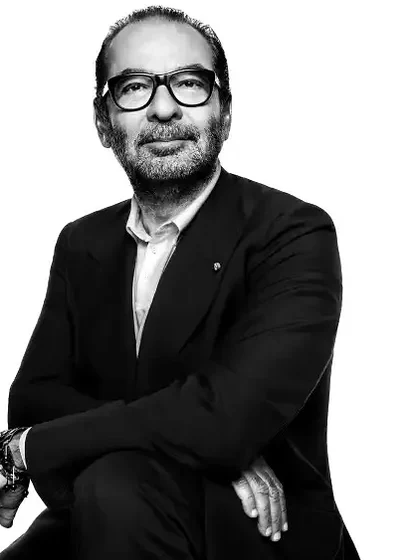
Remo Ruffini
Como-born creative executive who acquired Moncler in 2003, invented the Genius model and now oversees its creative direction as executive chairman.
Remo Ruffini is the executive chairman of Moncler and retains responsibility for the brand's creative direction. This is an unusual kind of designer biography. Ruffini is not primarily known for sketching seasonal collections under his own name; he is a creative executive who decides what Moncler can contain, which collaborators can reinterpret it and how a technical down jacket becomes culture. When Leo Rongone became group chief executive on 1 April 2026, Ruffini gave up the CEO title but explicitly kept the creative authority he has exercised since acquiring the company in 2003. (Moncler Group; Moncler Group governance announcement)
His central design decision has been repeated for more than two decades: keep the padded jacket recognisably Moncler, then change its weight, surface, context and author. That approach produced luxury mainline collections, runway experiments, technical Grenoble clothing and the multi-designer Genius platform. Ruffini's authorship lies as much in the system connecting those projects as in any one sleeve or quilting pattern.
Como, New York and a twenty-year apprenticeship
Ruffini was born in Como on 27 August 1961 into a textile family. His parents discussed patterns, fabric and orders at the dinner table; his father Gianfranco built Nik-Nik, whose tight printed shirts became a conspicuous part of 1970s American dress. As a teenager Remo assembled a small jacket collection at the family kitchen table and sold pieces to friends and local shops. He was not an outsider discovering fashion late, but he also saw how quickly a product identified with one moment could fall when that moment passed. (Vogue; Vogue Business)
After school he visited his father's company in New York. A permanent job and college held little appeal, but travel around Massachusetts, Rhode Island and the New England coast did. Ruffini recognised a hybrid wardrobe—American button-down shirts and collegiate sportswear carrying a trace of European order—that felt suited to northern Italy. In 1982 he returned to Como and started New England Company from a windowless single-room office with twenty-five shirts. (Vogue; Vogue Italia)
New England grew into a complete casualwear business. Ruffini has called those two decades his school: they taught him production, wholesale, communication and the danger of confusing a short-lived trend with a durable code. He sold the company before taking control of Moncler. The experience explains why his later innovation often concerns calendars, distribution and collaboration rather than the seasonal silhouette alone. (Vogue; Surface)
Making the mountain jacket global
Moncler was founded by René Ramillon and André Vincent in Monestier-de-Clermont, near Grenoble, in 1952; its name compresses the town's. Early padded jackets protected factory workers and then mountaineers, including the Italian expedition that reached K2 in 1954. The French Olympic ski team wore Moncler at Grenoble in 1968, and the rooster emblem recorded that national association. Chantal Thomass helped move the jacket into urban fashion in the 1980s, but the company later declined and passed through different owners. (Moncler annual report; Le Monde)
Ruffini knew the product personally: at fourteen he cycled to school through Como winters in a light-blue Moncler jacket. He worked on the brand's artistic direction before buying a controlling stake in 2003. His insight was that the down jacket did not need to escape its technical identity to become luxury. It needed better proportion, lighter construction, richer fabric and a reason to be worn in the city as naturally as on a mountain. (Vogue; Le Monde; Moncler Group)
The Maya became the clearest urban expression: a short, glossy quilted jacket with a detachable hood, high collar, sleeve patch and felted pocket. Its identity depends on proportions and finish more than novelty; innumerable colours and later variants keep returning to the same compact form. The Karakorum, rooted in the 1954 expedition jacket, represents the archival side of the system. Ruffini made repetition an asset, treating the durable jacket almost as footwear brands treat a permanent sneaker. (Moncler Group; Vogue Business)
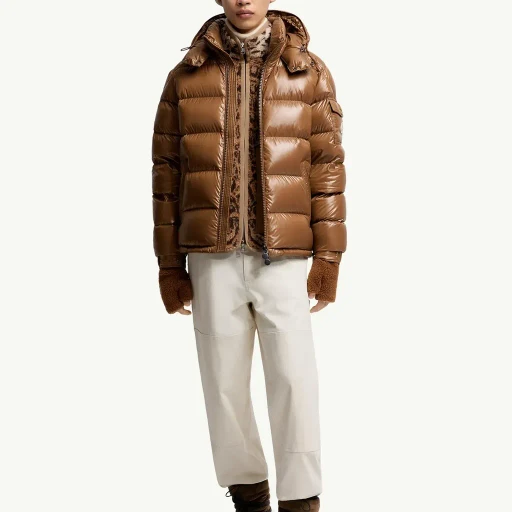
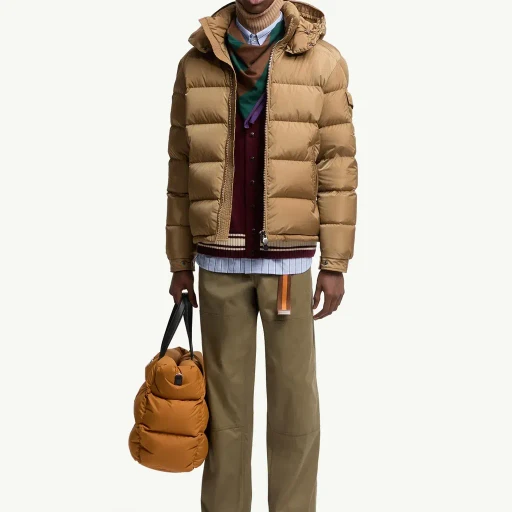
Runway lines widened the possible audience. Gamme Rouge, begun in 2006 and eventually designed by Giambattista Valli, treated down with couture femininity; Gamme Bleu, launched in 2009 under Thom Browne, combined it with uniform, tailoring and exaggerated sport. Moncler Grenoble, launched as a runway proposition in New York in 2010, returned to performance skiing and après-ski while making archival colours and quilting contemporary. These were not anonymous sub-labels: their distinct designers and purposes should remain visible when cataloguing a piece. (Moncler annual report; Vogue Business)
Genius: creative direction as casting
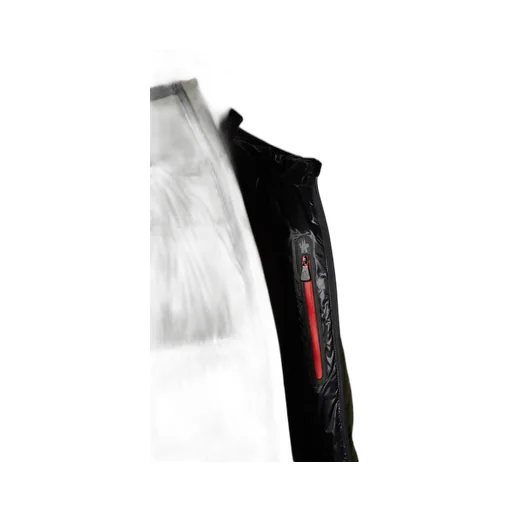
By 2017 the Gamme structure had become another conventional pair of seasonal lines. Ruffini ended it and introduced Moncler Genius in February 2018: separate “geniuses” would each reinterpret Moncler, with projects released through the year rather than held for one runway delivery. The first group included Pierpaolo Piccioli, Simone Rocha, Craig Green, Kei Ninomiya, Hiroshi Fujiwara's Fragment, Palm Angels and Grenoble. One jacket could become a floor-length monastic cape, a flowered dress or an abstract padded sculpture without the core company pretending those voices were identical. (Moncler 2018 annual report; British Vogue)
Genius changed creative direction from a hierarchy into a commissioning practice. Ruffini selected collaborators, set the shared product and brand limits, and used staggered launches to keep Moncler present beyond two fashion weeks. The invited designer still authored the actual collection. A 7 Moncler Fragment Hiroshi Fujiwara jacket should therefore be credited to Fujiwara within Ruffini's platform, not described as a garment designed solely by Ruffini. (Moncler 2018 annual report; 032c)
The programme later widened beyond fashion designers to musicians, artists, carmakers and entertainers. That breadth risks turning “genius” into a general celebrity-collaboration label, but it also anticipated the way large brands now build multiple communities rather than speak in one seasonal voice. Moncler currently describes Genius as one of three dimensions beside Collection, for the urban wardrobe, and Grenoble, for mountain performance. (Moncler Group; Moncler 2025 annual results)
From chief executive to executive chairman
Moncler listed in Milan in 2013, making Ruffini responsible to public shareholders while he retained a large economic stake and creative control. In 2020 the group announced its acquisition of Stone Island, completed in 2021. The two brands share expertise in technically advanced outerwear but retain separate identities and creative organisations; buying Stone Island did not make Ruffini the designer of its garments. (Moncler Group)
In January 2026, Moncler announced that former Bottega Veneta chief executive Leo Rongone would become group CEO on 1 April. Ruffini moved to executive chairman while keeping creative direction and strategic oversight. The separation clarifies how the company now understands his value: daily management can pass to another executive, but the architecture joining product, image and collaborators remains Ruffini's responsibility. (Moncler Group; Moncler H1 2026 report)
As of September 2026, Ruffini continues in that role. Moncler's three-part structure and frequent partnerships mean there is no honest single answer to “who designed Moncler?” without looking at the line and season. Ruffini directs the whole; named guest designers, Grenoble teams and the Collection studio author specific products within it.
Reading and dating Moncler under Ruffini
Begin with the interior label. Moncler Gamme Rouge and Gamme Bleu identify the pre-Genius runway lines and ended in 2017. Numbered Genius labels from 2018 name both the project and collaborator—such as 1 Moncler Pierpaolo Piccioli or 7 Moncler Fragment—information that should not be shortened to generic “Moncler”. Current Moncler Grenoble identifies the performance and mountain dimension, while Moncler Collection covers the central urban offer.
A Maya or revived Karakorum may be reissued for years, so purchase date is not design date. Check model name, article code, collaboration label, season and materials. Ruffini's tenure explains why the jacket exists within modern luxury; it does not erase the 1950s archive or the work of the named person who transformed it.
References
- Moncler Group. “Remo Ruffini.” Current official biography.
- Moncler Group. “Bartolomeo Rongone to be Group Chief Executive Officer, Remo Ruffini Executive Chairman.” 20 January 2026.
- Luke Leitch. “My first job in fashion: Remo Ruffini.” Vogue Business, 2 December 2024.
- Vogue Italia. “Remo Ruffini: Prima di Moncler? C'era una camicia, anzi 25.” 2024.
- Laure Guilbault. “Moncler CEO Remo Ruffini on fortune, the future—and why he doesn't want to be defined by fashion.” Vogue Business, 5 May 2022.
- Christina Ohly Evans. “Minding Moncler.” Surface, 23 February 2017.
- Moncler Group. Annual Report 2021, History. 2022.
- Moncler Group. Annual Report 2023. 2024.
- Le Monde. “La doudoune Moncler est menacée en France.” 24 September 2009.
- Moncler Group. “L'Arte del Piumino.” Current product history.
- Moncler Group. Annual Report 2018. 2019.
- Alice Newbold. “It's Genius: Moncler Asks Exceptional Designers To Create Distinctive Collections.” British Vogue, 2018.
- Marc G. Moore. “Concept Engineer: Moncler's Remo Ruffini.” 032c, 2022.
- Moncler Group. FY 2025 results. 19 February 2026.
- Moncler Group. H1 2026 results. 22 July 2026.
- Born
- August 27, 1961
- Awards
- Order of Merit for Labour