Hedi Slimane
French designer who imposed menswear's skinny silhouette at Dior Homme, then led Saint Laurent and Celine before both left his hands.
Hedi Slimane left Celine in October 2024 and, as of September 2026, has no confirmed fashion-house appointment. His earlier tenures at Dior Homme and Saint Laurent changed the look of menswear: close jackets, narrow trousers and the lanky, music-scene cast that wore them. (Coveteur; The Industry.fashion)
Slimane made a lean suit feel like a young man’s uniform rather than his father’s formalwear. At Dior Homme, the cut became so narrow that Karl Lagerfeld famously lost weight to wear it. Slimane later carried that silhouette into Saint Laurent’s leather jackets and Celine’s tailoring, directing the photographs, casting and stores around the same idea. (i-D)
Paris, tailoring and an early return to Yves Saint Laurent
Slimane was born in Paris on 5 July 1968. He studied art history at the École du Louvre and law at Panthéon-Assas University before moving into fashion, apprenticing with a menswear tailor and working briefly for Yves Saint Laurent's own studio before Pierre Bergé installed him as the house's ready-to-wear director for menswear. He had also begun photographing the people around him years before he designed for anyone, a habit that predates and outlasts every one of his creative directorships and that he never treated as a hobby subordinate to fashion. (Wikidata; FashionUnited)
Yves Saint Laurent Rive Gauche and the skinny silhouette, 1997–2000
Slimane presented his first Rive Gauche Homme collection for Yves Saint Laurent in 1997, cutting suits with narrow armholes, close trousers and a visibly younger, thinner body than the tailoring establishment expected. The look drew on punk and glam-rock references rather than the house's couture history, and it made Slimane's name years before he had a house of his own. A silhouette, in tailoring, is simply the outline a garment traces around the body; Slimane's innovation was to shrink that outline drastically for men, narrowing shoulders, armholes and trouser legs to a proportion the ready-to-wear industry had not offered since the 1960s. He resigned on 23 March 2000, shortly after Gucci Group took control of Yves Saint Laurent and as his relationship with Tom Ford's studio deteriorated; his final Rive Gauche show, for autumn/winter 2000, closed a three-year tenure that had already set the template for everything that followed. (StyleZeitgeist; i-D)
Dior Homme and the narrow suit
Christian Dior announced Slimane's hire as menswear creative director on 5 July 2000; he started twelve days later, on 17 July, and presented his first Dior Homme collection, for autumn/winter 2001–02, at the Jardin des Plantes in Paris on 28 January 2001. Over the following seasons he narrowed the silhouette further still: skinny black suits, drainpipe trousers and slim leather jackets built for a body type the fashion press began calling "the Hedi boy." Dior Homme's early seasons carried titles rather than plain season names — Solitaire, Red, Reflection, Luster — before the practice was dropped around 2006. The effect reached well beyond the house: within a few seasons, mainstream menswear retailers from department-store tailoring counters to fast fashion were cutting suits closer to the body than they had in decades, and "skinny" stopped being a niche description and became the default silhouette against which every other cut was measured. (WWD; Fashion Frenzy)
Karl Lagerfeld became the best-known convert to Slimane’s Dior Homme suits. He began dieting in 2000 and later said the clothes, modelled by very slim young men, had prompted him to change his own body. The anecdote captures both the force of Slimane’s new proportions and their narrow idea of who could wear them. (Healthista)
Slimane's Dior Homme years ran alongside the beginning of his parallel career as a photographer, documenting Berlin's post-reunification youth culture and, later, the London rock scene around Pete Doherty — work that fed directly back into his casting, since he routinely put musicians and street-cast non-models on his own runways rather than professional mannequins. Christian Dior announced on 30 March 2007 that Slimane had been replaced by his former assistant, Kris Van Assche, after a year of contract negotiations in which Slimane had sought greater creative control, including a womenswear line under his own name. He spent the following years largely on photography, relocating to Los Angeles and publishing Berlin (2003), London: Birth of a Cult (2005) and the California Song project shown at MOCA in 2011. (VMSD; Ocula)
Saint Laurent Paris: the renaming and the backlash, 2012–2016
Kering, the successor to Gucci Group, announced Slimane's return on 7 March 2012, giving him creative control over the entire brand image of Yves Saint Laurent rather than menswear alone. On 22 June 2012 he announced that ready-to-wear would be rebranded Saint Laurent Paris, restoring the plain wordmark the house had used for its original 1966 Rive Gauche ready-to-wear line while leaving Cassandre's 1961 YSL monogram in place on bags, shoes and fragrance. Dropping the founder's first name from the wordmark provoked a genuinely public row: critics from Le Monde to Madison Avenue called it disrespectful to a living legacy, even as Pierre Bergé himself publicly approved of it. (Design Week; FASHION Magazine)
Slimane moved much of the design studio to Los Angeles rather than working from the Avenue George V headquarters, and his Saint Laurent Paris pushed the Dior Homme silhouette into leather, denim and sequins, casting unknown indie musicians — members of Cherry Glazerr and Citizens!, among others — alongside veterans like Courtney Love and Jane Birkin. The clothes read as much as documentation of a Los Angeles music scene as fashion collections, and the aesthetic was widely credited with anticipating the 2010s "indie sleaze" revival years later. (Fashionista; AnOther)
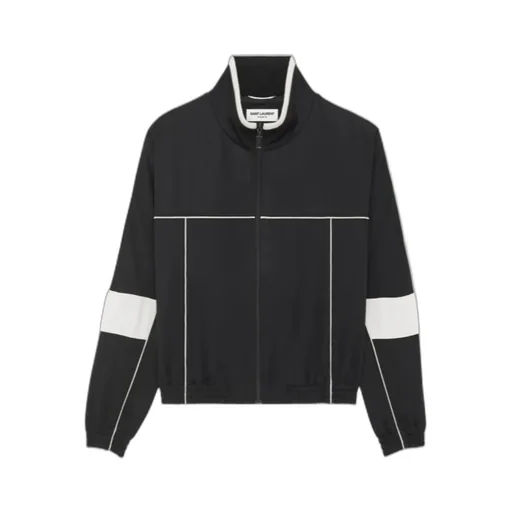
Kering confirmed Slimane's departure from Saint Laurent on 4 April 2016, the same day it announced Anthony Vaccarello as his successor. What followed was contentious. Slimane argued that Kering had unilaterally lifted the non-compete clause in his contract without paying the compensation it required; a Paris labour tribunal ruled in his favour on 29 June 2016, ordering a payment reported at the time as $13 million (and, in later reporting on a related compensation claim, as €9.3 million). Kering appealed repeatedly, and the Paris Court of Appeal rejected its final challenge on 3 December 2019, closing a dispute that had run for more than three years. (The Fashion Law; Hypebeast)
Celine: a new name and a new wardrobe
LVMH named Slimane artistic, creative and image director of Celine on 21 January 2018, succeeding Phoebe Philo, whose decade at the house had built one of the most closely imitated aesthetics in contemporary womenswear. Slimane moved quickly to replace it. On or around 3 September 2018 the house dropped the acute accent from its name, becoming Celine rather than Céline, and deleted its own Instagram archive of the Philo era in the same gesture — a move the designer described as returning the brand to the plain lettering it had used in the 1960s. Philo loyalists read it as an erasure; Slimane called it a necessary evolution: "It was anticipated but it had to be done. The major houses are alive. They must evolve and find the essence of what they truly are." The reaction split along the same lines his earlier renamings had produced: trade coverage treated the accent drop as a minor typographic footnote, while a large and vocal segment of Philo's customer base read the deleted Instagram archive as a deliberate erasure of a design language they considered irreplaceable, and much of that resentment persisted through his entire Celine tenure. (Designboom; Dazed)
His Celine reintroduced menswear for the first time in the house's history, added couture and a fragrance line, and revived the Triomphe emblem — the interlocking-C logo the house had used in the 1970s — as a monogram canvas across bags and accessories, positioning Celine as a much larger commercial engine than Philo's version had been. (Lampoon)
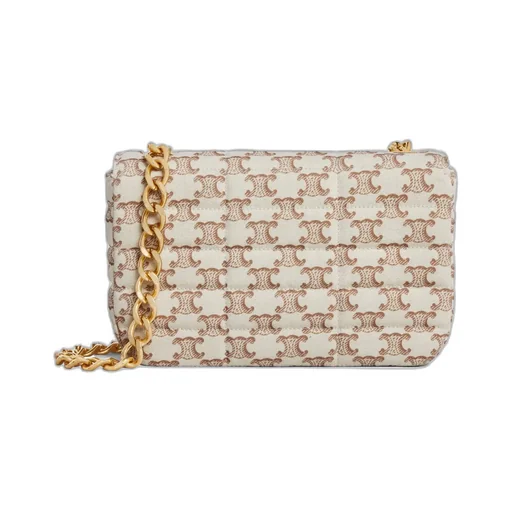
LVMH announced Slimane's departure from Celine on 2 October 2024, after a seven-year tenure, and named Michael Rider — a former member of Philo's own Celine studio — as his successor. Unlike his exit from Saint Laurent, Slimane's departure from Celine and from LVMH was not accompanied by public litigation. (Euronews)
Reading and dating the labels
Slimane’s changes are unusually easy to trace through labels and details. Dior Homme denim from his years often has a leather waistband tag and a season code; Saint Laurent ready-to-wear adopts the Saint Laurent Paris wordmark from 2012; Celine drops the accent from its name in 2018. These marks help place a piece in a period, while the collection code does the finer dating.
None of these markers, on their own, prove who designed a specific garment. Retail delivery outlives a creative tenure by a season or more, so a Saint Laurent Paris label from late 2016 may show either Slimane's final looks arriving in shops or Vaccarello's first collection, and an unaccented Celine label from 2025 is Rider's design, not Slimane's, despite following his logo change. Season codes and collection-specific details remain necessary to place an individual piece precisely, and a tenure date alone cannot prove authorship of an item.
References
- Coveteur. "Fashion Bulletin: The Hedi Slimane Rumors & Embarrassing Boyfriends." 2026.
- The Industry.fashion. "Is Hedi Slimane set to become Creative Director at Armani?" 2026.
- Wikidata. "Hedi Slimane (Q558)."
- FashionUnited. "A look back at Hedi Slimane's tenure at YSL." 1 April 2016.
- StyleZeitgeist. "Yves Saint Laurent Rive Gauche by Hedi Slimane (1997–2000)."
- i-D. "Hedi Slimane leaves Saint Laurent." 2016.
- Miles Socha. "Dior Taps Slimane for Men's Wear." WWD, 5 July 2000.
- Fashion Frenzy. "How Hedi Slimane Made Suits Hot Again: Dior Homme's Iconic 2001–2004 Era."
- Healthista. "Karl Lagerfeld lost 93 pounds in 13 months with this strange diet psychology."
- VMSD. "Hedi Slimane Out at Christian Dior." 2007.
- Ocula. "Hedi Slimane." Artist biography.
- Design Week. "Yves Saint Laurent rebrands as Saint Laurent Paris." May 2012.
- FASHION Magazine. "They said/We said: More on yesterday's Saint Laurent Paris name change, including surprising approval from Pierre Bergé." June 2012.
- Fashionista. "Hedi Slimane Casts Unknown Indie Musicians for a Very Rock n' Roll Menswear Debut at Saint Laurent." January 2013.
- AnOther. "Cigarettes and Tumblr: Hedi Slimane's Era-Defining A/W14 Saint Laurent Show."
- The Fashion Law. "Kering Ordered to Pay $13 Million to Former YSL Designer in Contract Dispute." 2016.
- Hypebeast. "Kering Loses Another Court Battle With Hedi Slimane." December 2019.
- Designboom. "Céline wipes the accent and its entire Instagram to celebrate new logo." 3 September 2018.
- Dazed. "Ten takeaways from Hedi Slimane's first interview about Celine." 2018.
- Lampoon. "Hedi Slimane left Celine: the Evolution of a Brand Through its Designers." 2024.
- Euronews. "Hedi Slimane quits as Celine's artistic director." 2 October 2024.
- 生年
- 1968年7月5日
- 学歴
- École du Louvre, Art historyPanthéon-Assas University, Law