
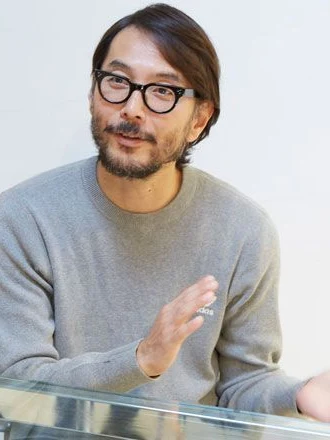
Hideaki Yoshihara
Japanese designer who co-founded green and HYKE with Yukiko Ode, jointly designs the collections, and leads HYKE's branding and creative direction.
Hideaki Yoshihara is one of two equal authors of HYKE. He and Yukiko Ode jointly plan and design the collections; within that partnership, Yoshihara leads branding and creative direction while Ode oversees product. Japanese retail shorthand often reduces the label to a single anonymous “HYKE designer”, but the division has been stated by the pair themselves and remains visible in current 2026 collection credits. (Parigot; HYKE)
Their label's premise, HERITAGE AND EVOLUTION, can sound like a general promise to modernise vintage clothing. Yoshihara's contribution makes it more exact. His training in menswear tailoring and responsibility for the brand's visual field help turn a researched military or work garment into a controlled proportion, image and system. HYKE does not hide its sources; it asks which part of an old object is necessary, then changes the scale, gender context or material without losing that reason. (Parigot; T Japan)
Tailoring, vintage and the shop before the label
Yoshihara was born in Tokyo in 1969 and graduated from Japan Men's Apparel Academy, where he studied the construction of menswear. Tailoring converts cloth into a controlled three-dimensional shell through pattern, canvas, pressing and internal structure. That education matters even when a HYKE coat is oversized or a military liner appears soft: apparent simplicity is held by decisions about shoulder, balance and volume. (AFPBB News / Senken; Vogue Japan)
Before designing under their own names, Yoshihara and Ode accumulated experience around vintage clothing and the fashion industry. In 1997 they opened the Daikanyama vintage shop Bowles. A year later its original line became green. The sequence is important: their archive knowledge did not arrive as a theme chosen for a runway collection. Handling old American menswear in a shop meant examining worn fabric, altered proportions and functional details as physical evidence. (AFPBB News / Senken; Numéro Tokyo)
green developed that evidence into polished womenswear. Its stated idea, FUNCTIONALITY + BEAUTY, put military field jackets, denim, workwear and tailored coats beside a feminine outline rather than decorating conventional dresses with surplus details. The label began runway presentations in Autumn/Winter 2005 and stopped after Spring/Summer 2009. Its directly operated Ebisu shop closed at the end of June that year. (Rakuten Fashion Week Tokyo; AFPBB News / Senken)
The pause was connected to Ode's childbirth and childcare. Yoshihara has described supporting the decision instead of separating the company from family life at any cost. Sources call the interval three years, about four years or four years: Spring/Summer 2009 to Autumn/Winter 2013 is roughly four calendar years but was described as a three-year hiatus in contemporary reporting. The honest account preserves both endpoints rather than forcing the rounded summaries to agree. (Numéro Tokyo; AFPBB News / Senken)
Returning as HYKE
The pair returned for Autumn/Winter 2013 under the name HYKE. Although green's functional beauty remained a foundation, the new label adopted “heritage and evolution” and a more sustainable working structure. Yoshihara and Ode chose not to rebuild their lives around a permanent physical shop. They could sell through wholesale partners and their own online channel while protecting the concentrated product development and family rhythm that the first company had made difficult. (Numéro Tokyo; Parigot)
Yoshihara's role is sometimes mistranslated into sole “creative director”, which can imply that Ode executes his ideas. Their own explanation is different: both undertake the planning and design; he additionally handles branding and creative direction. That includes the coherence around the objects—the casting, image, presentation, typography and decisions about how much of the archive reference should be made visible. The clothes are jointly authored, not divided into his concepts and her production. (Parigot; Numéro Tokyo)
HYKE usually begins without a literary seasonal theme. The designers choose an inspiration source: a naval smock, flight jacket, military liner, trench, denim jacket, protective system or piece of outdoor equipment. They may dismantle vintage garments to understand material, seams and why a closure occupies a particular position. Once function is understood, a shoulder can expand, a lining can become an outer layer, or a hard uniform can meet transparent cloth. (T Japan; Vogue Japan)
This method produces recurring signatures rather than one-off costumes: exact oversized outerwear, controlled khaki and navy, flight-jacket ribbing, deep tactical pockets, trenches and denim. Sheer panels and long fluid layers can cross those structures without converting them into a simple masculine/feminine opposition. For Yoshihara, the visual task is to let the original logic remain legible while the collection reads as one present-tense world. (T Japan; FASHIONSNAP)
Collaboration as a test of identity
An early sequence of collaborations tested whether that identity could survive another company's technology. Mackintosh × HYKE began in 2014 with military-informed outerwear made through the British company's construction knowledge. adidas Originals by HYKE followed in 2015. Beautiful Shoes × HYKE, begun for Spring/Summer 2017 with footwear designer Toshinosuke Takegahara, became a continuing rather than novelty-driven partnership. (Vogue Japan; HYKE)
The North Face × HYKE ran from Spring/Summer 2018 through Autumn/Winter 2019 and later returned as the trail-oriented TNFH THE NORTH FACE × HYKE. Its final collection arrived for Autumn/Winter 2025. Moncler Genius in 2021 brought the pair's enlarged utility forms into down, while Porter × HYKE, first released in 2022 and revisited since, applied the same proportion and restraint to bags. (FASHIONSNAP; HYKE)
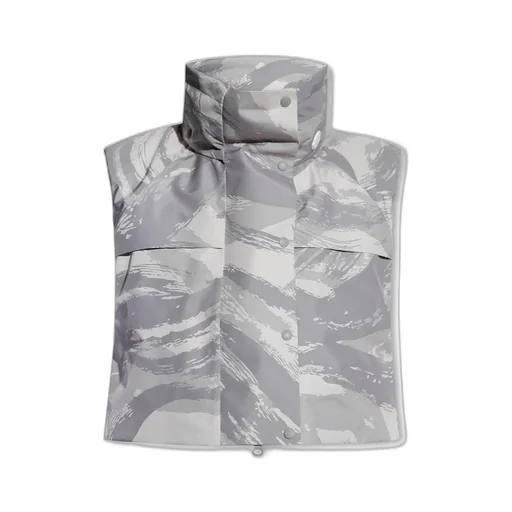
HYKE received the 35th Mainichi Fashion Grand Prix in 2017, awarded jointly to Yoshihara and Ode. The distinction is sometimes incorrectly rewritten online as a Tokyo Fashion Award; contemporaneous Japanese coverage and the official Tokyo fashion-week profile identify the Mainichi prize. That year also brought HYKE's first Tokyo collection runway for Autumn/Winter 2017–18. (Vogue Japan; Rakuten Fashion Week Tokyo)
For Autumn/Winter 2025 the label returned to an audience runway after ten seasons, staging the show at Ariake Arena. The collection layered sheer clothing over utility structures and closed the TNFH project. Autumn/Winter 2026 continued under both designers with references including MA-1 flight jackets and Nordic knitwear, while current official listings also record E5 eyevan, End Custom Jewellers and Beautiful Shoes collaborations. (FASHIONSNAP; J'aDoRe Jun Online; HYKE)
Reading green and HYKE
First establish the word on the label. green belongs to the 1998–Spring/Summer 2009 practice; HYKE begins with Autumn/Winter 2013. Resale descriptions such as “green HYKE” can be useful search shorthand but do not name an official transitional label. A genuine HYKE neck label cannot be an original green-era garment. (Rakuten Fashion Week Tokyo; AFPBB News / Senken)
Within HYKE, use the internal product number to match the exact official look. The online collection pages list named products and codes—for example 17521 for a plaid coat in Autumn/Winter 2025 and 17614 for a cropped trench in Autumn/Winter 2026. Nearby numbers appear in successive seasons, so the first digits are a product family, not a safe standalone year code. (HYKE, Autumn/Winter 2025; HYKE)
Military names are supporting evidence, not dates. HYKE has revisited MA-1, CWU, M-43, liner, Royal Navy and trench structures across its life. Match four things: full care-label code, exact material, silhouette and pocket/closure construction, and dated official imagery. Collaboration pieces add the partner's co-branding and release record. No authoritative Japanese source establishes a universal HYKE neck-label typography chronology, so one should not be invented. (United Arrows; HYKE, Autumn/Winter 2025)
References
- Numéro Tokyo. “HYKE 吉原秀明・大出由紀子インタビュー.” 2023.
- Parigot. “HYKE: Heritage and Evolution.” Parigot 2020 Winter.
- Senken Shimbun / AFPBB News. “「green」から「HYKE」へ.” 2013.
- Mitsuko Watanabe. “編集長×気鋭デザイナー対談 HYKE.” Vogue Japan, 25 November 2015.
- Rakuten Fashion Week Tokyo. “HYKE.” Accessed 10 September 2026.
- Vogue Japan. “第35回毎日ファッション大賞、HYKEが大賞を受賞.” 29 November 2017.
- T Japan. “HYKE、服の歴史を解体し進化させる.” Accessed 10 September 2026.
- HYKE. “Official online store and collections.” Accessed 10 September 2026.
- HYKE. “2025 FW Collection.” 2025.
- FASHIONSNAP. “HYKE 2025年秋冬コレクション.” 2025.
- United Arrows. “HYKE 2025年秋冬コレクション.” 2025.
- J'aDoRe Jun Online. “HYKE 2026 FALL & WINTER.” 2026.
- 原語表記
- 吉原秀明
- 学歴
- Japan Men's Apparel Academy
- 受賞
- Mainichi Fashion Grand Prix, 2017
主な作品
該当する結果が見つかりませんでした
キーワードやフィルター条件を変更して再度お試しください。