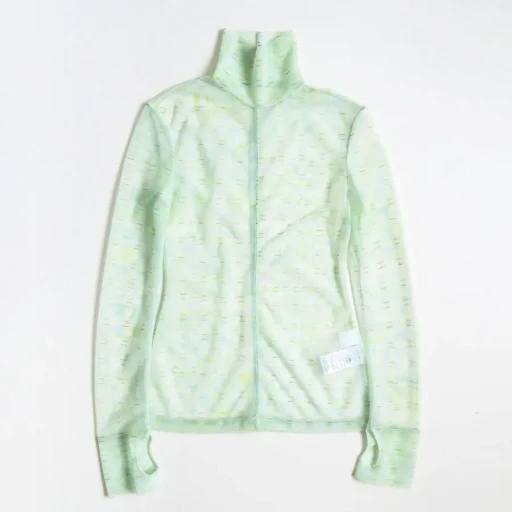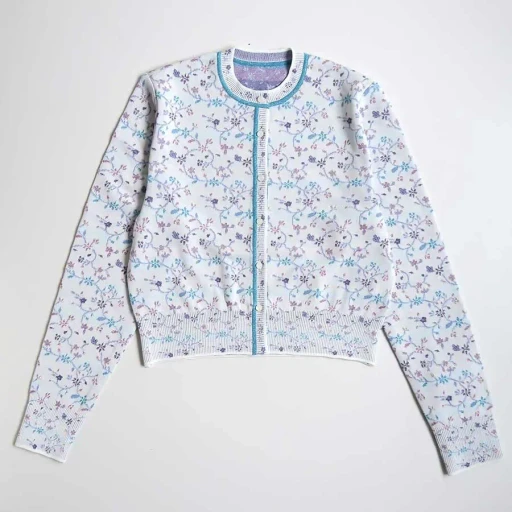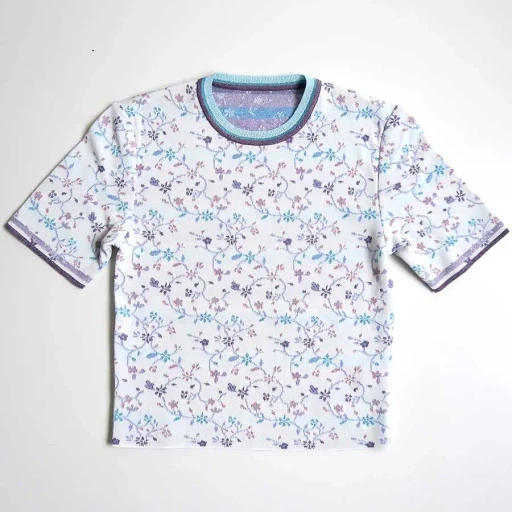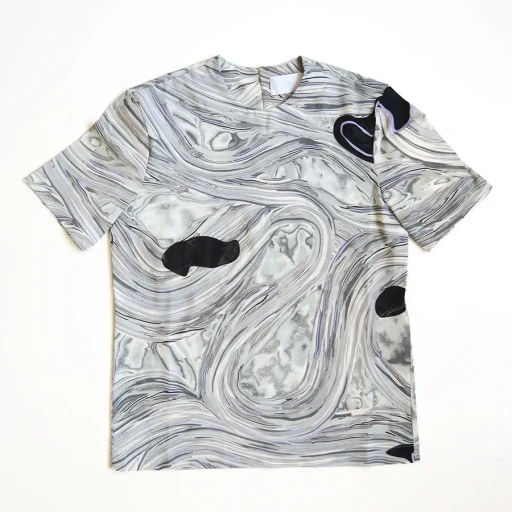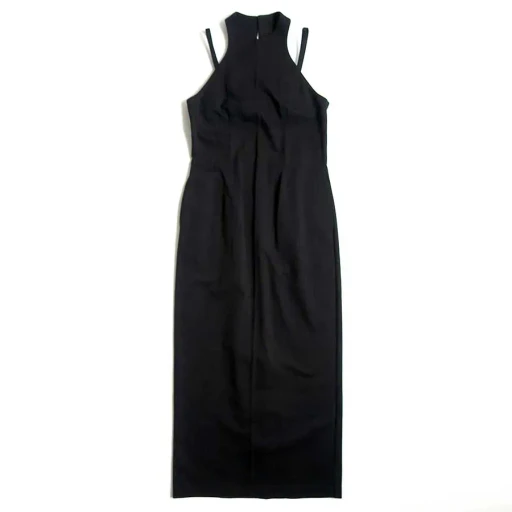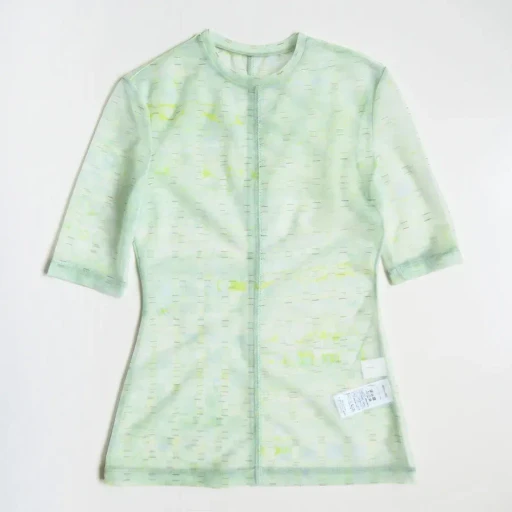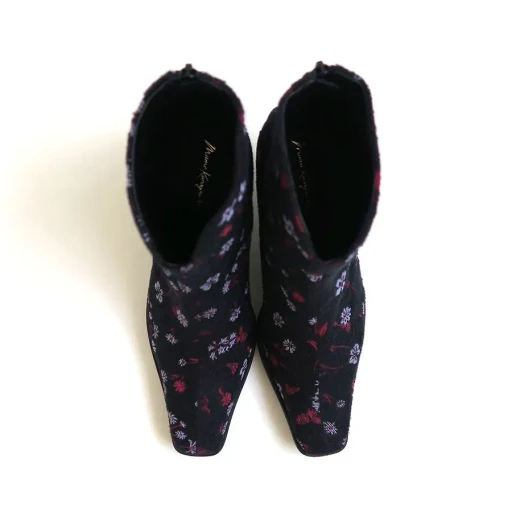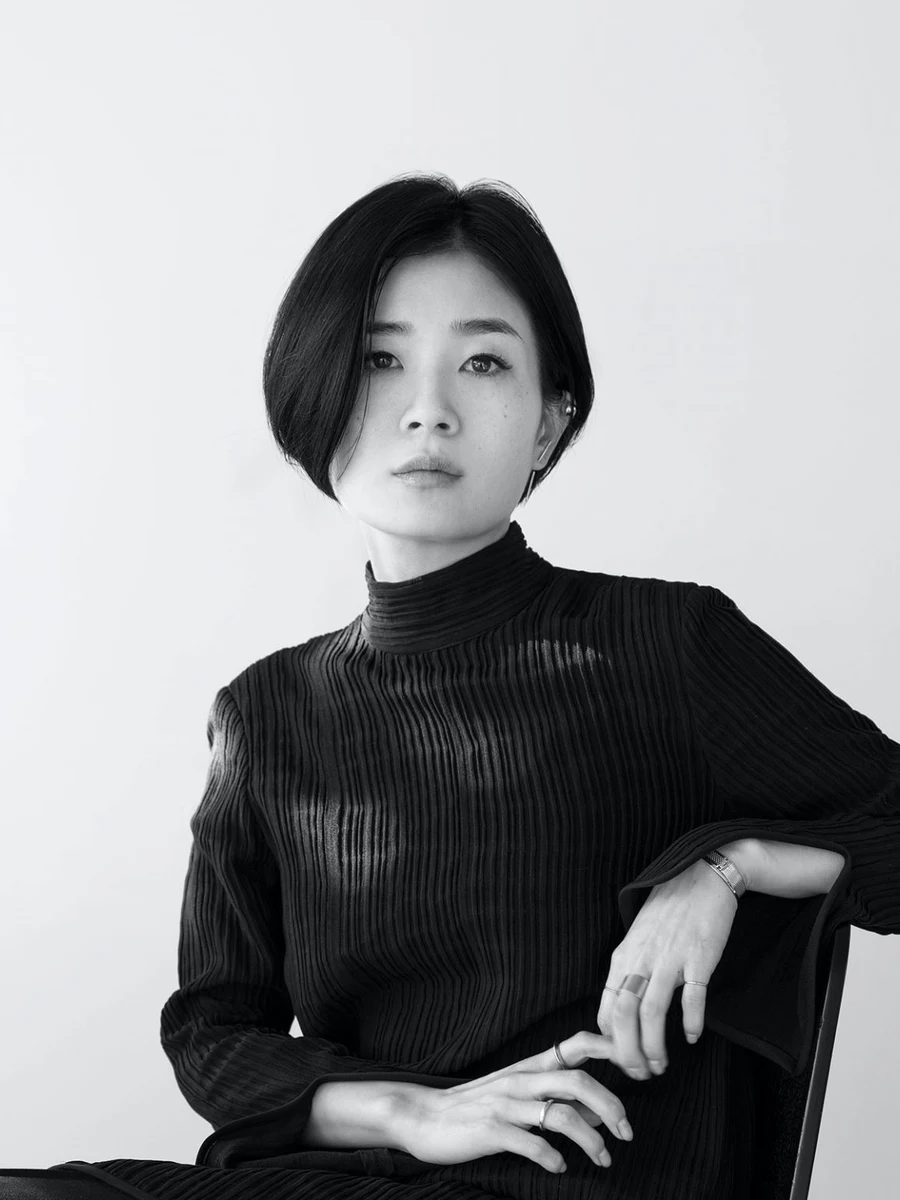
Maiko Kurogouchi
Japanese designer and founder of Mame Kurogouchi, developing regional Japanese craft into contemporary ready-to-wear since 2010.
Maiko Kurogouchi is the founder and sole designer of Mame Kurogouchi, the Tokyo house still commonly shortened to "Mame" by buyers and resellers even though that has not been its full name since 2018. She is not a diffusion designer working under someone else's house: she established the label herself in 2010, after four years at Issey Miyake's design office, and has designed every collection under her own name since. The label presented officially in Paris for the first time for autumn/winter 2018–19, at which point its international name changed from the lower-case "mame" to Mame Kurogouchi; the same change reached Japan two years later. (WWDJAPAN; Senken Shimbun)
The corrective matters because the two halves of her career are often flattened into one sentence — "trained under Issey Miyake, makes craft-driven clothes" — that undersells what changed when she left. Kurogouchi's work is not an extension of Miyake's textile-engineering language. It is built from a different starting point: fieldwork with regional artisans, translated into pattern and cloth through her own studio, with the maker's process kept visible in the finished garment rather than resolved away. (FASHIONSNAP)
From Nagano to the Issey Miyake design office
Kurogouchi was born in Nagano Prefecture in 1985. While still a student at Bunka Fashion College in Tokyo, she represented Japan at the 2005 Jeunes Créateurs de Mode competition and won the event's Paris final. She graduated from Bunka in 2006 and joined the Issey Miyake design office the same year, working on A-POC — A Piece of Cloth, the label's programme for garments generated from a single continuous length of knitted or woven fabric rather than cut-and-sewn panels — and contributing to the house's Paris collections. (Fashion Press; WWDJAPAN)
She left in 2010 to found the Kurogouchi Design Office and present her own collection, first shown for spring/summer 2011 under the name "mame" — a childhood nickname, and the Japanese word for bean. The scale at the outset was modest: a young designer's line sold through a handful of Japanese stockists, without a Paris presence. (Senken Shimbun; Fashion Press)
Building the house: awards, Paris, and a new name
The label's recognition followed a fairly conventional Japanese industry ladder before it became an international one. In 2014 Kurogouchi won the Newcomer Prize and Shiseido Encouragement Award at the Mainichi Fashion Awards, Japan's longest-running industry prize. She began showing off-calendar exhibitions in Paris from 2015 and placed the collection with a New York showroom the following year. In 2017 she received the inaugural Fashion Prize of Tokyo, established by the Tokyo metropolitan government with the city's textile and fashion industry bodies specifically to support designers capable of showing internationally. (Senken Shimbun; WWDJAPAN)
That support led directly to the Paris Fashion Week debut, officially on-calendar for autumn/winter 2018–19. It was at this point that the label's international name changed from "mame" to Mame Kurogouchi; the Japanese market continued using the old name for a further two years before it, too, moved to Mame Kurogouchi in 2020, the same year the house opened its first flagship store, in Tokyo's Hanegi. A second, larger flagship followed in Aoyama in January 2023, alongside a shop-in-shop at Isetan Shinjuku. In August 2023 Kurogouchi won the Mainichi Fashion Award's Grand Prize — the awards' top honour, distinct from the newcomer prize she had received nine years earlier. (WWDJAPAN; FASHIONSNAP)
Monozukuri: developing cloth with regional artisans
Kurogouchi describes her working method with the Japanese term ものづくり (monozukuri) — literally "making things," used in Japanese industry to mean the combined craft, technical knowledge and process behind an object, rather than the object alone. In interviews she has been specific that this cannot be conducted remotely: she visits the workshops in person, because "direct conversation with craftspeople cannot be replaced by phone or email." Her stated method is to bring artisans a question rather than a finished instruction — "how might we make this?" — which she says lets a maker's expertise expand her original idea by "200 to 300 per cent." (FASHIONSNAP)
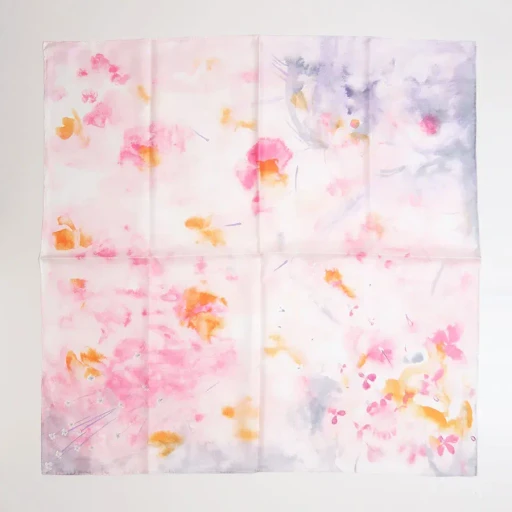
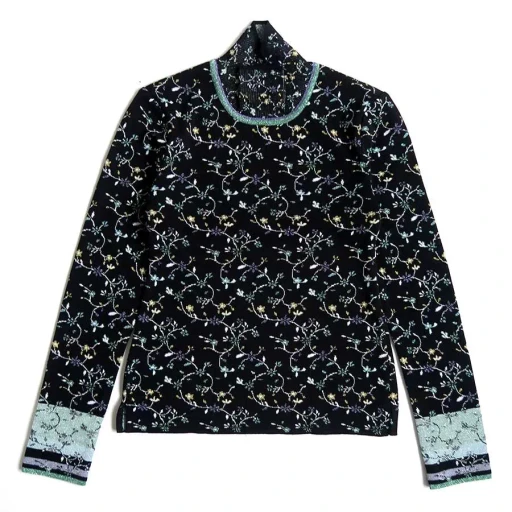
Three regional partnerships recur in profiles of the house. In Kyoto, dye workshops apply multi-colour gradations by hand with a brush, layering colour onto the cloth before each application dries — a slower, more variable process than printing a gradient. In Gunma, around the historic weaving town of Kiryu, Kurogouchi worked with weavers to rebuild kasuri — a resist-dyed ikat technique in which yarn is pattern-dyed before weaving — using a modern shortcut: the pattern is transferred onto high-density polyester warp threads before weaving, producing the soft, slightly blurred distortion associated with hand-tied kasuri without the original binding process. By her own account, the artisan who developed that specific method has since retired, and she has said the technique cannot currently be reproduced. In Nagano, an artisan in his eighties used a high-speed rapier jacquard loom — a mechanised loom that raises individual warp threads to weave a pattern directly into the cloth rather than printing or embroidering it afterward — to translate a photographed icicle formation into a jacquard weave, placing yarns to follow the photograph's detail rather than a standard repeat. Kurogouchi has estimated her studio has developed more than a thousand original fabrics over the past decade, and has called herself, only half in jest, possibly "the last generation" working this way as the supporting factories contract. (FASHIONSNAP)
Cord embroidery, Jomon patterning and inherited forms
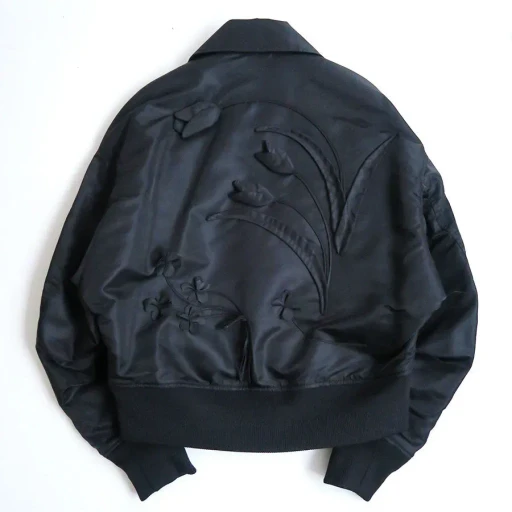
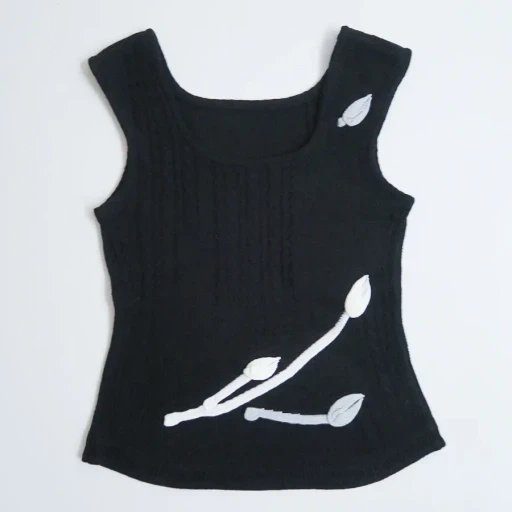
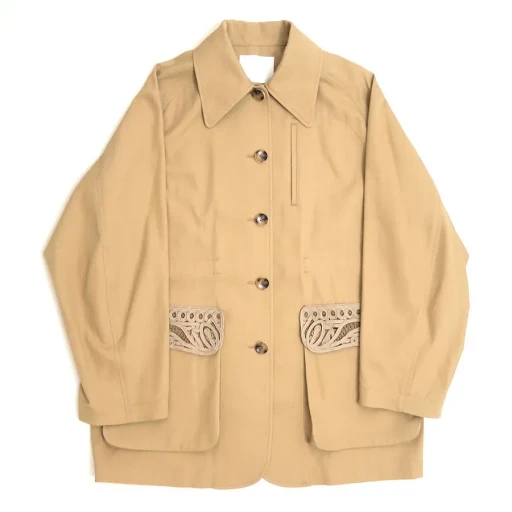
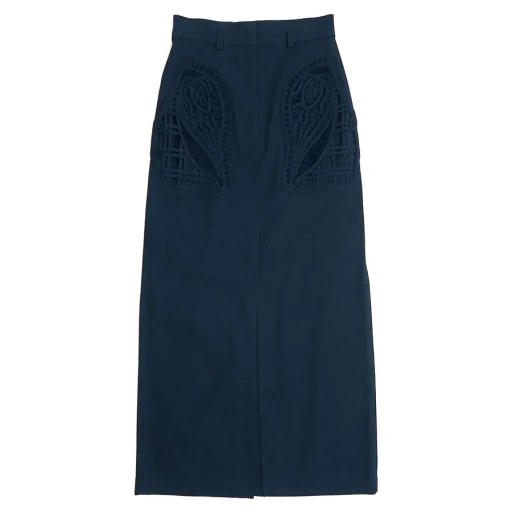
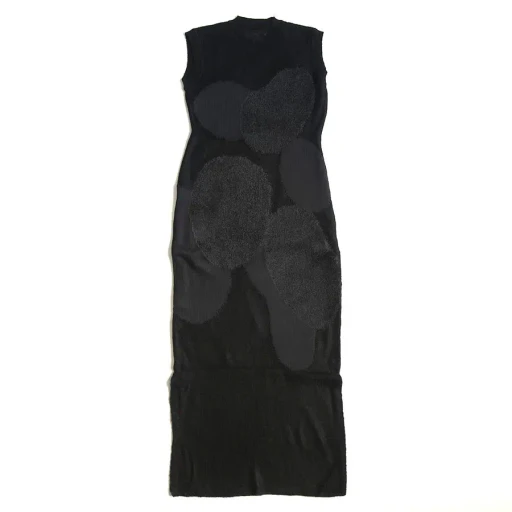
Alongside woven textile development, the house's most identifiable in-house signature is a technique it calls cord embroidery: lengths of ribbon or cord stitched onto the base fabric in a continuous line to build a raised, dimensional pattern, closer in effect to passementerie or couture cording than to conventional embroidery or lace. Early pieces were stitched by hand on single-head machines; production has since moved to multi-head machines for volume, though hand-stitched versions are still made and priced separately. A cord-embroidered bag introduced in 2020 became one of the house's best-known accessories and remains in the permanent range. (7yorku)
The technique has carried some of the label's clearest cultural references. For autumn/winter 2020, "Wrapping," Kurogouchi commissioned a shoelace factory to produce a linen-nylon cord, drawn onto garments in continuous lines to build basket-like, botanical patterns. For autumn/winter 2022, shown under the theme "Land," she turned to her native Nagano and to the pottery of Japan's prehistoric Jōmon (縄文) period — the culture whose cord-marked earthenware gave the era its name, and whose forms had already been championed decades earlier by the artist Taro Okamoto. Three-dimensional, moss-textured cord embroidery reproduced Jōmon pottery motifs directly onto dresses and outerwear, set against a palette of moss green, brown and khaki drawn from the Nagano mountains. For spring/summer 2023, "Bamboo Groove," the same cording technique was turned to the geometry of Japanese bamboo basketry, referencing the early-twentieth-century master craftsman Rokansai Iizuka. (riemiyata; 7yorku)
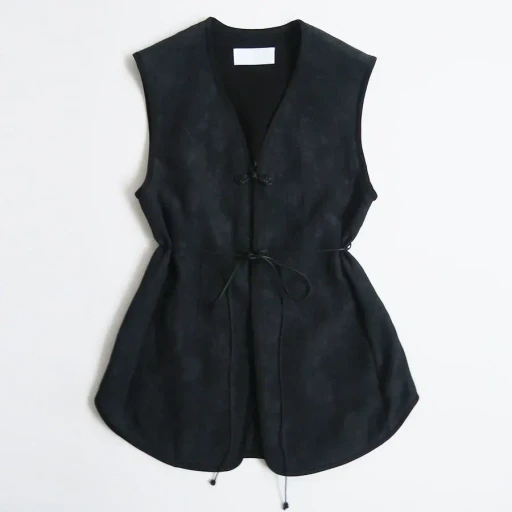
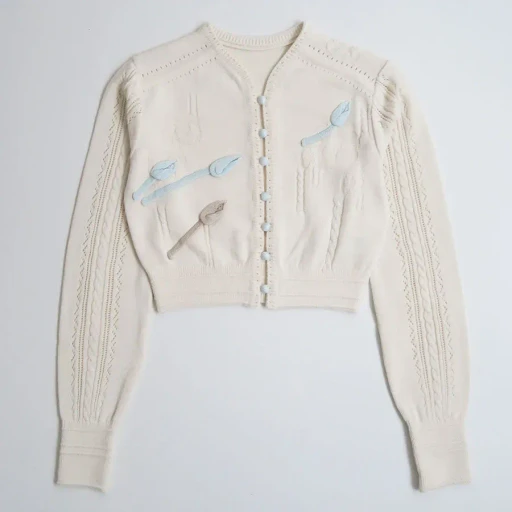
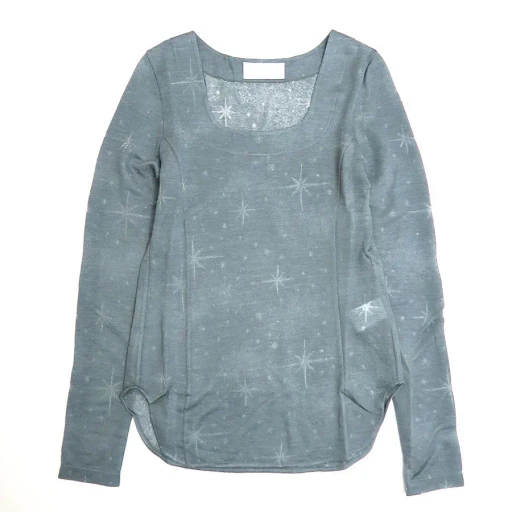
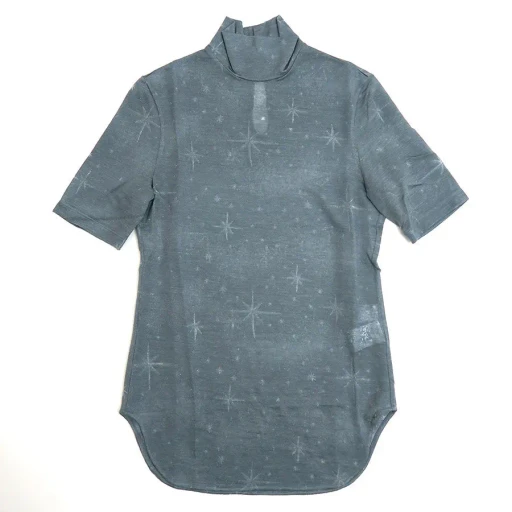
The house builds its silhouettes to follow the body rather than conceal it, using curved seams, soft volume, fine embroidery and lace-like cording at cuffs, collars and hems. These details are structural as well as decorative: they trace an edge, direct the fall of the cloth or hold a delicate surface against the body. (ESMOD Tokyo)
Collaboration: Uniqlo, Tod's and beyond the runway
Kurogouchi has treated collaboration as an extension of the same craft-development work rather than a separate licensing exercise. From June 2021 to September 2023, "Uniqlo and Mame Kurogouchi" ran for six seasonal collections, built around innerwear and base layers the two companies described as designed to work as outerwear — softly structured slips, bodysuits and three-dimensional knitwear sold at Uniqlo's price point rather than Mame Kurogouchi's. The final collection went on sale on 1 September 2023. Separately, in 2020, Kurogouchi collaborated with the Italian shoemaker Tod's, and the house has also produced leather goods with the Tokyo bag maker Tsuchiya Kaban; sourcing on the Tsuchiya Kaban partnership is limited to a single brand-directory listing, so it is noted here without further detail. (UNIQLO; WWDJAPAN; Fashion Press)
Labels, dating and how to read the work
The clearest dating marker on an older piece is the wordmark itself. Anything labelled simply "mame" is, by definition, from before the international rename that accompanied the 2018 Paris debut; the Japanese market carried on using that name for two more years, so a "mame"-labelled piece sold domestically can date as late as 2020. Anything labelled Mame Kurogouchi post-dates the respective rename in its market. Within the Mame Kurogouchi era, a cord-embroidered bag places a piece at 2020 or later, since the technique's signature bag was introduced that year; a piece using the moss-textured Jōmon cording sits specifically in the autumn/winter 2022 "Land" collection, and bamboo-basketry cording in spring/summer 2023's "Bamboo Groove." A garment carrying both the Mame Kurogouchi label and a Uniqlo co-brand is not mainline — it belongs to one of the six "Uniqlo and Mame Kurogouchi" seasons between June 2021 and September 2023, sold at Uniqlo's own price architecture rather than the house's. (WWDJAPAN; riemiyata; 7yorku)
As of September 2026, Maiko Kurogouchi remains the sole designer and founder of Mame Kurogouchi. (Fashion Press)
References
- WWDJAPAN. "黒河内真衣子が語る「マメ」立ち上げからの12年 23年春に青山に出店、ユニクロとのコラボも好調." WWDJAPAN, 2023.
- WWDJAPAN. "伝統や技術を守っていけるようなブランドになりたい「マメ」黒河内真衣子." WWDJAPAN.
- Senken Shimbun. "マメクロゴウチ." 繊研新聞. Accessed September 2026.
- Fashion Press. "マメクロゴウチ: Mame Kurogouchi." Fashion Press. Accessed September 2026.
- FASHIONSNAP. "【インタビュー】「マメ クロゴウチ」黒河内真衣子が守り続けるもの——対話とピュアで地道なプロセスから生まれる、"濃度"のあるものづくり." FASHIONSNAP.
- FASHIONSNAP. "黒河内真衣子が「毎日ファッション大賞」の大賞を受賞 新人賞はシンフラックスの川崎和也." FASHIONSNAP, 28 August 2023.
- riemiyata. "「Mame Kurogouchi(マメ クロゴウチ)」、2022-23年秋冬コレクションを発表 長野県と縄文へのオマージュ." riemiyata.com.
- 7yorku. "職人をリスペクトするマメクロゴウチの特徴 コード刺繍編 Cording Embroidery." 7yorku, 12 March 2023.
- ESMOD Tokyo. "Mame Kurogouchi(マメクロゴウチ)の特徴は?職人をリスペクトした服づくり." ESMOD Tokyo.
- UNIQLO. "コラボレーションの最後を飾る「Uniqlo and Mame Kurogouchi」2023年秋冬コレクション2023年9月1日(金)より発売." UNIQLO, August 2023.
- Wikidata. "Maiko Kurogouchi (Q11678442)." Accessed September 2026.
- 原語表記
- 黒河内真衣子
- 学歴
- Bunka Fashion College (2006)
- 受賞
- Mainichi Fashion Award, Newcomer Prize and Shiseido Encouragement Award, 2014Fashion Prize of Tokyo, 2017Mainichi Fashion Award, Grand Prize, 2023