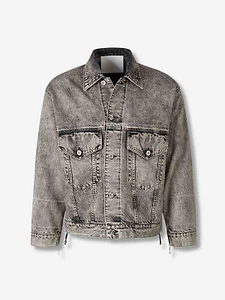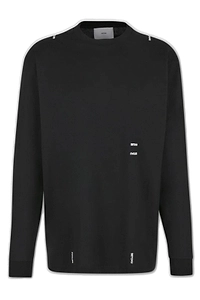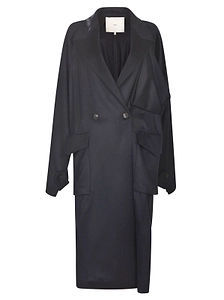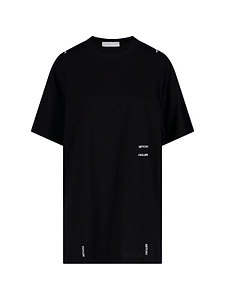
Satoshi Kuwata
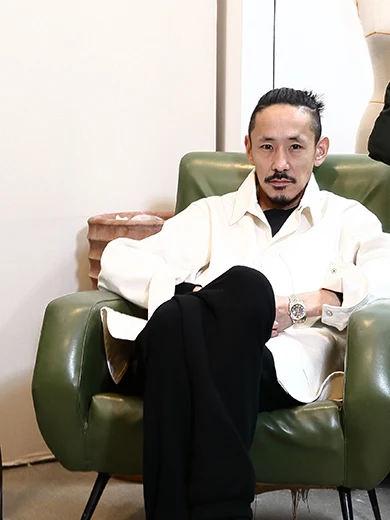
Japanese designer based in Milan, founder of Setchu and grand-prize winner of the 2023 LVMH Prize, trained as a tailor on Savile Row.
Satoshi Kuwata is the founder and designer of SETCHU, the Milan label he started in 2020 and which won the grand prize of the LVMH Prize for Young Fashion Designers on 7 June 2023, at a ceremony at the Fondation Louis Vuitton in Paris. The award carried a grant of €400,000 and a year of mentoring from LVMH executives; the label was in its fifth season when it won. (Hypebeast; Exhibition Magazine)
Two things are usually blurred in short accounts of him. His training was not generic "Savile Row experience" but a post at H. Huntsman & Sons, one of the row's bespoke houses — bespoke meaning a garment cut from a pattern drafted for one client rather than graded from a size chart. And he describes himself as a tailor rather than a designer: "tailoring is not draping. Tailoring is about sculpting the body." (LVMH Prize; Exhibition Magazine)
From Yawata to Savile Row
Kuwata was born in 1983 in Kyoto Prefecture, in Yawata on the southern edge of the prefecture. He did not go to fashion school in Japan. After finishing high school he worked as sales staff at the retailer Beams, and at 21 he left for London on a one-way ticket, paying for the move himself and arriving with very little English. (Numéro TOKYO; SPUR; 10 Magazine Japan)
He looked for work along Savile Row itself, asking the tailoring houses in writing, and was taken on at H. Huntsman & Sons, where he worked while studying at Central Saint Martins; he graduated in fashion design in 2011. His first responsibilities at Huntsman were not cutting but choosing: selecting from a library of some 5,000 cloths for clients who were spending a great deal, where a wrong choice wasted their money rather than the house's. That is where his habit of treating material as the first design decision comes from. (10 Magazine Japan; Fashionsnap; nss magazine)
Then came a decade of other people's studios. He worked for Gareth Pugh in London, beginning during his final year of study; in the studio of Givenchy in Paris under Riccardo Tisci; as a design director at Edun in New York; with Kanye West; and at Golden Goose in Milan before starting his own label. The houses are agreed on by every source that lists them, including the LVMH Prize's own page; the order is not, and none of them give years. (LVMH Prize; nss magazine; SPUR)
折衷: a compromise made into a method
The label's name is taken from 和洋折衷 (wayō setchū), the ordinary Japanese phrase for a Japanese-Western blend — the word used for a house with tatami rooms and a Western kitchen, or a meal that mixes both. 折衷 (setchū) on its own means eclectic, or a compromise struck between two things. Kuwata has said that people repeatedly tell him there is no English equivalent, and that he would like the word to travel the way sashimi, sushi, tempura and tofu have. (Exhibition Magazine; Fashion Press)
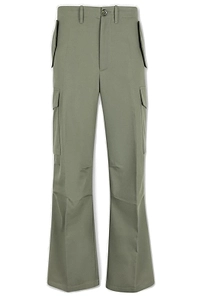
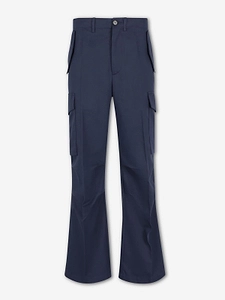
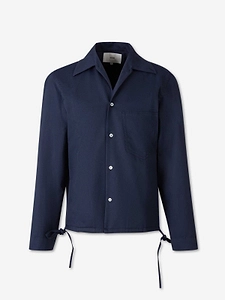
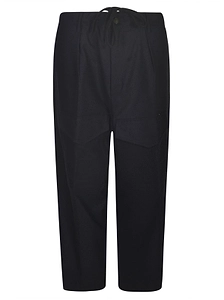
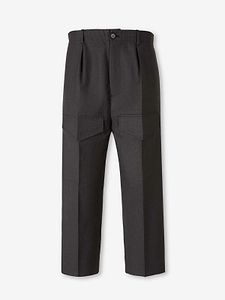
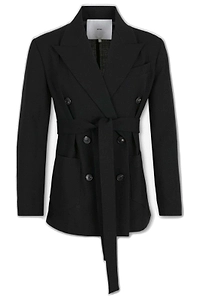
The joining is not decorative. A collection typically puts hakama-derived trousers next to a peaked-lapel blazer, or a Savile Row shoulder over a wrapped, layered body, and Kuwata keeps the palette disciplined — he has described holding each collection to roughly 10–15 per cent pure black and white, and has likened the two halves of the idea to water and oil, which meet without dissolving into each other. (Numéro TOKYO)
The origami jacket
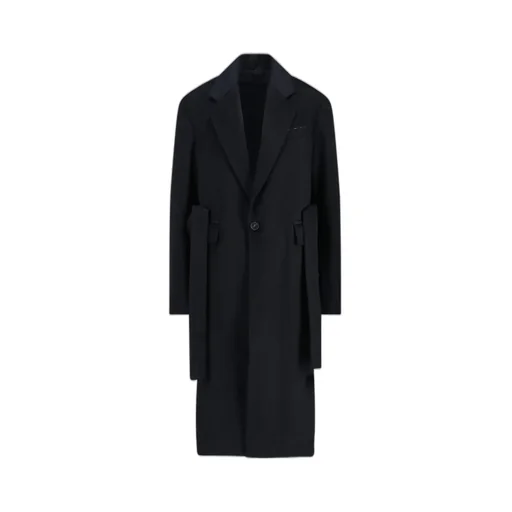
The label's signature object is the origami jacket, which reads at a distance as a Savile Row-cut tailored jacket but is built to fold along fixed creases, in the manner of a kimono, until it packs flat. It came out of a practical constraint — how to carry good clothes while travelling — rather than a metaphor about Japan, and it remains the brand's best-selling product. (10 Magazine; The Fashion Post; Fashionsnap)
The method behind it is literal paper work. Kuwata begins by folding and cutting paper to test a three-dimensional shape before anything is cut in cloth on the stand, which is why so many SETCHU garments have a second state: a hooded top that becomes a skirt, a shirt that opens into a wrap, a safari jacket with concealed handles that turns into a tote. He frames this as a way of extending the life of one purchase rather than as a novelty. (Exhibition Magazine; Lampoon)
Milan, mills and materials
SETCHU is Japanese in argument and Italian in manufacture. Kuwata founded it in Milan in 2020, during the period when the pandemic confined him to his apartment, and has explained the choice of city in terms of speed: working with vertical mills — mills that spin, weave and finish under one roof — he can have 25 metres of a developed cloth in about two weeks, against the three to four months the same development would take him in Japan. Fabrics are developed for the brand rather than bought from a seasonal book. (Fashionsnap; Numéro TOKYO)
His material choices follow the same logic of intention over label. He has argued that "there's no perfect material. There is a perfect intention behind how you use it," choosing hemp over linen because it regulates temperature across seasons and demands far less water, and using a denim-like cloth spun from sugarcane processing waste. A paper denim combining cotton with Japanese washi has run alongside Italian cashmere, leather and silk. (Lampoon)
The prize, and the years after it
Recognition came in two steps. In July 2022 SETCHU won first prize at Who Is On Next?, the emerging-designer competition held as part of Altaroma in Rome; the LVMH Prize followed in June 2023, in a decision Delphine Arnault described as close to unanimous — the phrasing ANA later repeated when announcing him as a uniform designer. (nss magazine; ANA Holdings)
What followed is unusually well dated. In April 2024 Kuwata showed a small group of bespoke garments made with the Savile Row tailors Davies & Son in Venice, during the opening of the 60th Biennale — reportedly the first time that house had co-designed a collection with an outside designer. In January 2025 SETCHU was guest designer at the 107th Pitti Immagine Uomo in Florence, which was Kuwata's first runway show of any kind. He moved onto the Milan men's schedule in June 2025 with the Spring/Summer 2026 collection Chasing Rainbows by the Hour, shown at Galleria Ordet and built around a fishing trip to Victoria Falls, with woven pieces made alongside Batoka artisans in a partnership supported by LVMH Métiers d'Art. An Autumn/Winter 2026 collection followed in January 2026. (10 Magazine Japan; Fashionsnap; The Fashion Post)
The largest commission is domestic. On 3 July 2025 ANA Holdings announced that Kuwata would design the hospitality-side uniforms — passenger service staff and cabin crew — in a redesign timed to the airline's 75th anniversary in December 2027, with the new uniforms entering service in the second half of the 2027 financial year or later. (ANA Holdings; WWDJAPAN)
An international career between the documented posts
Kuwata's posts at Givenchy, Edun and Golden Goose, and his work with Kanye West, are consistently named but rarely dated. Even their order varies: a June 2023 SPUR interview places the Kanye West work before Givenchy and Edun afterwards, while other profiles place Edun in New York before his move to Milan. What can be fixed securely is the outer frame: he graduated in 2011, worked across those studios during the following decade, founded SETCHU in 2020 and showed its first collection for Spring/Summer 2021. (SPUR; nss magazine)
Reading and dating a SETCHU garment
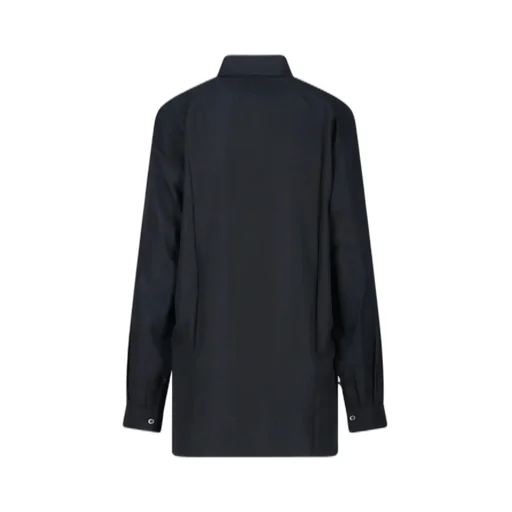
The label is young, so the useful checks are about season and collaboration rather than label generations. SETCHU uses conventional Spring/Summer and Autumn/Winter naming, beginning with Spring/Summer 2021; its first runway did not take place until January 2025, so an earlier “runway collection” was in fact a showroom season. Production is Italian, and transformable constructions — the folding jacket, convertible safari jacket and wrap shirt — recur rather than belonging to a single collection. (Fashion Press; The Fashion Post)
Two conflations are worth avoiding. H. Huntsman & Sons is where Kuwata trained, not a SETCHU product line; the Savile Row collaboration made as garments is the 2024 capsule with Davies & Son, while the 2026 outdoor capsule Aigle by Setchu is separately branded. Nor does the 2023 LVMH Prize date a garment: it marks a moment in the label's history, not a stamp used on the clothes. (LVMH Prize; 10 Magazine Japan)
As of September 2026, Kuwata remains SETCHU's owner and designer, showing on the Milan men's schedule and working on the ANA commission. (ANA Holdings; Fashion Press)
References
- LVMH Prize. "Setchu." LVMH Prize for Young Fashion Designers. Accessed 11 September 2026.
- Eric Brain. "Satoshi Kuwata's Setchu Wins the 2023 LVMH Prize." Hypebeast, 7 June 2023.
- Saveria Mendella. "Setchu by Satoshi Kuwata, the Art of Uncompromising Compromise." Exhibition Magazine, Faces issue.
- "Satoshi Kuwata, vincitore dell'LVMH Prize 2023." nss magazine, 7 June 2023.
- "Setchu: LVMH Prize Winner 2023." 10 Magazine, 7 June 2023.
- "SETCHUの桑田悟史が描いた、東洋と西洋の融合." 10 Magazine Japan, 24 July 2024.
- "古今東西を折衷するSETCHUの美学。デザイナー桑田悟史にインタビュー." Numéro TOKYO, 13 July 2024; from the May 2024 issue.
- "祝・LVMHプライズ2023、グランプリ受賞!【SETCHU】世界が注目するデザイナー桑田悟史にインタビュー." SPUR, 8 June 2023.
- Miwa Goroku. "ラグジュアリーの極地を目指して。SETCHUの桑田悟史が今日も釣りをする理由." The Fashion Post, 25 January 2026.
- "釣りとファッションの共通点とは? SETCHUのタイムレスなデザインの裏側." Fashionsnap, 30 July 2026.
- "更新続ける「セッチュウ」、目指したのは合理性から距離を置くこと." Fashionsnap, 21 June 2025.
- Susanna Galstyan. "Setchu: Satoshi Kuwata on Japanese principles and the leather supply chain." Lampoon, 17 September 2025.
- ANA Holdings. "ANAグループ 新制服のデザイナー決定について." Press release 25-023, 3 July 2025.
- "ANAの新制服 滝沢直己と「セッチュウ」桑田悟史、「アディダス」がデザインを担当." WWDJAPAN, 3 July 2025.
- Fashion Press. "セッチュウ (SETCHU)." Accessed 11 September 2026.
- 原語表記
- 桑田悟史
- 学歴
- Central Saint Martins, Fashion design (2011)
- 受賞
- Who Is On Next?, 2022LVMH Prize for Young Fashion Designers, 2023