Teppei Fujita
Japanese designer and former Yohji Yamamoto patternmaker; founder of sulvam in 2013, known for cut-open, unfinished-looking tailoring.
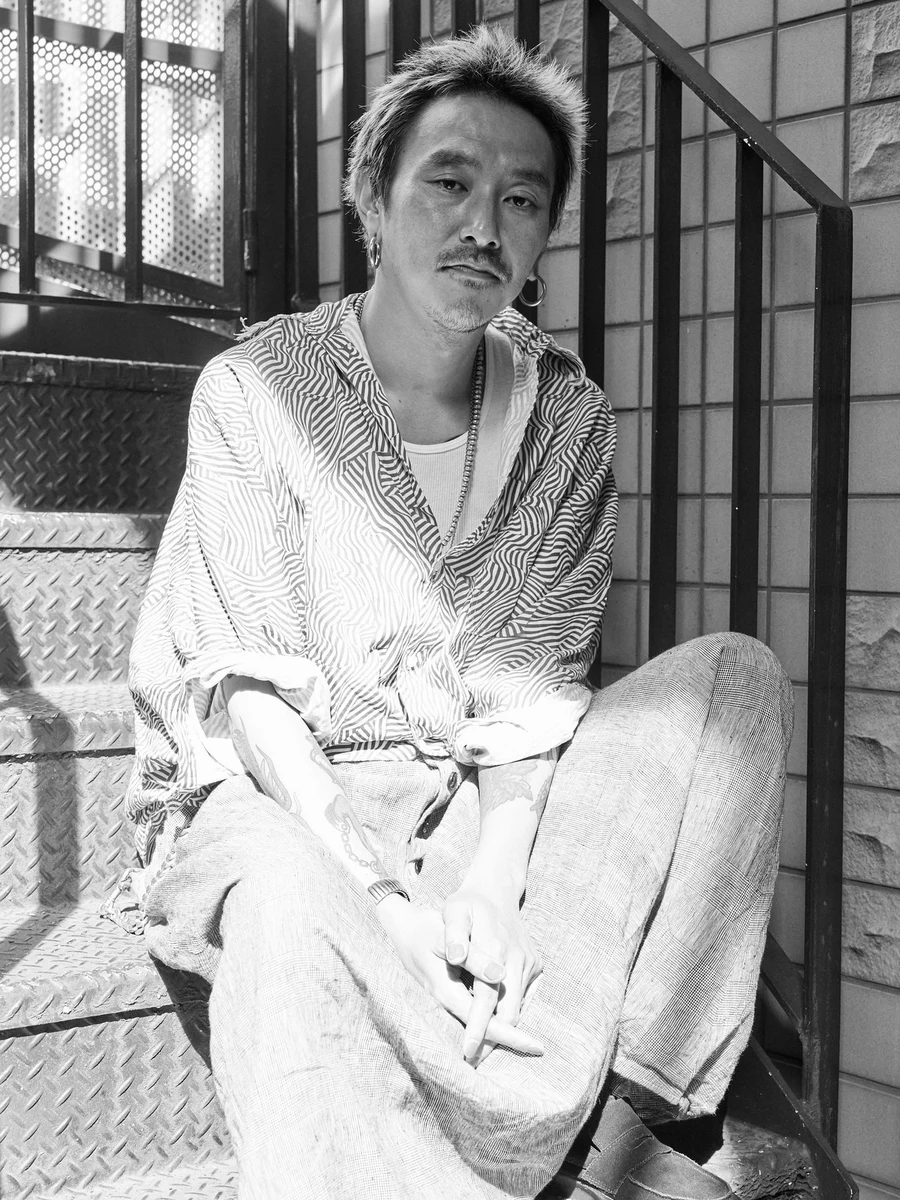
Teppei Fujita is the founder and designer of sulvam, the Tokyo tailoring label he set up in 2013 after roughly seven years as a patternmaker inside Yohji Yamamoto. It is easy to file sulvam under the long list of labels descended from Yamamoto's studio and stop there, but the debt is more specific than lineage or silhouette. Patternmaking is the technical stage between an idea and a wearable garment: a patternmaker drafts, cuts and pins flat pieces of card or cloth to work out how a design will actually hang, move and close around a body, translating a designer's intent into the pieces a sewing room can build from. That is the discipline Fujita spent his twenties learning, and by his own account it is still the entire mechanism of how he designs — he does not sketch a collection so much as draft it directly in pattern paper, so the same skill that got him hired as an inexperienced twenty-something is the one visible in every collection since. (Pen Online; Rakuten Fashion Week Tokyo)
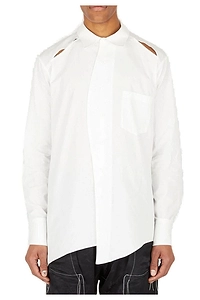
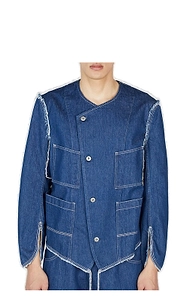
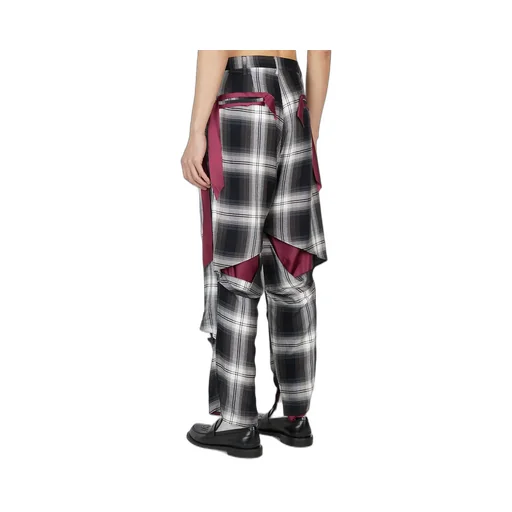
The result looks deliberately unfinished: raw-cut hems, exposed linings and tailoring caught mid-assembly rather than resolved into a clean shell. These are not accidental flaws but a way of leaving the pattern-cutting process visible in the finished garment, first in menswear and later in womenswear. (gsc-RINKAN; FHCM)
From a Chiba select shop to the Yamamoto atelier
Fujita was born in Chiba Prefecture in 1984 and grew up in Kashiwa, northeast of Tokyo. One profile places him at Bunka Fashion College before he entered the industry, although the principal Japanese career summaries do not list a school. (Rakuten Fashion Week Tokyo; Tokyo Fashion Award; Senken Shimbun; Pen Online)
He entered fashion on the shop floor rather than through a design internship — as sales staff, then as a buyer, at a select shop near home. (GRIND) In 2006 he joined Yohji Yamamoto with no patternmaking background at all; senior staff taught him the craft from scratch, and he stayed roughly seven years, into 2013. (Rakuten Fashion Week Tokyo, Japanese interview; Tokyo Fashion Award) Watching Yamamoto build an internationally recognised house without a partner became the direct spur to try the same: "working for Mr. Yamamoto, who brought his brand to an international level all by himself, became a major inspiration for me," Fujita has said. He resolved to launch his own label before turning thirty. (Rakuten Fashion Week Tokyo)
The pattern is the sketch
Fujita has been consistent, across separate interviews years apart, that he does not work from mood boards, reference images or drawn sketches. "I basically have no inspiration from specific things like movies or music. I don't draw designs or sketches. My creative process starts when I start drawing the pattern making line," he has said, adding that "the pattern drawing paper is the design sketch which transform[s] prototypes into actual clothing." (Pen Online) A toile — a test garment, usually cut in cheap cloth from a first pattern to check fit and proportion before the real fabric is used — is therefore not a technical checkpoint on the way to Fujita's idea; it is close to the idea itself.
The tools stay analogue by choice: pencil, straight ruler, cutting knife, eraser, awl, tracing wheel and paperweight, worked at a sewing machine more than sixty years old that was passed to him by a retiring craftsman. "I don't need a PC at all when making clothes — because it's analogue," he has said. (Mukta / Sal) That insistence matters for reading the clothes: the imperfect, hand-drawn quality of a sulvam seam is a record of a physical process, not a digitally rendered effect applied afterward.
Fujita has also described the process as emotional rather than research-led: "I design with my emotions, so most of my designs are dreams to be positive," he has said, adding that ideas often arrive while walking, and occasionally in his sleep — "when I'm making clothes, I sometimes draw patterns in my dreams." (FHCM) He has framed the audience for the clothes in similarly personal terms: "people who wear sulvam are generally people who are themselves. And that makes me happy." (Pen Online)
sulvam: improvisation, not solo work
The label's name comes from salvum, a Latin word Fujita and his studio read as "improvisation": the idea that everyone involved in making a garment — cutter, mill, sewing factory, Fujita himself — contributes something closer to a musician's part in a jam session than to instructions carried out from a single script. (Rakuten Fashion Week Tokyo, Japanese interview; gsc-RINKAN)
The company was founded in 2013, the date given by both the Tokyo Fashion Award and Fujita himself. The 2014 date in several later profiles refers to the first public collection, made for Autumn/Winter of that year. The apparent discrepancy is therefore best read as the difference between establishing the business and bringing its clothes to market. (Tokyo Fashion Award; Rakuten Fashion Week Tokyo, Japanese interview; Fashion Press; GRIND)
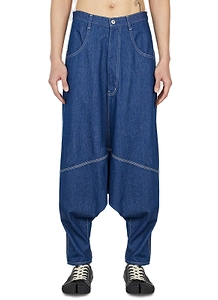
Fujita has described his method as keeping tailoring — jackets, trousers and coats built on a fitted, structured base — as the foundation of every collection, then testing how far that base can be taken apart without losing it. (Rakuten Fashion Week Tokyo, Japanese interview) In practice that produces pieces such as strapped, bondage-style trousers and jackets with hems and linings left raw rather than finished, built from a restrained, largely tonal palette that puts the emphasis on fabric and cut rather than colour. (gsc-RINKAN; FHCM)
Fashion Press's own brand copy for sulvam describes the work as gathering "time, national borders, gender, season, culture, and concepts" into designs aimed at an individual sense of elegance rather than a themed narrative — language consistent with a label whose collections are not built around trend seasons so much as accumulated feeling, and consistent with Fujita's later decision to extend the house into womenswear without treating it as a separate design language. (Fashion Press)
Nine years to Paris, and past it
sulvam won the Tokyo Fashion Award in 2015, the year it also first showed in Paris. In 2017 the label held its first solo show outside Japan at Pitti Immagine Uomo in Florence, alongside a Milan presentation, and Fujita was later named an LVMH Prize finalist. From 2018, sulvam moved its runway presentations to Paris. (Fashion Press; GRIND)
The pandemic produced one of the more legible statements of Fujita's working method: sulvam's 21AW Paris collection was shown as a single, unedited take on video, against a white background with one fixed camera. Fujita's own description of the intent — no gimmicks, show the process directly — matches the same instinct that keeps a seam visibly unfinished on the garment itself. (FHCM) sulvam incorporated a French company and opened a Paris atelier and showroom in 2022, and introduced a womenswear line beginning with the spring/summer 2024 collection. (Fashion Press)
Reading and dating sulvam
sulvam has never used a diffusion-line letter system or a fixed seasonal theme the way some of its Tokyo contemporaries do, so there is no shortcut equivalent to a Comme des Garçons date code. Dating a piece means matching its silhouette, fabric and construction detail against the brand's own season-by-season archive rather than reading a code off a label. (sulvam)
A few features recur across nearly the whole run and should not, on their own, be read as markers of an early or a "truer" collection: raw or exposed seam allowances, visibly unfinished hems and linings, and asymmetric or strapped closures are constants of the house's tailoring vocabulary from the 2014 debut onward, not a phase Fujita grew out of. (gsc-RINKAN; FHCM) One date does work as a hard boundary: any garment sold as sulvam womenswear necessarily comes from spring/summer 2024 or later, since the line did not exist before then. (Fashion Press) Presentation city is a weaker clue and should be treated as context rather than proof — sulvam showed from Tokyo before 2018, then moved to Paris, then formalised a French operation in 2022, but retail delivery of a collection does not have to track the city where it was shown, so a Paris-era piece is not automatically newer than a Tokyo-era one without checking the season name itself. (Fashion Press)
References
- Rakuten Fashion Week Tokyo. "Teppei Fujita / 'sulvam' designer." Accessed September 2026.
- Rakuten Fashion Week Tokyo. "藤田哲平 Teppei Fujita." Accessed September 2026.
- Tokyo Fashion Award. "sulvam." 2015 winner profile, accessed September 2026.
- Fashion Press. "サルバム: sulvam." Accessed September 2026.
- gsc-RINKAN. "サルバム 歴史と概要." Accessed September 2026.
- Fédération de la Haute Couture et de la Mode (FHCM). "A Conversation With: Teppei Fujita (Sulvam)." Accessed September 2026.
- Senken Shimbun. "ファッションは街から教わった「サルバム」藤田哲平氏 地元柏市の個店で初イベント." 1 September 2025.
- GRIND. "SULVAM from vol.102." Accessed September 2026.
- Pen Online. "Teppei Fujita, Rising Star of Men's Fashion." Accessed September 2026.
- Mukta / Sal. "'AWEARNESS' #1 sulvam 藤田哲平." Accessed September 2026.
- sulvam. "Official site." Accessed September 2026.
- 原語表記
- 藤田哲平
- 学歴
- Bunka Fashion College