
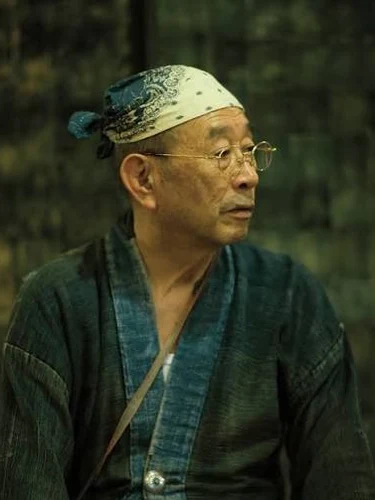
Toshikiyo Hirata
Japanese founder of KAPITAL, who built the Kojima denim factory behind the label and led the company as president until the 2024 handover.
Toshikiyo Hirata founded KAPITAL and ran it as representative director for close to four decades from Kojima, in Kurashiki, Okayama. The company that carries his name in the trade register is a manufacturer first: KAPITAL's own corporate record gives its establishment as March 1985 and lists four sewing factories and a dedicated dyeing and finishing plant, the カントリー工場 (Kountry factory). His son Kazuhiro Hirata, who works as Kiro Hirata, is the designer most international readers know, but the plant, the machines and the dye house were Toshikiyo's. (KAPITAL; WWDJAPAN)
The founding date is the first thing worth correcting. English brand write-ups repeat 1984, and the year is now near-universal in resale copy. KAPITAL's own company page, its recruitment material and WWDJAPAN all give 1985 — the company page specifically as 昭和60年3月, March 1985. Where the two disagree, the company's own filing is the better record; 1984 may describe when Hirata began working towards the business rather than when the firm existed. (KAPITAL; HAVEN; KAPITAL Recruit)
Hirata rarely presented himself as a public-facing designer. He came to denim through manufacturing rather than fashion school, gave few interviews and built his reputation through the company: its factories, processes and eventual retail label. (KAPITAL; WWDJAPAN)
Karate, America, and a return to denim country
The account repeated across brand profiles is that Hirata encountered American jeans while teaching karate in the United States, and came back to Japan wanting to make them. He settled in Kojima — his wife's home town — learned fabric development and cutting, and built a factory whose object was to match the quality of the American originals rather than to sell a label. (GQ; HAVEN)
Kojima was the right place and the wrong place at once. It was already the centre of Japanese denim, built on a school-uniform and work-clothing industry that had converted its sewing capacity to jeans; that concentration of dyers, weavers, sewers and finishers is what the word capital in the company name plays on. It also meant Hirata was starting a factory in a district full of factories, with no route in except the quality of the work. (WWDJAPAN; HAVEN)
A sewing factory before a brand
For its first period the company was an OEM operation — original equipment manufacturing, meaning it designed and sewed garments that were sold under other companies' names. WWDJAPAN records that it handled OEM work for domestic brands including Hysteric Glamour before launching a label of its own. That order of events matters: the retail brand was grown out of a production business that already had to satisfy other people's quality standards, not the other way round. (WWDJAPAN)
The company still describes itself in those terms. Its recruitment material opens on 1985 and the phrase デニム縫製工場からスタート — it started as a denim sewing factory — and calls KAPITAL a ファクトリーブランド (factory brand), a label owned by the plant that makes it. That is an unusual structure in fashion, where design houses more often commission production from suppliers they do not own. (KAPITAL Recruit)
Hirata's build-out is legible in the corporate record rather than in interviews. KAPITAL lists sewing plants at its head office and at Mitsu, Yamashiro and Yanagida, plus the Kountry factory for dyeing and processing. A 2026 corporate listing gives 232 employees, capital of ¥300 million, turnover of ¥4.6 billion for the year to February 2025, and fifteen directly operated shops. A single company therefore cuts, sews, dyes, distresses, repairs and sells — which is what allows a garment to be sent back through a process a second time instead of being written off. (KAPITAL; Mynavi)
Handing the drawing to someone else
The division of labour that produced the KAPITAL people recognise dates from 2002, when Kiro joined the family business after studying art in the United States and working as a designer elsewhere in Japanese casualwear. The arrangement was unusually clean: the father had spent seventeen years making the manufacture reliable, and the son arrived with an art-school eye and no interest in stopping at faithful American reproduction. Neither half works without the other — a collaged, overdyed, repeatedly patched garment is only economic if the plant that has to sew it is the same company. (GQ; HAVEN)
It also means the two men are routinely conflated. The label is often described as an anonymous Japanese craft collective, and where a founder is named it is as often Kiro as Toshikiyo. The corporate record separates them cleanly: Toshikiyo established and ran the company from 1985, and Kiro became representative director only in 2024. (KAPITAL; WWDJAPAN)
The dye house and the craft vocabulary
The Kountry factory is the part of Hirata's infrastructure that most changed what the label could make. Overdyeing, indigo work, abrasion, patching and reconstruction all happen in-house, which is why KAPITAL can treat finishing as a design stage rather than a purchased effect. The KOUNTRY line is the clearest expression of it: garments that are pieced, stitched over, faded unevenly and returned to the dye vat. (KAPITAL; KAPITAL)
Two Japanese textile traditions supply that vocabulary, and both need to be described precisely. 刺し子 (sashiko) is functional reinforcement stitching — rows of running stitch that thicken and strengthen cloth, with many regional patterns and histories. 襤褸 (boro) refers to cloth patched and repatched over generations because textile was scarce and could not be discarded; surviving boro is a record of necessity, not a decorative style. A newly made, expensively processed jacket can cite the techniques and the look of both without sharing that history, and describing every patched KAPITAL piece as "authentic boro" turns a history of poverty into a sales adjective. (Victoria and Albert Museum; KAPITAL)
The same applies to the dyestuffs. Alongside indigo, KAPITAL's Century Denim programme works with 柿渋 (kakishibu), fermented persimmon tannin, which leaves a dry brown cast, and with sumi ink, which pulls cloth towards grey-black. These are traditional Japanese materials being used experimentally on new fabric, not preserved antique cloth. The programme is associated with Kiro's tenure, but it runs on the dye and finishing capacity his father assembled. (KAPITAL)
The handover to the next generation
Hirata remained the company's representative until spring 2024. KAPITAL's webshop still named 平田俊清 on 5 March; by 17 May the corporate page listed 代表取締役 平田和宏 — his son, Kiro. The company did not announce a precise date, placing the formal succession somewhere inside that ten-week interval. (KAPITAL, archived 5 March 2024; KAPITAL, archived 17 May 2024)
The scale Hirata left behind is modest by international fashion standards and substantial for an Okayama manufacturer. WWDJAPAN counted thirteen domestic shops in January 2025; the company's own 2026 graduate listing gives fifteen, so the number is moving rather than disputed. The same listing describes the business as the design, manufacture and sale of original fashion products together with shop operation, with cutting and sewing carried out in its own plants — the structure Hirata set up, stated as a job description. (WWDJAPAN; Mynavi)
The other change of that year came from outside. In January 2025 WWDJAPAN reported that L Catterton, the LVMH-affiliated investment firm, had taken a majority stake in KAPITAL, with the investment dated to 2024 and the timing and sum undisclosed. A founder-owned Okayama factory brand passing majority control to an international investor in the same year as the family succession is the largest structural change in the company's history. (WWDJAPAN)
Reading Toshikiyo Hirata's part of KAPITAL
A tenure date cannot attribute a garment. Hirata was not the label's designer in the sense Kiro is; his contribution was its production capability, and that capability survived the 2024 handover. The same sewing plants and Kountry dye works continued to make the clothes, so their presence cannot by itself distinguish a “Toshikiyo-era” garment from a later one. (KAPITAL; WWDJAPAN)
What the factory history does explain is what to expect from the clothes. Because dyeing, processing and repair are in-house, irregular fading, uneven overdye, added patches and dense reinforcement stitching are ordinary production characteristics on KAPITAL and KOUNTRY pieces rather than damage or evidence of age. Conversely, none of those features dates a garment: KOUNTRY marks a processing context, not antique cloth, and the same treatments have been applied across many seasons. (KAPITAL)
For anything earlier, the useful line is the OEM period. Before KAPITAL sold under its own name, the plant sewed for other brands, so a garment carrying a different label may still have come out of the same Kojima factory — and, equally, an unbranded or oddly labelled "Kojima made" piece is not a KAPITAL item. Identification should rest on the care label, the product code and the seasonal catalogue, not on a factory story. (WWDJAPAN; KAPITAL)
References
- KAPITAL. "会社情報・お問い合わせ." Accessed 11 September 2026.
- KAPITAL. "会社情報・お問い合わせ" (archived 17 May 2024). Internet Archive.
- KAPITAL. "会社概要" (archived 5 March 2024). Internet Archive.
- KAPITAL. "採用情報." Accessed 11 September 2026.
- KAPITAL. "KOUNTRY Month Tomorrow!!" 27 April 2023.
- KAPITAL. "New Century Denim Pre Order." 25 March 2023.
- "LVMH系の投資会社、日本のブランド「キャピタル」の過半数株式を取得 金額は非公開." WWDJAPAN, 8 January 2025.
- "(株)キャピタル 会社概要." Mynavi, 2026 graduate listing. Accessed 11 September 2026.
- "KAPITALを紐解く:日本のデニムイノベーター." HAVEN. Accessed 11 September 2026.
- Noah Johnson. "A Rare Visit to Kapital, Japan's Denim Paradise." GQ, 9 September 2019.
- Victoria and Albert Museum. "Make your own: Japanese 'Boro' bag." Updated 17 April 2024.
- 原語表記
- 平田俊清
主な作品
該当する結果が見つかりませんでした
キーワードやフィルター条件を変更して再度お試しください。