Yasuhiro Mihara
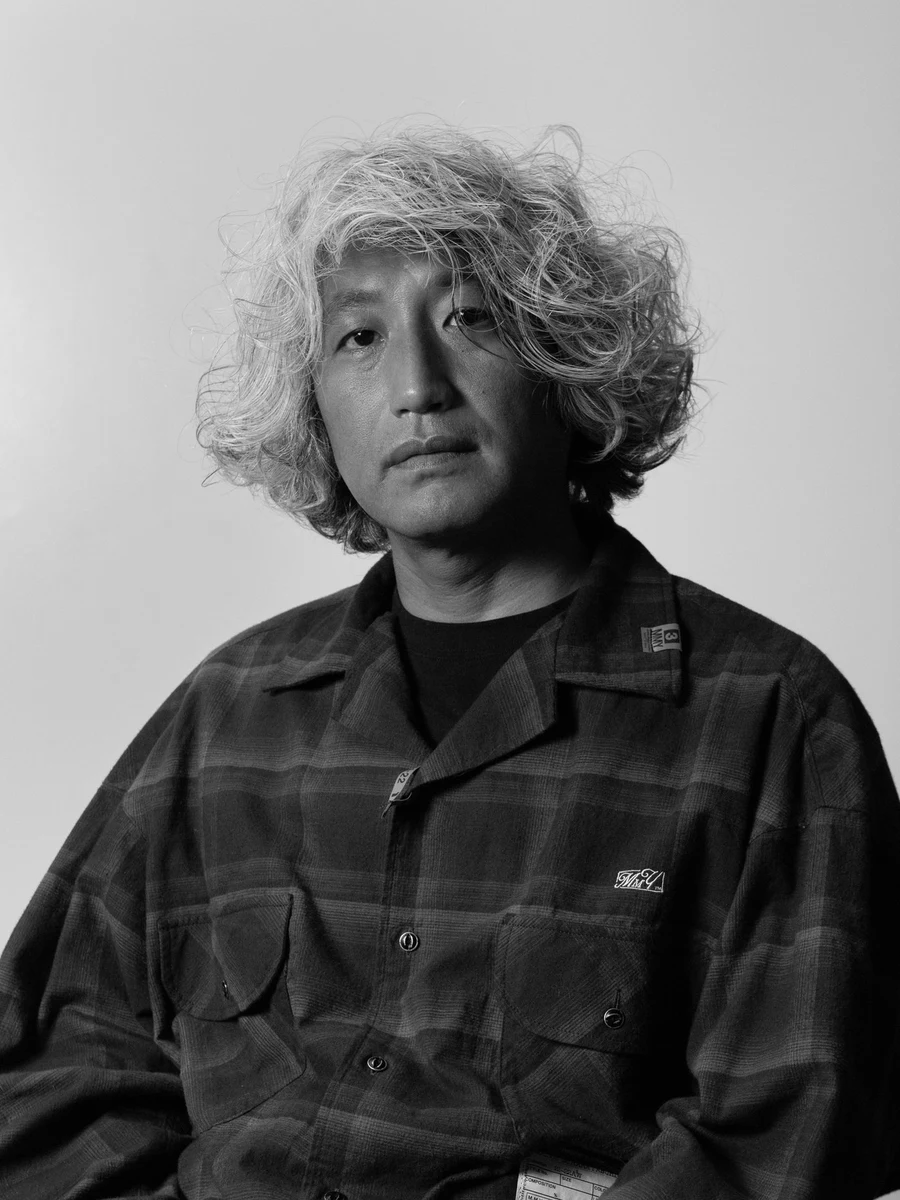
Japanese designer, founder of Maison Mihara Yasuhiro since 1997, known for the hand-sculpted OriginalSole trainer.
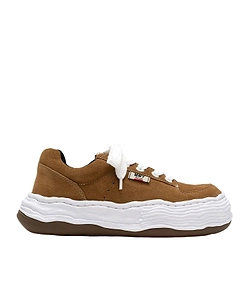
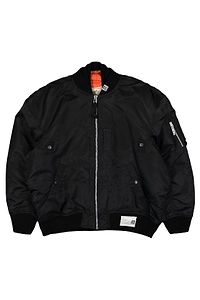
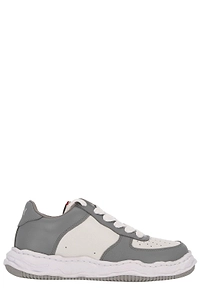
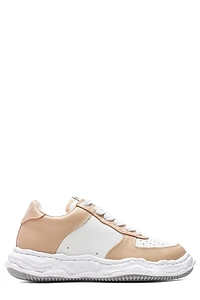
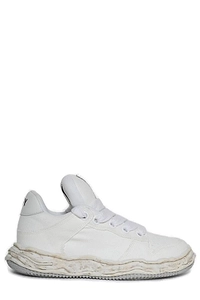
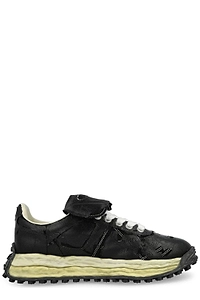
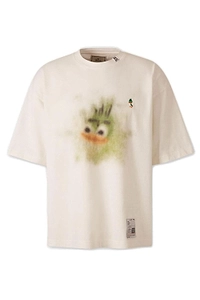
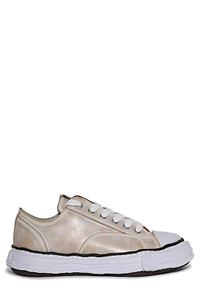
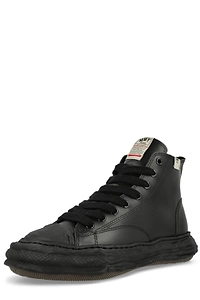
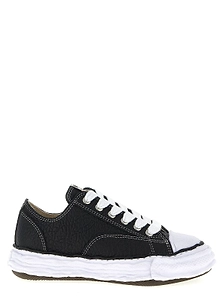
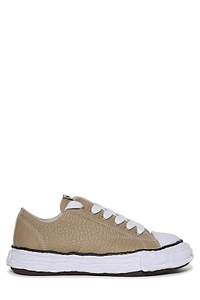
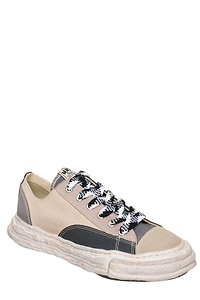
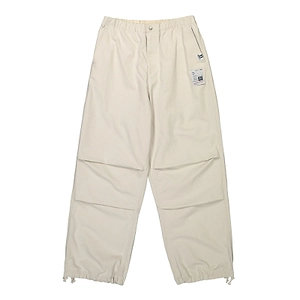
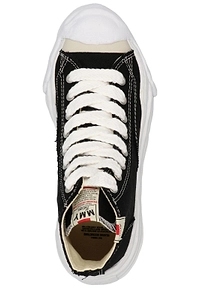
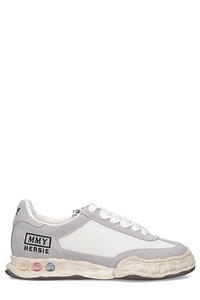
Yasuhiro Mihara (三原康裕) is the founder and designer of Maison Mihara Yasuhiro, the Tokyo house that has shown in Paris since 2007. For most buyers who own one piece of his work, that piece is a shoe: a trainer whose sole looks like it has been left out in the sun and half-melted, or like a plaster cast taken before the mould had fully set. That is a deliberate effect, not a defect, and it is only the most visible part of a career that began as a self-taught shoemaker's brand called archi doom in 1996, was renamed the following year, and has carried three different house names since. (Fashion Press; honeyee)
A painter's son who taught himself to make shoes
Mihara was born on 15 June 1972. His own house biography gives Nagasaki Prefecture as his birthplace, while Fashion Press and RINKAN give Fukuoka. Accounts otherwise agree that his mother was a painter, his father researched poultry vaccines and Mihara grew up around her work. (Fashion Press; RINKAN; Maison Mihara Yasuhiro)
He entered Tama Art University's Design Department in April 1993, majoring in textile design, and graduated in March 1997. He did not study footwear there. From around 1994 he taught himself shoemaking outside class, working at a tannery to learn leather and studying last-making — the craft of shaping the foot-formed block a shoe is built around — with working cobblers on his days off, alongside formal training in fashion and textiles. In 1996, while still a student, he launched archi doom with backing from a shoe manufacturer; the name fused "architecture" and "doom" to signal construction and destruction in the same object. (Fashion Press; RINKAN)
From archi doom to a name of his own
After graduating in 1997, Mihara helped found a shoemaking workshop called EVOL and renamed archi doom MIHARAYASUHIRO. The house's English biography compresses both stages into a 1996 launch, while Fashion Press, RINKAN and honeyee distinguish the student label of 1996 from the eponymous name adopted the following year. (Fashion Press; RINKAN; honeyee)
He put his own name first, ahead of the family name — an inversion of standard Japanese order — as a deliberate claim that Japanese shoemaking, a craft with a short domestic history compared with tailoring or textiles, deserved the same confidence of authorship as a European maison's. He opened his first store, SOSU MIHARAYASUHIRO, in Minami-Aoyama, Tokyo, in September 1998. In 1999 he incorporated the company as SOSU — a name drawn from the mathematical idea of a prime number, meant to suggest a value that resists being broken down into anything simpler — and showed a womenswear collection at Tokyo Collection. Menswear followed in 2000. (Fashion Press; RINKAN)
PUMA by Mihara Yasuhiro: sport as raw material
In 2000 Mihara began PUMA by MIHARAYASUHIRO, a collaboration line with the German sportswear manufacturer that became one of fashion's earliest and longest-running crossovers between a designer label and a mass sports brand. He formally signed as a designer for PUMA AG in September 2001, and the line's global, simultaneous product drops were unusual for the period. Early designs included pairs assembled by cutting two different trainers in half and rejoining them into a single shoe — a literal version of the reconstruction that later defined his solo footwear. (RINKAN; honeyee)
Mihara has since described the partnership, which ran until 2015, in more conflicted terms than its commercial success suggests. He recalled the pairing of "a nameless designer from the Far East" with a global sports brand as something that genuinely surprised the industry at the time, but also spoke of mental exhaustion from sales-side pressure over those fifteen years, and of regret that the collaboration helped push sport brands toward fashion marketing in a way he felt encouraged a shallower, trend-driven "sneaker culture" rather than a more durable one. It is a rare instance of a designer criticising the commercial logic of his own most visible early success. (honeyee)
OriginalSole: disorder made by hand
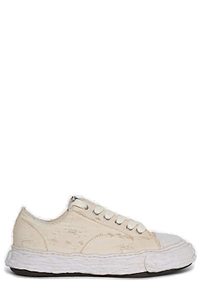
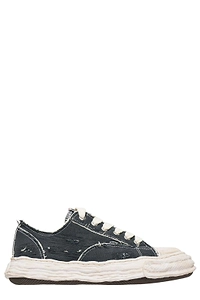
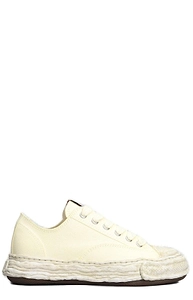
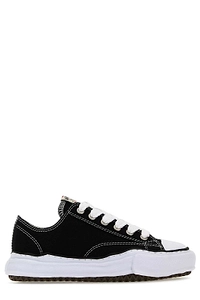
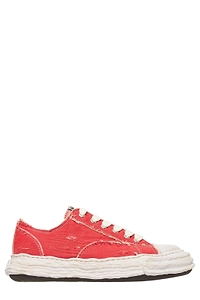
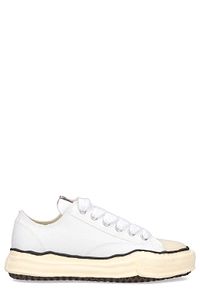
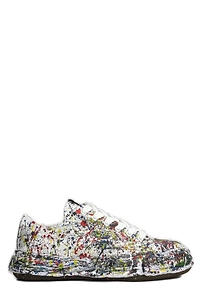
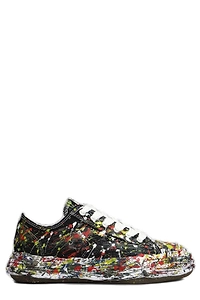
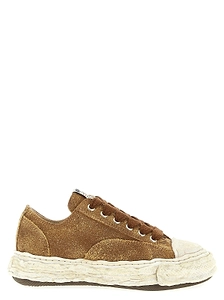
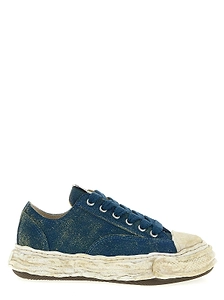
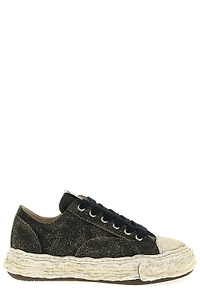
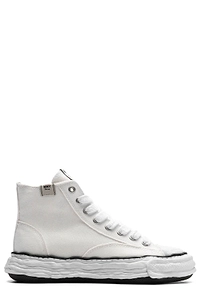
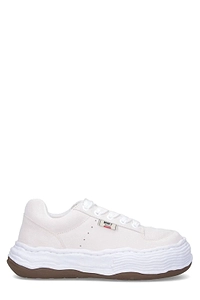
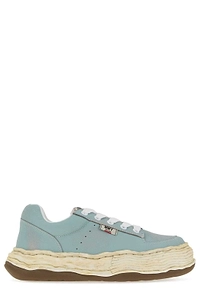
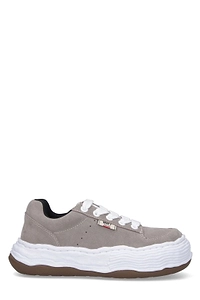
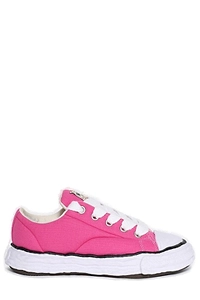
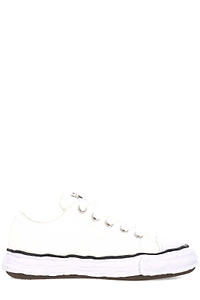
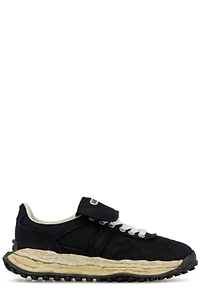
Mihara's signature footwear device, generally known as the OriginalSole, starts as a physical object rather than a drawing: he sculpts the sole by hand in resin clay, building in the bumps, waves and asymmetries of a shoe that has already been worn and reshaped by a body, before the clay model is scanned and tooled into a vulcanised rubber sole for production. Vulcanisation is the process of curing rubber with heat and sulphur so it hardens into a stable, durable sole; Mihara's innovation is to vulcanise a shape that already looks softened, collapsed and imperfect, rather than the clean, regular sole vulcanisation normally produces. (Kawalog; Feature)
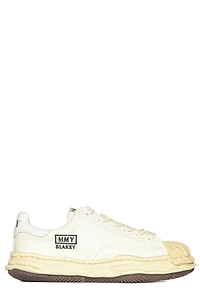
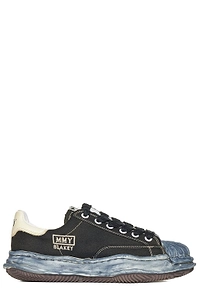
The uppers built onto that sole are usually close paraphrases of famous trainers — a Converse-style low top sold as Peterson, an Adidas Superstar-adjacent silhouette as Blakey, an Air Force 1-like form as Wayne, a Vans Authentic reference as Baker, a New Balance-adjacent runner as George — redrawn with exaggerated toe boxes, oversized laces and deliberately misaligned panels, so the familiar shape and the visibly wrong sole argue with each other on the same shoe. (Kawalog)
In spring/summer 2021, Mihara extended the idea to a fully biodegradable line called General Scale: a natural rubber-tree-latex sole from the French manufacturer RELTEX, an organic cotton upper and laces, a compressed plant-fibre insole and a water-based adhesive, with supplier documentation distributed to retailers for traceability. The relief pattern on the sole was, once again, developed from a hand-carved prototype rather than drawn digitally. (WWDJAPAN)
Paris, positioning and the current house
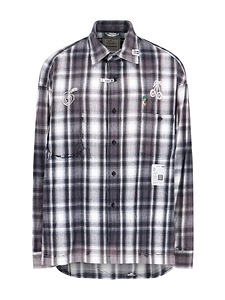
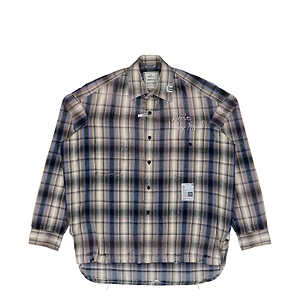
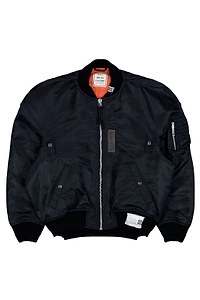
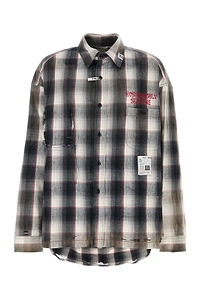
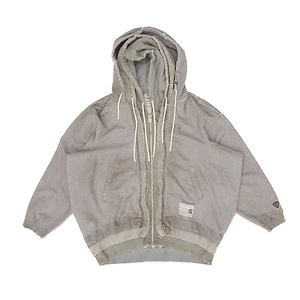
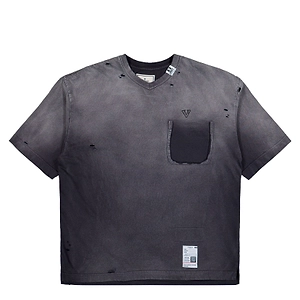
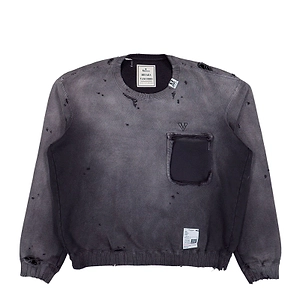
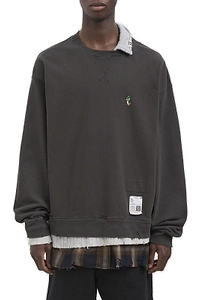
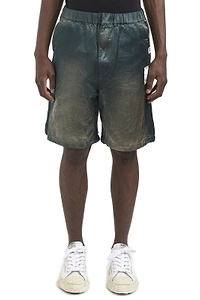
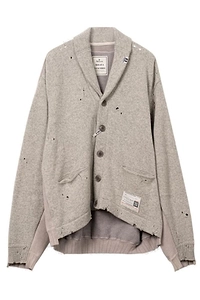
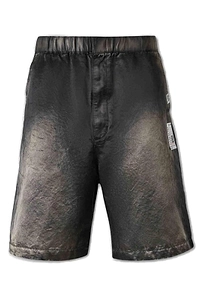
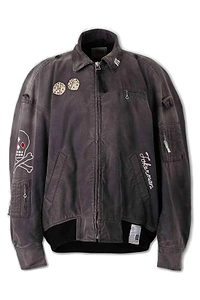
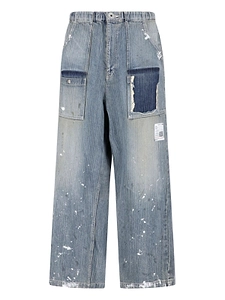
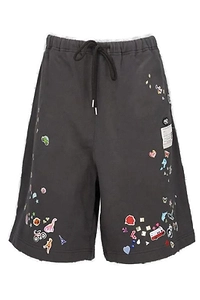
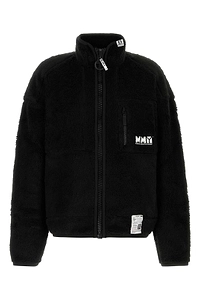
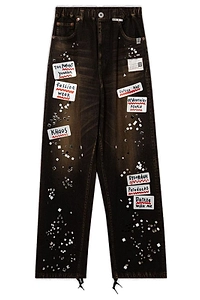
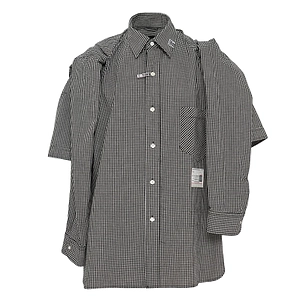
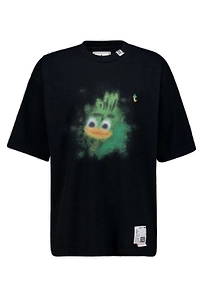
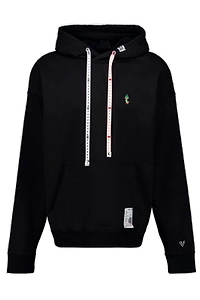
Mihara's ready-to-wear moved from Tokyo Collection to Milan in the mid-2000s and then to the Paris men's calendar from 2007, where one contemporary review described the clothes as "poetry heard through fabric." The house has since operated as a comparatively accessible name within the Paris schedule rather than an avant-garde extreme in the Comme des Garçons mould: outerwear typically retails between roughly ¥50,000 and ¥150,000 and footwear between roughly ¥30,000 and ¥50,000, with a core audience in its twenties and thirties and a growing base of buyers in their forties. Alongside the mainline, Mihara has run a widening set of sub-lines — MYne and FIT MIHARA YASUHIRO from 2016–17, General Scale and the menswear line in・stru(men-tal). from 2021 — and a long run of collaborations, including Hysteric Glamour, New Era, Billabong and, in recent seasons, Amiri. In 2024 he won the grand prize at Japan's Mainichi Fashion Awards. (Digital Zasshi; RINKAN; Fashion Press)
Across all of this Mihara has kept describing his purpose in the same terms he used early in his career: reconciling people with art through ordinary, discardable objects — shoes above all — rather than through rarefied ones. He has said he once made a one-off shoe as a gift, then rejected the idea of making anything genuinely singular again, on the grounds that scarcity-based value contradicted what he was trying to do; the OriginalSole's mass-produced, hand-shaped irregularity is the practical solution to that contradiction, since every pair repeats the same designed disorder rather than manufacturing a rare original. He has traced that thinking to Marcel Duchamp's readymades, framing the useful insight as one about intent rather than technique: an ordinary object becomes art through the question a maker asks of it, not through the maker's manual skill alone. (Fashion Press)
Reading and dating the work
A Mihara garment or shoe should first be placed against the three house names, because the name on a label is itself a rough date. archi doom (1996) and the earliest MIHARAYASUHIRO pieces (from 1997) predate the brand's own retail infrastructure and are correspondingly rare. Anything carrying the plain MIHARAYASUHIRO wordmark dates to between 1997 and the 2016–17 autumn/winter season; anything reading Maison MIHARA YASUHIRO postdates that rename. A PUMA by MIHARAYASUHIRO or PUMA MIHARA YASUHIRO shoe belongs to the 2000–2015 collaboration and sits outside the mainline entirely, no matter how similar its silhouette looks to a later OriginalSole model. (RINKAN; honeyee)
Within the current house, sub-line names narrow the date further: MYne and FIT MIHARA YASUHIRO point to 2016–17 or later, while General Scale and in・stru(men-tal). point to 2021 or later. On the OriginalSole shoes specifically, do not read an uneven, "melted" sole profile as damage or a factory reject — the irregularity is the hand-sculpted design intent, repeated deliberately across a production run rather than varying at random, and two pairs of the same model in the same size will still show minor differences in the sole's contour because each began from the same clay master rather than a machined mould with zero tolerance. Model names such as Peterson, Blakey, Wayne, Baker and George identify the silhouette lineage the shoe is paraphrasing and are the fastest way to confirm which archetype a given pair reworks. (Kawalog; Feature)
References
- Fashion Press. "メゾンミハラヤスヒロ: Maison MIHARA YASUHIRO." Accessed September 2026.
- Fashion Press. "デザイナー三原康裕にインタビュー、靴作りから始まった「"人と芸術を調和させること"が僕の使命」." Accessed September 2026.
- RINKAN. "ミハラヤスヒロの歴史." Accessed September 2026.
- RINKAN. "ミハラヤスヒロ 様々なコラボレーション." Accessed September 2026.
- honeyee. "Maison MIHARA YASUHIRO." Accessed September 2026.
- Digital Zasshi. "MAISON MIHARA YASUHIROの歴史や特徴/ランク/ターゲット年齢層など." Accessed September 2026.
- Kawalog. "メゾンミハラヤスヒロとは?"粘土ソール"スニーカーについて【履き心地・サイズ感】." Accessed September 2026.
- Feature. "The Distorted Sole Explained: Maison Mihara Yasuhiro." Accessed September 2026.
- WWDJAPAN. "「ミハラヤスヒロ」の新ラインは"土に還るスニーカー" 縫い糸や接着剤まで分解性素材を使用." Accessed September 2026.
- Maison Mihara Yasuhiro. "About." Accessed September 2026.
- 生年
- 1972年6月15日
- 原語表記
- 三原康裕
- 学歴
- Tama Art University, Textile design (1993–1997)
- 受賞
- Mainichi Fashion Grand Prix, 2024
主な作品