
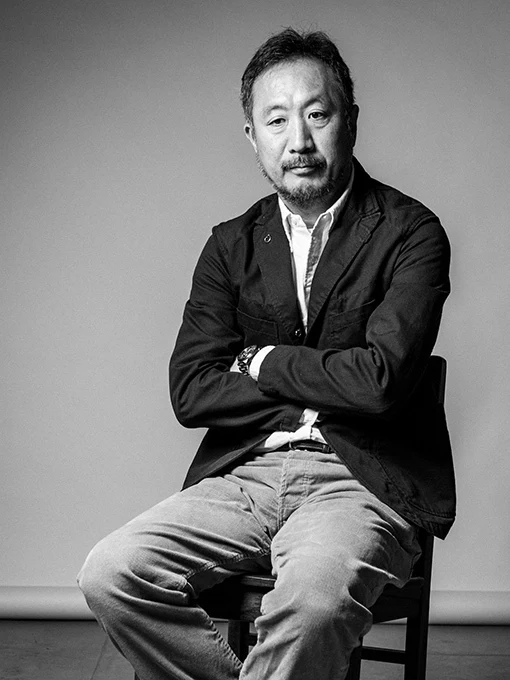
Daiki Suzuki
Japanese founder of Engineered Garments whose New York-made clothing rethinks American work, military and outdoor traditions.
Daiki Suzuki founded Engineered Garments in New York in 1999 and designed its main collection through Spring/Summer 2025. His clothes begin with American work, military, outdoor and collegiate forms, but they are not reproductions. A pocket shifts, an interior is left unexpectedly elaborate, tailored cloth meets a fatigue pattern, or a jacket is cut with deliberate imbalance. Suzuki's America is the one he learnt by searching warehouses and trade shows: full of practical garments whose peculiarities become more interesting when the rules are not obeyed too neatly. (Fashion Press; Nepenthes)
He was born in Aomori Prefecture in 1962. Japanese magazines, particularly Popeye, brought American clothes, films and lifestyles into his adolescence. That mediated distance mattered. Suzuki did not grow up taking the American wardrobe for granted; he studied images and details, then encountered the real products with a collector's attention. He has continued to treat clothing as a record of place, labour and fantasy rather than a list of timeless “menswear essentials.” (POPEYE; SHIPS)
Suzuki met Keizo Shimizu in Japan's 1980s retail world and joined Nepenthes in 1989, moving to the United States as its buyer. He worked through Boston, New York and San Francisco, sourcing goods before online search made distant makers easy to find. In 1997 he returned to New York to establish the company's office. Buying trained him to read why an object worked, but also exposed the limits of the market: eventually, the most convincing way to obtain a missing garment was to make it. (POPEYE; Fashion Press)
Made in New York
Engineered Garments developed in Manhattan's Garment District, with design, fabric sourcing and most production close to the Nepenthes office. The label name was prompted by a patternmaker who remarked that the pieces were “engineered rather than designed.” Whether flattering or exasperated, the phrase caught Suzuki's method: garments accumulated pockets, seams, reinforcements and internal decisions until conventional fashion-design language felt insufficient. (Fashion Press; 2nd Street Knowbrand)
Local production was not simply a flag on the label. Proximity allowed Suzuki to respond to the cloth available in New York and to factories accustomed to particular forms of workwear. It also preserved small irregularities that a highly standardised system might remove. The Garment District has contracted around the company, making “Made in New York” increasingly difficult and increasingly central to what an Engineered Garments object records. (Fashion Press; WWD Japan)
The early business was modest and aimed principally at Japan. Friends in New York and San Francisco carried pieces, but Suzuki did not begin with a plan to represent American fashion back to Americans. International recognition grew after overseas distribution expanded in the early 2000s. In 2008 he became the inaugural winner of the CFDA/Vogue Best New Menswear Designers in America programme and the first Japanese designer admitted as a full CFDA member. The award was striking precisely because his American clothing retained an outsider's editing eye. (Fashion Press; POPEYE)
Useful forms, productive mistakes
Suzuki repeatedly combines opposites: formal and work, symmetrical and irregular, historically faithful and obviously invented. He has said that bringing two contradictory things into one garment makes clothing interesting. This is why an Engineered Garments jacket can look conventional at a distance and become odd in use. The discovery may be a game pocket, a mismatched facing or a different arrangement on each side—details intended for the wearer as much as the observer. (Fashion Press)
The Bedford jacket is the clearest example. Its notch-like lapel and multi-pocket body sit between a work coat and an unstructured blazer. Engineered Garments has made it in ripstop, denim, corduroy, mesh, waxed cotton and technical synthetics, changing its behaviour without surrendering the pattern's identity. A Bedford can serve as informal tailoring or hard-wearing overshirt; its point is not to settle the distinction. (Begin; BRUTUS)
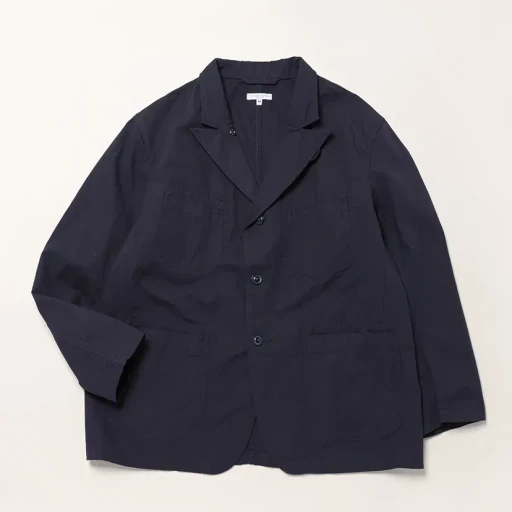
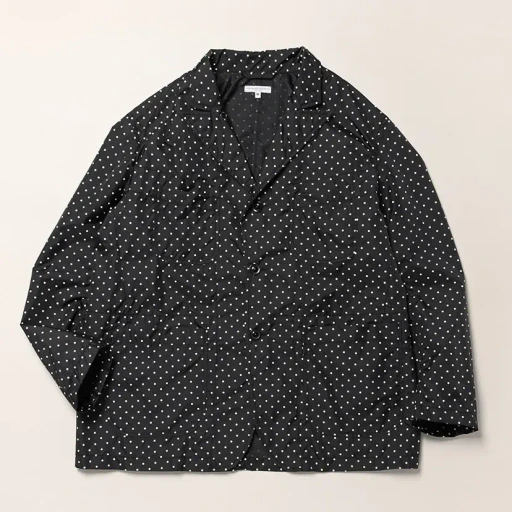
The 19 Century BD shirt, Andover jacket, fatigue pant and Loiter jacket form a similar working vocabulary. Suzuki does not preserve one definitive edition. He changes fabric, scale and detail, letting a pattern collect history over many seasons. Corduroy is especially characteristic: he values its inexpensive, rugged association with labour and wears old examples until they are visibly exhausted. Patina is evidence that the experiment survived ordinary life. (BRUTUS; SHIPS)
His styling refuses the idea that workwear requires solemn authenticity. Pattern is piled on pattern; a suit may be worn with outdoor equipment; shorts, kilts and long shirts disturb familiar masculine proportion. The wearer looks assembled from several personal enthusiasms rather than issued a complete historical uniform. Suzuki's consistent subject is the working man's garment, but “work” becomes material for invention, not a claim that the customer is impersonating its original user. (Fashion Press; SHIPS)
Woolrich, Workaday and collaboration
Suzuki also directed Woolrich Woolen Mills, using an old American company's archive and manufacturing culture for a more fashion-led line. The project enlarged his audience while clarifying the difference between heritage and facsimile: an archive supplies construction ideas and stories, but a contemporary garment still needs its own reason to exist. His later collaborations—with brands including Levi's, Dr. Martens, Barbour, Uniqlo and Hoka—likewise tend to alter use, fabrication or balance rather than stop at paired logos. (Fashion Press; WWD Japan)
Engineered Garments Workaday concentrates the most persistent utility pieces. It should not be mistaken for a diffusion line that merely makes cheaper versions of seasonal runway garments. Workaday is where fatigue trousers, work shirts and related staples can continue with less dependence on a collection theme. After stepping back from the main line, Suzuki retained Workaday, collaborations and limited projects as his particular field. (Fashion Press; Nepenthes)
Handing over the main collection
For Autumn/Winter 2025, Kenta Miyamoto and Kunimasa Odagi took over the design and direction of Engineered Garments. Miyamoto had assisted Suzuki for ten years and also directed AïE; Odagi brought experience across design, production and marketing and had supported Suzuki beyond the main brand. Their 2026 interview describes the transition plainly as inheriting the label from its founder. (Nepenthes; Fashion Press)
Suzuki did not disappear from Nepenthes America or disown the company. As of 2026 he is identified as Engineered Garments' founder and representative of Nepenthes America, while Miyamoto and Odagi direct the main collection. This distinction matters for attribution: a 2026 Engineered Garments piece belongs to the house Suzuki built, but should not automatically be described as “designed by Daiki Suzuki.” (POPEYE; Fashionsnap)
Identifying and dating the clothes
Record Engineered Garments, FWK by Engineered Garments and Workaday exactly as labelled. FWK was the former women's presentation, while many later collections integrate men's and women's clothing without that separate name. Collaborations should credit both partners. “Made in USA” is characteristic but not sufficient authentication, and it does not identify a season. (HOUYHNHNM; Fashion Press)
Recurring model names are more useful for identifying a pattern than a date. Bedford, Andover, Loiter, fatigue and 19 Century styles return in many fabrics, sometimes with small construction changes. Capture the complete style number, care label, fibre composition, country of manufacture and retailer season record. Wear, mismatched cloth and an unfinished-looking interior may be intentional, but the exact example—not the general aesthetic—must establish that. (Begin; BRUTUS)
Suzuki's achievement was to make knowledge playful. He knew the reference closely enough to disturb it, and respected a useful garment enough to let it become strange. The best Engineered Garments pieces reward both readings: they function in a wardrobe, then keep revealing the decisions hidden inside. (Fashion Press; 2nd Street Knowbrand)
References
- POPEYE. “50 × 50 Interviews: Daiki Suzuki.” 2026.
- Fashion Press. “エンジニアド ガーメンツ デザイナー 鈴木大器.” 9 July 2013.
- Fashion Press. “ブランドのオリジナリティとは?” 9 July 2013.
- Nepenthes. “Engineered Garments Interview: Kenta Miyamoto / Kunimasa Odagi.” 2026.
- WWD Japan. “鈴木大器が語る『NYで一番いい店、売れている店になりたい』.” 2022.
- SHIPS. “デザイナー鈴木大器氏に訊く『働く男が纏うべき服』.” 2015.
- BRUTUS. “鈴木大器がコーデュロイを好きな理由.” 2022.
- Begin. “名作ベッドフォードジャケットを知ればエンジニアド ガーメンツの真髄がわかる.” 2018.
- Fashionsnap. “エンジニアド ガーメンツ 東京が青山から神宮前へ移転.” 9 January 2026.
- Fashion Press. “エンジニアド ガーメンツ:ブランド沿革.” Accessed September 2026.
- 2nd Street Knowbrand. “エンジニアド ガーメンツとは何か.” 2024.
- HOUYHNHNM. “互いの強みを繋ぎ、新たな価値を奏でるジーユーとエンジニアド ガーメンツ.” 2025.
- Native name
- 鈴木大器
- Awards
- CFDA Best New Menswear Designers in America, 2008