Fumito Ganryu
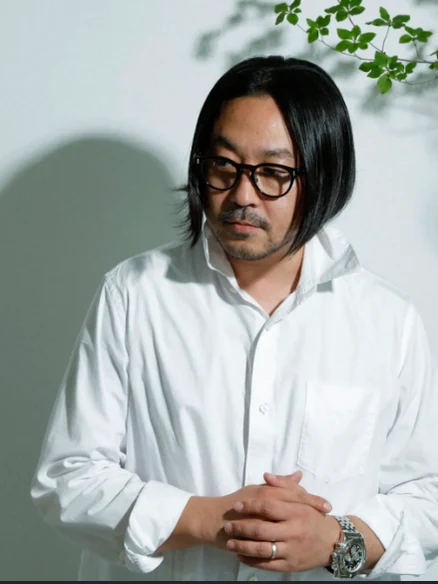
Japanese designer behind Comme des Garçons' GANRYU line and, since 2018, the independent label FUMITO GANRYU.
Fumito Ganryu has designed under two closely related names. GANRYU was his line within Comme des Garçons; FUMITO GANRYU, launched independently in 2018, is its successor rather than a separate designer or secondary project. For a buyer, the wording on the label establishes which business and period produced the garment before silhouette or collaboration details narrow it further. (Modescape; FUMITO GANRYU)
From Fukuoka to Bunka
Ganryu was born in Fukuoka in 1976. He studied fashion design first at Bunka Fashion College, graduating in 2000, and continued at the postgraduate Bunka Fashion Graduate University, from which he graduated in 2004. (FUMITO GANRYU; GSC Rinkan)
While enrolled at the graduate university, he entered the YKK Fastening Award, Japan's largest student fashion design competition, and won the Excellence Prize in its third competition, in 2003. His submission worked on the fastener itself rather than the garment around it, under the theme "機能美と美機能" (kinōbi to bikinō, functional beauty and beautiful function) — decorating and reshaping a zip or snap so that the fastening became the design feature, and the garment it closed could be altered simply by changing that piece. It is an early statement of a habit that runs through his later work: starting a garment's design from a single functional part rather than from silhouette. (GSC Rinkan; qui.)
Patternmaking under Junya Watanabe
Ganryu joined Comme des Garçons in 2004, going straight into the pattern room of Junya Watanabe's line as a patternmaker. Patternmaking is the stage between a sketch and a garment: the pattern is what decides how a flat piece of cloth becomes volume on a moving body, and a patternmaker working under a designer as exacting as Watanabe is absorbing construction logic at source rather than at a remove. (FUMITO GANRYU; Modescape)
He has said he thought hard about why the responsibility of a namesake line was later handed to him — "自分に任された理由をすごく考えた" — rather than treating the offer as simple reward. (Modescape)
GANRYU: pop, avant-garde, basic
Kawakubo made Ganryu the label's fourth designer-led line and, at the time, its youngest, inviting him to launch GANRYU within the Comme des Garçons group. The brand's own biography and a contemporary 2012 account of the label both date the launch to 2007; several later retrospective profiles instead give 2008. (FUMITO GANRYU; tenpomap; Modescape; GSC Rinkan)
Ganryu described the line's concept as "ポップと前衛とベーシック" — pop, avant-garde and basic — filtering Comme des Garçons' experimental register through a street- and rock-inflected sensibility that stayed, in his words, mostly beneath the surface: "芯はストリートではあるんですけど、それをアウトプットするわけではない" (the core is street, but that is not what gets put out directly). The recurring silhouette paired loose, dropped-crotch sarouel trousers with structured, cut-and-sew tops in contrasting fabrics, and the line became one of the few labels within the Comme des Garçons group to sell through its own online store. (GSC Rinkan; Modescape)
Naming a Comme des Garçons line after the designer who runs it, rather than giving it a generic or purely conceptual title, was already established practice inside the group — Junya Watanabe is the clearest precedent — and it carries a particular consequence for GANRYU: the label's identity and its designer's are inseparable in a way a house name is not. There is no version of the brand that could have continued under someone else once Ganryu left it.
In July 2013, GANRYU showed at VERSUS TOKYO, staged during Tokyo Fashion Week. Modescape describes it as the first time in fourteen years that a brand carrying the Comme des Garçons name had shown a collection in Tokyo. It was there that Ganryu first crossed paths with Osumi, the designer of PHENOMENON — a connection that would resurface more than a decade later. (Modescape; qui.)
The end of GANRYU and the start of FUMITO GANRYU
GANRYU's final collection was shown for Spring/Summer 2017; Fashion Press has separately reported Ganryu's departure from Comme des Garçons as coming in late 2016. Neither source gave a public reason for the line's closure. Ganryu has said that he initially considered moving into a business outside fashion altogether, before an unplanned opportunity brought him back. (Modescape; Fashion Press)
That opportunity was an invitation to Florence. In June 2018, as part of the Designers' Projects at Pitti Immagine Uomo, Ganryu presented his first collection as an independent designer — for Spring/Summer 2019 — under the label FUMITO GANRYU, describing it as clothing built around "the relationship between the body and clothing" and, on his own site, as conceptual wear for the 21st century. Working without Comme des Garçons' backing for the first time, he went on to show in Paris in the seasons that followed. (WWD Japan; FUMITO GANRYU; Fashion Press)
The debut collection kept the street- and casualwear-derived silhouettes of GANRYU but pushed them further from the body: extra-long hooded tunics that came up over the forehead, jackets closed with transparent belts, voluminous wrap-skirt-influenced trousers, and jogging bottoms shown with sandals to lighten the leg's silhouette against the volume above it. The palette moved from a neutral opening of white, black, navy and beige into vivid blue, red, yellow and green — a structure Ganryu has repeated in later seasons, using colour shift within one collection rather than between them. (Fashion Press)
Technical fabric, environmental thinking, collaboration
FUMITO GANRYU's silhouettes read as more minimal and mode-driven than GANRYU's, but the sarouel trouser survived the transition, now more often reworked in technical cloth than in the earlier line's cut-and-sew contrasts, updated season to season with crash- and repair-style surface treatments. Neoprene, rash-guard jersey and waterproofed fabrics recur, and Ganryu has spoken about wanting the clothes to give a wearer a route back into an environmentally conscious mindset, rather than simply substituting a recycled fabric for a virgin one — sustainability as an idea worked into the garment's function, not a swapped material claimed on a label. A recurring Mods Shirt, developed out of the pattern of an M-51 military field coat, and an oversized Duffel Coat shown for Autumn/Winter 2019 — a dolman-sleeved wool shell lined in mesh to keep an exaggerated silhouette light rather than heavy — show the same working method as the GANRYU-era pieces: take an existing, functional archetype and rebuild it from a single altered part outward. (Modescape)
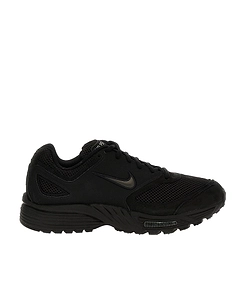
That same instinct for pairing unlike systems shaped a first collaboration with PHENOMENON, released in March 2024 as ten pieces split across a main line and a Red Label, built on PHENOMENON's tiger-camouflage print and worked into an M-51-derived coat, a field jacket and graphic hoodies. The project traced back directly to the two designers' meeting at VERSUS TOKYO in 2013, meaning a full decade separated the introduction from the collaboration it produced. FUMITO GANRYU has also worked with PUMA, including a second collaboration for Autumn/Winter 2025. (qui.; Instagram: @fumitoganryu)
Ganryu's own history with the YKK Fastening Award also came back around: in 2025, twenty-two years after his student win, YKK invited him to take part in a runway staged for the award's 25th anniversary alongside its judges and past winners — a rare instance of a design competition's own alumni record folding back into a designer's current commercial work. (YKK; qui.)
The 2026 Spring/Summer collection, "Adventure(r)" (冒険(家)), took quick-drying, amphibious fabric and structures drawn from towelling and mosquito netting and built them into ventilated, multi-pocketed pieces around the idea that "function should not remain merely functional; design should not remain merely design." It was shown as a pop-up presentation in Kita-Aoyama, Tokyo, in April 2026. The following season, "Suit(e)" for Autumn/Winter 2026–27, worked from the premise that clothing should respond to a wearer's mood and surroundings as much as to temperature, presenting pieces designed to be recombined by "your own free choices and stance" rather than issued as fixed, pre-matched outfits. (hpfrance; Fashion Headline)
Reading and dating a Ganryu garment
Start with the exact name on the tag:
- GANRYU was produced inside Comme des Garçons from 2007 to the final Spring/Summer 2017 collection. Some retrospective accounts give 2008 as the launch year, so the name establishes the era more securely than an exact first season.
- FUMITO GANRYU is the independent label launched in 2018 for Spring/Summer 2019. It carries no Comme des Garçons affiliation. (FUMITO GANRYU; Fashion Press)
Next, use a printed season name or collaboration partner. Titles such as Adventure(r) and Suit(e), PHENOMENON's tiger camouflage or PUMA branding can connect a piece to dated collection material. The dropped-crotch sarouel trouser appears across both labels and many seasons; it is characteristic, but not a date code. (hpfrance; Fashion Headline; qui.)
References
- Modescape. "GANRYUを率いたデザイナー「丸龍文人」とは?活動の痕跡を辿る." Modescape Magazine.
- GSC Rinkan. "丸龍文人によるブランド GANRYU(ガンリュウ)." GSC Rinkan.
- Pen Online. "次世代のコムデギャルソン、「ガンリュウ」に注目せよ!" Pen Online.
- WWD Japan. "「ガンリュウ」の丸龍文人カムバック!ギャルソンを離れ6月に再スタート." WWD Japan.
- Fashion Press. "元ガンリュウ丸龍文人の新ブランド「フミト ガンリュウ」." Fashion Press.
- FUMITO GANRYU. "Bio." fumitoganryu.jp. Accessed September 2026.
- qui. "YKKファスニングアワード 25周年記念スペシャルコレクション." qui.tokyo.
- qui. "FUMITO GANRYUとPHENOMENONの初となるコラボレーション." qui.tokyo, 2024.
- tenpomap. "コレクション:GANRYU." tenpomap, August 2012.
- hpfrance. "FUMITO GANRYU 2026年春夏コレクション「Adventure(r)/冒険(家)」." hpfrance resources, 2026.
- Fashion Headline. "FUMITO GANRYUが2026-27年秋冬コレクション「Suit(e)」を発表." Fashion Headline, 2026.
- Native name
- 丸龍文人
- Education
- Bunka Fashion College (2000)Bunka Fashion Graduate University (2004)
- Awards
- YKK Fastening Award, Excellence Prize, 3rd competition, 2003