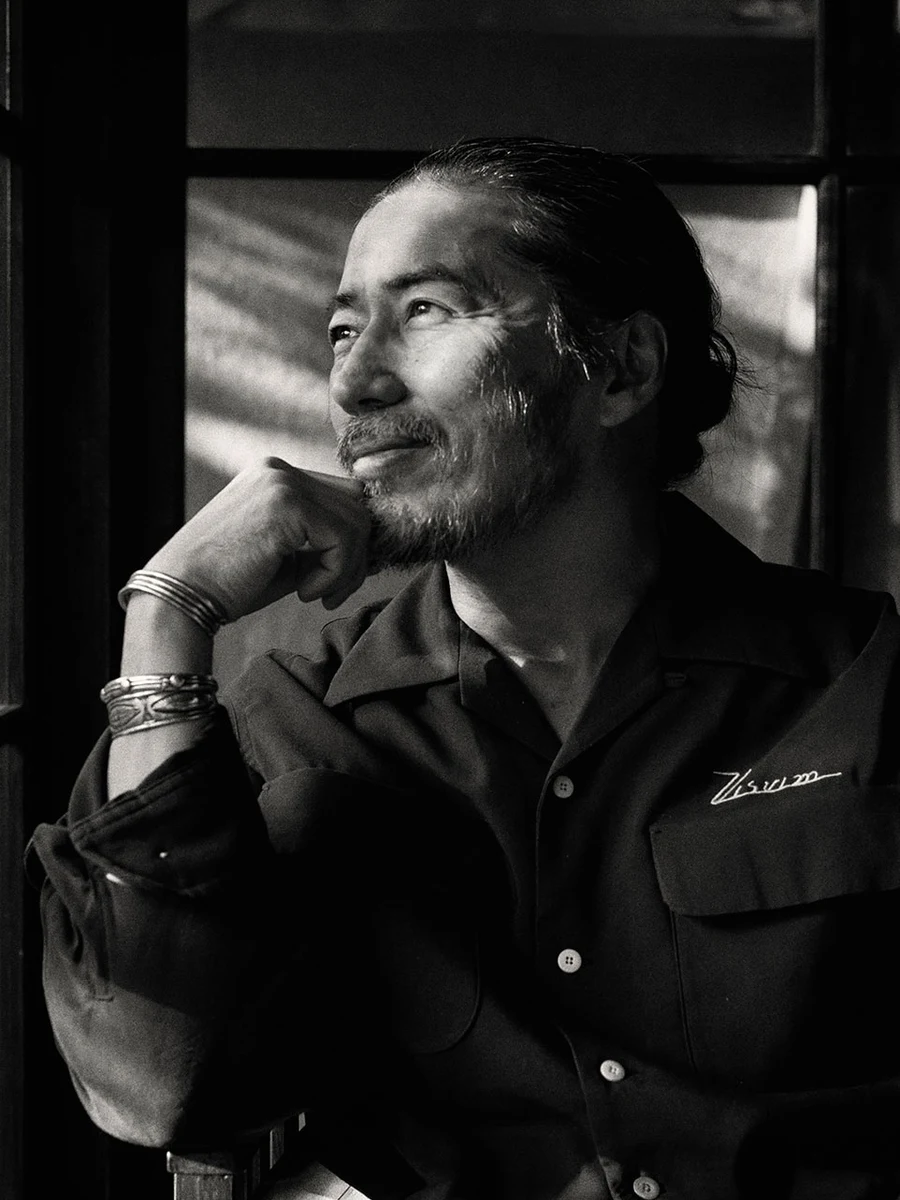
Hiroki Nakamura
Japanese founder and creative director of visvim, combining footwear engineering, textile research, natural dyeing and the pursuit of future vintage.
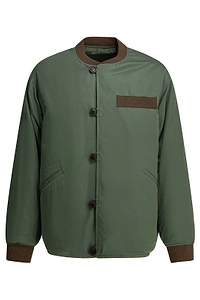
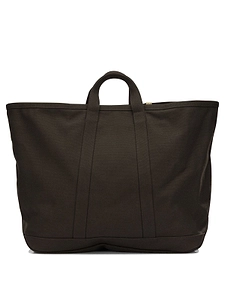
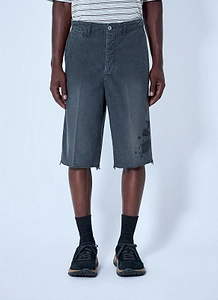
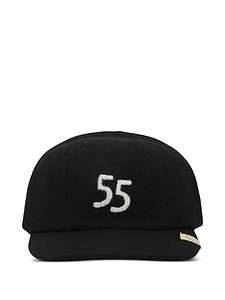
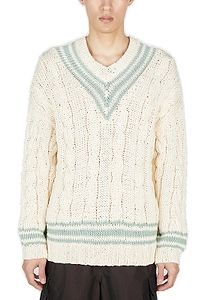
Hiroki Nakamura is the founder and creative director of visvim, a Japanese label built around a deceptively simple ambition: to make contemporary objects capable of becoming good vintage. Since 2000, he has combined sneaker engineering with moccasin construction, reconstructed denim from the yarn outward and used natural indigo, mud, cochineal and other unstable colour sources in products designed to change with their owners. The work looks towards the past, but reproduction is not its end. An old object is evidence from which a better present one might be developed. (The Fashion Post; Nikke 1896)
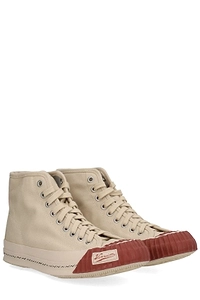
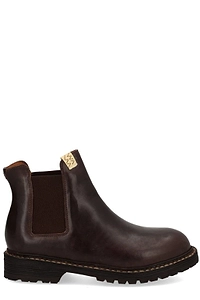
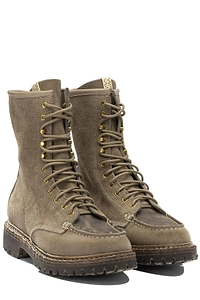
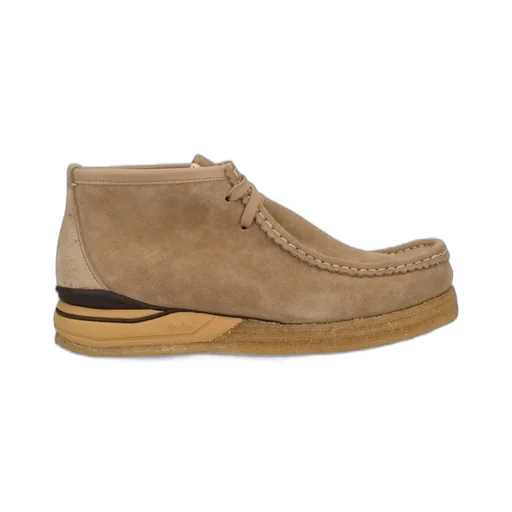
Visvim is sometimes compressed into “luxury Japanese Americana”. American workwear and outdoor clothing are central, but the phrase misses Nakamura's movement across Japanese, European, Chinese and Indigenous American material histories. It also misses the modern industrial parts hidden inside apparently old forms. A visvim shoe may use vegetable-tanned leather and hand sewing together with an EVA midsole and TPU heel stabiliser. The design proposition is not handcraft against technology; it is choosing the processes that produce comfort, character and long use. (visvim; GQ Japan)
From outdoor equipment to an independent experiment
Nakamura was born in 1971 and became absorbed by vintage clothing and outdoor equipment as a teenager. At seventeen he encountered a worn pair of Native American moccasins whose soft elk upper wrapped around the foot. He was drawn not only to their appearance but to the directness of their construction and the character acquired through use. Later work in sales and marketing at Burton Snowboards gave him experience with technical product, international distribution and the relationship between specialist equipment and everyday identity. (visvim; Fashion Headline)
He left Burton and established Cubism, the company behind visvim. Current Japanese interviews date the start of the brand to 2000, while several company and retail histories describe the first shoe collection as beginning in 2001. The discrepancy is best kept visible: 2000 marks the project and company narrative; 2001 is the commonly recorded market launch. What began with footwear expanded into clothing in the early 2000s, then bags, fragrance, shops, publishing and womenswear. (The Fashion Post; Isetan Mitsukoshi)
Nakamura took the collection to a Paris showroom in its third year after a visiting representative encouraged him. There was no instant international breakthrough. He describes a process of learning, returning and improving individual products over long periods rather than planning a rapid scale. This gradualism remains visible in styles that recur season after season with changes to sole units, fibres, dyes or balance. (The Fashion Post)
The FBT: an old upper and a modern ground
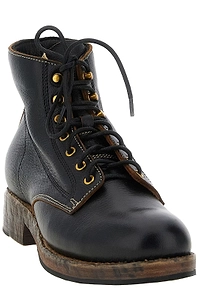
The FBT became the clearest early statement of the method. Its moccasin-inspired leather upper and removable fringed skirt sit on a trainer sole containing contemporary cushioning and stabilisation. Nakamura was responding to the adapted moccasin he wore at seventeen—already fitted with rubber for urban use—rather than claiming to reproduce a ceremonial or historical Indigenous object. The design nevertheless relies on a recognisable Native American form, and its history should be described specifically rather than dissolved into a vague language of “tribal” inspiration. (visvim)
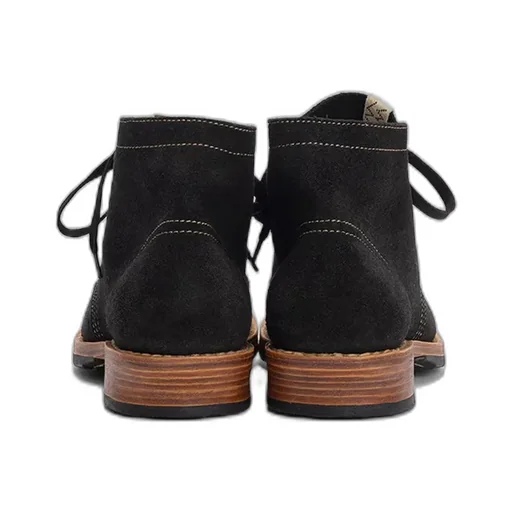
The silhouette has remained stable while its materials have changed. Natural-tanned uppers, cork footbeds that mould through wear, polyurethane midsoles and custom Vibram outsoles have appeared as Nakamura's team revised comfort and durability. This ongoing development is why a model name does not supply a date. An early FBT and a recent FBT may look closely related from above while differing substantially underfoot and inside. (visvim)
Social Sculpture and rebuilding cloth
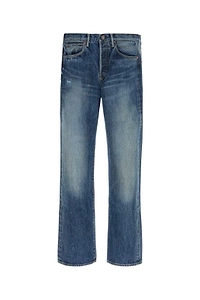
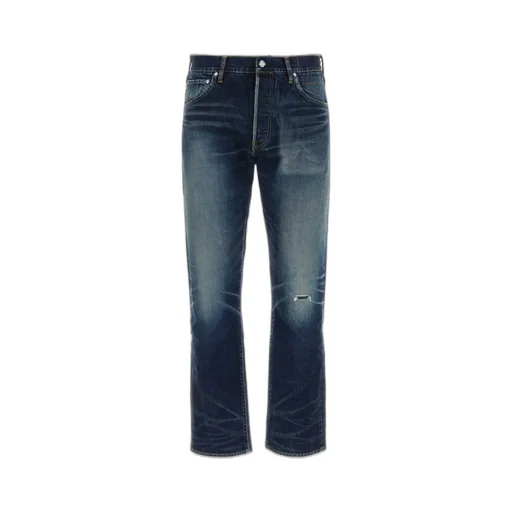
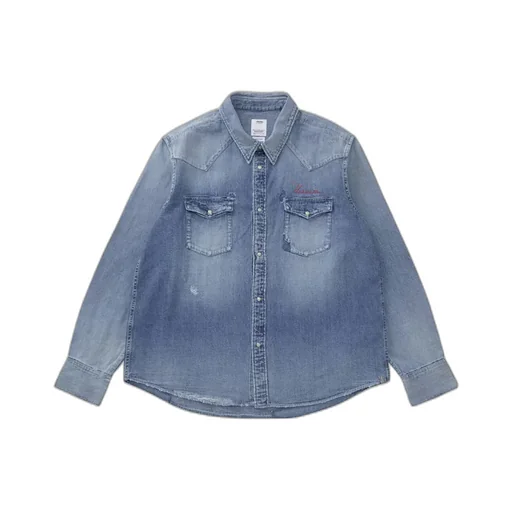
The denim programme Social Sculpture starts before a five-pocket pattern is cut. Nakamura's team develops yarn thickness, irregularity, cotton mixture, weave and finishing to create cloth with internal character rather than applying a vintage-looking wash to a generic base. The name refers to constructing the social life of an object as well as its material: manufacture gives the first form, but fading, repair and the wearer's habits continue the sculpture. (GQ; Nikke 1896)
That approach separates visvim from exact reproduction. Nakamura may place an inspirational vintage object beside a new product to make the comparison explicit, but he believes a maker must eventually overwrite the source. A successful 2026 garment should be capable of making a future viewer ask whether it is vintage—not because distressing disguises its age, but because its material and proportions remain persuasive after long use. (The Fashion Post)
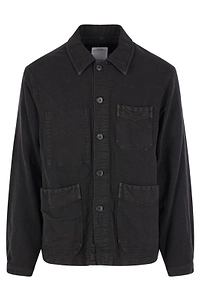
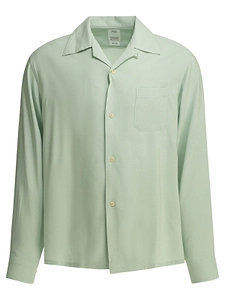
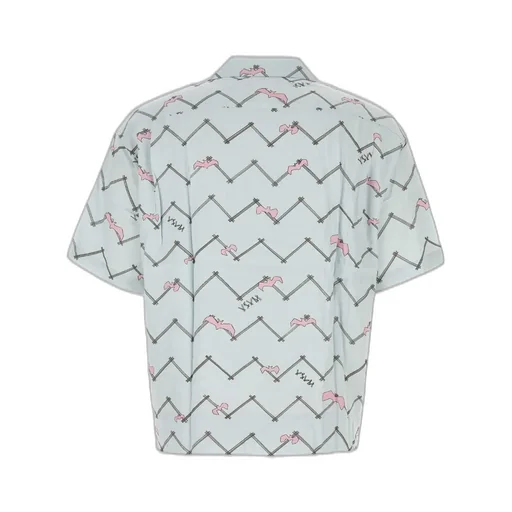
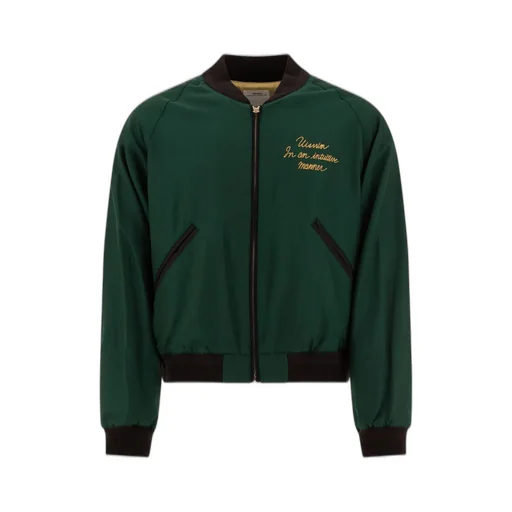
Cut and fibre therefore matter as much as surface ageing. A military jacket may be lighter than its source, a work shirt may use a rare long-staple cotton, and a synthetic shell may be processed to recover a dry, less industrial hand. At Pitti Uomo in 2016, Nakamura described American casualwear as one major influence among beautiful objects from Japan, Europe and elsewhere; the collection's identity comes from moving among them without treating one geography as pure. (GQ Japan; visvim)
Colour that is allowed to move
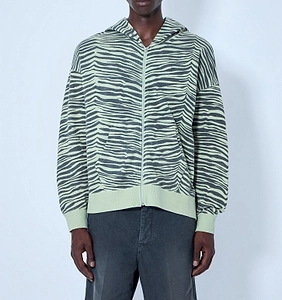
Natural dyeing gives visvim colour depth precisely because it resists perfect control. Synthetic dyes can make cloth reliably uniform and lightfast; plant, mineral, insect and mud processes introduce small differences and may fade. Industrial fashion usually treats those variations as defects. Nakamura treats them as a way for an object to disclose time and individual use, while working with specialist dyers to make the result viable as a contemporary product. (visvim; visvim)
In Amami Ōshima, visvim has worked for more than a decade with artisans using 泥染め (dorozome), the mud-dyeing method associated with Ōshima tsumugi. Cloth is repeatedly worked with plant tannin and iron-rich mud, producing a dark colour through their chemical reaction. Elsewhere the company uses natural indigo fermentation, stencil-resist 藍型 (aigata) and regional weaving such as Kurume kasuri. The collaboration can preserve knowledge by giving it unfamiliar applications, but visvim's own records name the workshops and explain the labour rather than presenting “Japanese craft” as an anonymous luxury effect. (visvim; visvim)
The expense follows from that experimentation: small quantities, custom textile development, hand processes and failed trials cannot be priced like standard mass production. Nakamura does not argue that cost automatically proves quality. His proposition is that one object used for years can offer a different value from several quickly replaced ones, and that endangered skills survive only when people are paid to practise them. The buyer still has to judge whether a particular garment fulfils that promise. (GQ; The Fashion Post)
A label, a womenswear project and a place
Visvim grew beyond a men's footwear brand without making every project identical. WMV, introduced for Autumn/Winter 2013, is a womenswear collection developed with Nakamura's wife, Kelsi. Indigo Camping Trailer, often abbreviated ICT, concentrates especially labour-intensive indigo, damage and hand-finishing processes. F.I.L., or Free International Laboratory, is the retail identity rather than a designer line. Moncler V, which Nakamura designed around 2010, was an external collaboration and should be catalogued under Moncler rather than visvim. (Isetan Mitsukoshi; GQ)
Shops have become part of the same authorship. Nakamura designed the current Nakameguro general store and gallery using a garden, tin fittings, stencil-dyed doors and other commissioned craft. In a 2026 interview he connected this spatial work to the increasing clarity of the clothes: collection, repair, coffee, publishing and architecture form one environment for considering how objects are made and kept. (visvim; The Fashion Post)
What he worries about now is continuity of production rather than novelty for its own sake. Workshops close, ageing specialists retire and a technique can disappear even while demand for its visual effect grows. Nakamura's answer is repeated work: visvim has used Amami mud dyeing for roughly fifteen years, giving artisans a continuing problem to solve and introducing the process to customers outside its original textile context. Preservation here is not freezing a method; it is creating enough meaningful use for another generation to practise it. (The Fashion Post)
Reading and dating visvim
First separate visvim, WMV, ICT products and collaborations. A “Folk” suffix usually identifies footwear developed through the brand's craft-oriented construction vocabulary, but it does not identify one season. Social Sculpture identifies a denim programme, not a single fit or wash. Product names such as FBT, Skagway, Christo and Kerchief recur for years, so title recognition is only the beginning. (visvim; visvim)
Photograph the full care label, model code, size, composition and country of manufacture. Visvim production is international: Japanese direction can coexist with specialised work in China, Italy or elsewhere, and “made in Japan” should never be inferred from the brand name. Natural dyeing and hand-finishing can create legitimate variation, but seller claims about rarity or one-of-one treatment still require model and release evidence. Dating a repeating style means matching its code, exact material and colour to a seasonal catalogue—not judging how convincingly old it appears. (visvim; GQ)
References
- Hiroaki Nagahata. “感じることが仕事。visvim・中村ヒロキが手放したくない感覚.” The Fashion Post, 9 April 2026.
- visvim. “FBT.” Dissertation, 12 August 2014.
- visvim. “Natural-Dyeing / 天然染色.” Dissertation, 26 August 2026.
- visvim. “Doro-Zome / 泥染め.” Dissertation, accessed September 2026.
- visvim. “VISVIM GENERAL STORE / VISVIM GALLERY.” Dissertation, 25 October 2022.
- Nikke 1896. “ビジネスパーソンインタビュー vol.04.” 1 April 2019.
- Kaijiro Masuda. “軽やかにマニアックに世界を魅了したビズビム.” GQ Japan, 21 June 2016.
- Fashion Headline. “『visvim』デザイナー・中村ヒロキ—ブランドを通して世界とコミュニケーション.” 2013.
- Isetan Mitsukoshi. “visvim Handwork Project.” 2016.
- Jian DeLeon. “Visvim's Hiroki Nakamura on the Price of His Clothes and ‘Future Vintage’.” GQ, 5 September 2013.
- Native name
- 中村ヒロキ