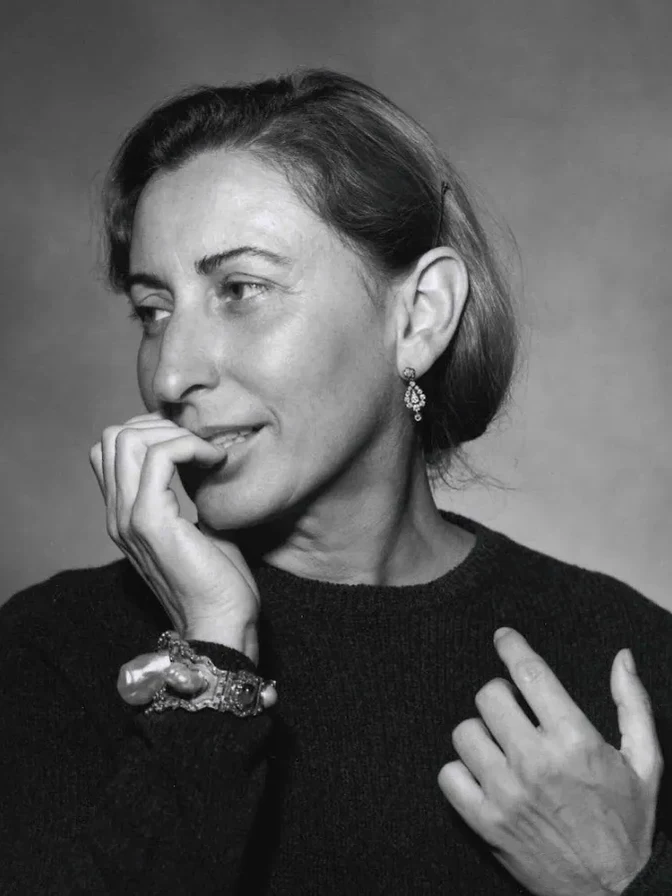
Miuccia Prada
Italian designer who transformed Prada through nylon and 'ugly chic'; Prada co-creative director and founder and creative director of Miu Miu.
Miuccia Prada is co-creative director of Prada with Raf Simons and the sole creative author of Miu Miu. The arrangement is easy to blur: Simons joined Prada with equal responsibility in April 2020, but his appointment does not extend to Miu Miu. Miuccia continues to direct that house herself while serving as an executive director of the family group and president of Fondazione Prada. (Prada; Prada Group; Prada Group Journal)
Her work has been unusually influential because it makes contradiction productive. Prada can be bourgeois and subversive, deliberately plain and extremely expensive, intellectual and desirous. Miuccia rarely resolves those tensions into a reassuring message. She puts the difficult thing—a synthetic fabric, a queasy colour, an awkward skirt length, an unfashionable social type—at the centre and waits for the viewer's taste to move.
Maria Bianchi becomes Miuccia Prada
She was born Maria Bianchi in Milan in 1949. Her maternal grandfather Mario Prada had opened Fratelli Prada, a leather-goods and travel shop in the Galleria Vittorio Emanuele II, in 1913. Miuccia later took the Prada surname after being legally adopted by an unmarried maternal aunt, joining her public identity to the family company she would transform. (Vogue Japan; Prada Group history)
Her route to fashion was anything but vocational. She earned a doctorate in political science at the University of Milan, trained in mime at the Piccolo Teatro and participated in the Italian Communist Party and the women's movement. She has recalled attending demonstrations in Yves Saint Laurent rather than the jeans favoured by other activists. The apparent inconsistency—left-wing feminist politics alongside a love of beautiful, costly objects—became less an obstacle to her work than its governing question. (British Vogue; Vogue Japan)
Miuccia entered the family business and took it over from her mother in 1978. That year she met Patrizio Bertelli, who ran a competing leather-goods manufacturer; the often-told story has them meeting when she confronted him about copies of Prada bags. They became business partners and married in 1987. Bertelli supplied industrial discipline and an appetite for expansion, while Miuccia supplied the restless aesthetic argument. Their disagreements became part of the company's method. (Vogue Japan; Prada Group Journal)
Nylon against the idea of luxury
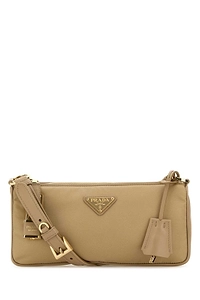
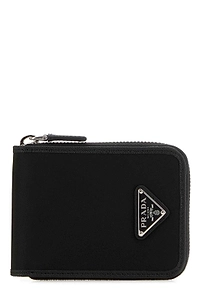
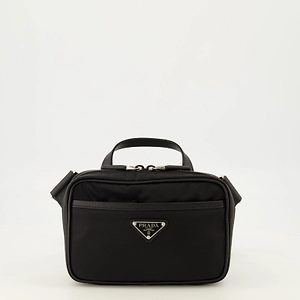
The object that first expressed her Prada was the Vela backpack, produced for Fall 1984–85 and refined into its familiar two-pocket form by 1987. Its material was Pocono, a fine, durable black nylon related to the industrial fabric used for protective travel covers. At a house known for leather luggage, nylon appeared anonymous, practical and insufficiently precious. The early bag sold slowly; its eventual success came from precisely that refusal to perform luxury in the expected way. (Prada Group; Prada social-responsibility report)
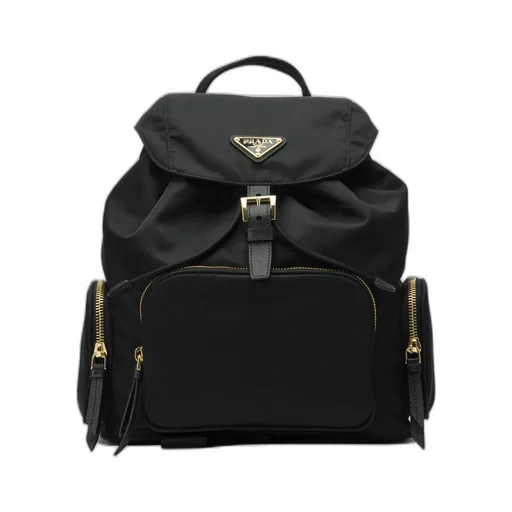
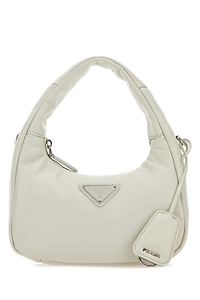
The nylon backpack established a method Miuccia would repeat. She does not merely elevate a humble material; she allows the humble material to expose how unstable “luxury” is. Nylon moved into Prada ready-to-wear in the 1990s and became dresses, rainwear, tailoring and sportswear. The triangular metal badge, inherited from the luggage business, gained more force against the blank industrial surface than it would have on ornate leather. Later Re-Nylon versions changed the fibre supply, but the conceptual contrast remained. (Prada Group)
Prada's first women's ready-to-wear collection appeared in 1988, followed by menswear in 1993. The clothes initially looked restrained beside the theatricality of late-1980s fashion: narrow colour ranges, uniforms, simple knits and skirts that declined to flatter in an obvious way. Miuccia was not trained to draw or cut patterns in the conventional designer's route. She worked by testing what she wanted—or felt uneasy about wanting—and by arguing those ideas through a skilled studio. (Vogue Japan; Prada Group Journal)
“Ugly chic” and the education of taste
Spring 1996, titled Banal Eccentricity, became known as the “ugly chic” collection. Its murky avocado, mustard, brown and purple palette recalled 1970s upholstery and kitchen appliances; geometric prints, thick sandals, prim collars and knee-length skirts assembled the details of bad middle-class taste. Yet the fabrics, proportions and styling made the result newly compelling. The collection did not announce that ugliness was secretly beautiful. It demonstrated that taste is learned, social and therefore capable of change. (Vogue archive; Vogue Runway)
That practice distinguishes Miuccia's work from simple minimalism. A Prada collection may include austere grey tailoring, but it may also contain bananas, hot-rod flames, chandelier crystals, comic-strip women, Frankenstein imagery or deliberately artificial fur. Spring 2011's striped dresses, baroque scrolls, platform brogues and bananas are now instantly recognisable because their collision was so unlikely. She makes the viewer negotiate between seriousness and absurdity rather than settle into one house look. (Interview; Prada Group Journal)
The same intelligence entered store design and cultural patronage. Fondazione Prada began in 1993 and developed exhibition spaces in Milan and Venice; architects including Rem Koolhaas and Herzog & de Meuron designed Prada “Epicenter” stores. Art is not pasted onto the clothes as borrowed prestige. Exhibitions, cinema, architecture and fashion form parallel places where the group can test how people look, gather and assign value. (Prada Group history; Vogue Japan)
Miu Miu: not a diffusion line
Miuccia founded Miu Miu in 1993, naming it after her family nickname. Calling it merely Prada's younger or cheaper line misses its independent purpose. The brand gives freer expression to the unstable roles of femininity: schoolgirl, grande dame, athlete, secretary, starlet and runaway can coexist in one look. A cardigan may be shrunken, a skirt cut so low that its lining becomes visible, or lingerie treated as ordinary daywear. (Prada Group; Associated Press)
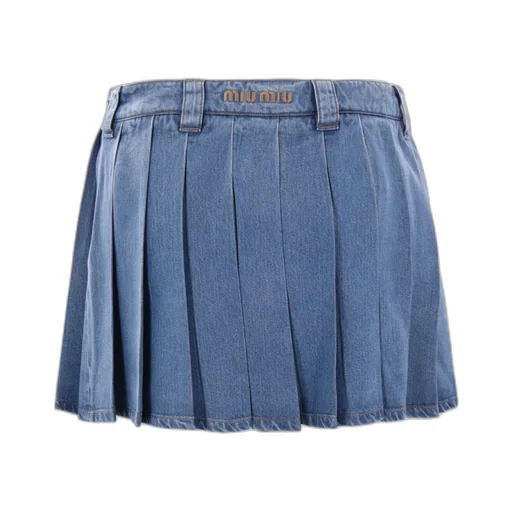
The Spring 2022 Miu Miu collection made that method a global image. Raw-cut pleated miniskirts sat extremely low on the hip beneath abbreviated sweaters and shirts, exposing the construction and the body normally covered by a conventional uniform. The look was repeated in editorials and on red carpets until it became shorthand for fashion's early-2020s return to Y2K proportions. Its importance lies less in “bringing back the miniskirt” than in taking a sober school or office uniform and making its supposedly proper proportions collapse. (Vogue Japan; Vogue Business)
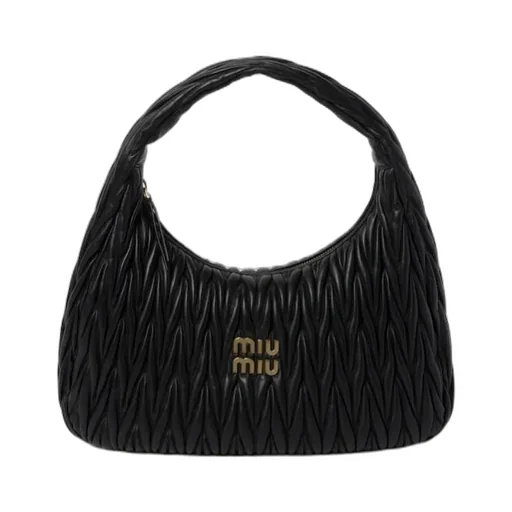
Miu Miu remains Miuccia's sole directorship as of September 2026. Its continued prominence is not evidence that she has ceded Prada to Simons; it shows why the distinction between the two roles matters. At Miu Miu she can follow a more personal, impulsive line, while Prada is now an explicit dialogue. (Prada Group; Miu Miu Spring 2026 campaign credits)
Prada with Raf Simons, 2020–present
On 23 February 2020, Prada announced that Raf Simons would join Miuccia as co-creative director from 2 April, with equal input and decision-making across every creative aspect of the Prada label. Their first joint collection was Spring 2021 womenswear, shown digitally that September. It was not a succession announcement and Miuccia did not retire. The unusual structure made disagreement between two established authors the premise of the job. (Prada; Prada Group press release)
Their shared Prada has returned repeatedly to uniform, protection and the signs people use to recognise one another. Simons's interest in youth, graphic communication and exact menswear meets Miuccia's suspicion of good taste and fascination with social roles. Garments may look inherited or already worn; collars hold themselves up with wire, false belts are built into trousers, and fragments of evening dress interrupt plain workwear. The useful reading is not to guess which designer drew which look, but to notice where one person's certainty has been complicated by the other. (Associated Press; Prada Group Journal)
Reading and dating the work
For attribution, Prada before Spring 2021 belongs to Miuccia's sole creative period even if an item remained in shops after Simons arrived. Spring 2021 onward is co-authored and should be credited to both designers. Miu Miu remains Miuccia's work; attaching Simons's name to it is incorrect. Because staple nylon bags and shoes recur for decades, a model family alone cannot establish a season. Product codes, care labels and hardware changes provide the better dating evidence.
Miuccia Prada changed fashion not by supplying a stable definition of beauty but by keeping that definition under pressure. Nylon could become precious, brown could be provocative, a conservative skirt could become strange, and a family leather shop could support a contemporary-art institution. The consistency is not visual. It is the decision to distrust the obvious answer.
References
- Wendell Steavenson. “成功に関心はない。志を持ち、いい人でありたい.” Vogue Japan, 15 February 2024.
- Prada Group Journal. “Miuccia Prada, Patrizio Bertelli, Raf Simons and Lorenzo Bertelli.” Issue 118, 2025.
- Suzy Menkes. “Miuccia Prada on reinventing luxury and the power of creativity.” British Vogue, March 2018.
- Prada Group. “The History of the Prada Group.” Accessed September 2026.
- Prada Group. “The Choice of Nylon by Miuccia Prada.” Accessed September 2026.
- Prada Group. Social Responsibility Report 2015. 2016.
- Vogue. “1,000 Looks From Prada's '90s Spring Shows.” 2016.
- Laird Borrelli-Persson. “Prada Spring 1996 Ready-to-Wear.” Vogue Runway, archive review.
- Christopher Bollen. “Miuccia Prada.” Interview, 29 February 2012.
- Prada Group. “Miu Miu.” Current brand profile.
- Associated Press. “Miu Miu stays steady at Paris Fashion Week.” 6 October 2025.
- Liam Freeman. “ミュウミュウ、圧倒的なミニ丈でベーシックを再解釈.” Vogue Japan, 6 October 2021.
- Lucy Maguire. “Explained: The Miu Miu frenzy and the business of viral.” Vogue Business, 30 March 2022.
- Prada. “Prada announces co-creative directors.” 23 February 2020.
- Prada Group. “Prada announces co-creative directors.” 23 February 2020.
- Associated Press. “Prada projects youthful optimism, not escapism.” 22 February 2024.
- Born
- May 10, 1949
- Education
- University of Milan, Doctorate in political science
- Awards
- Knight Grand Cross of the Order of Merit of the Italian Republic