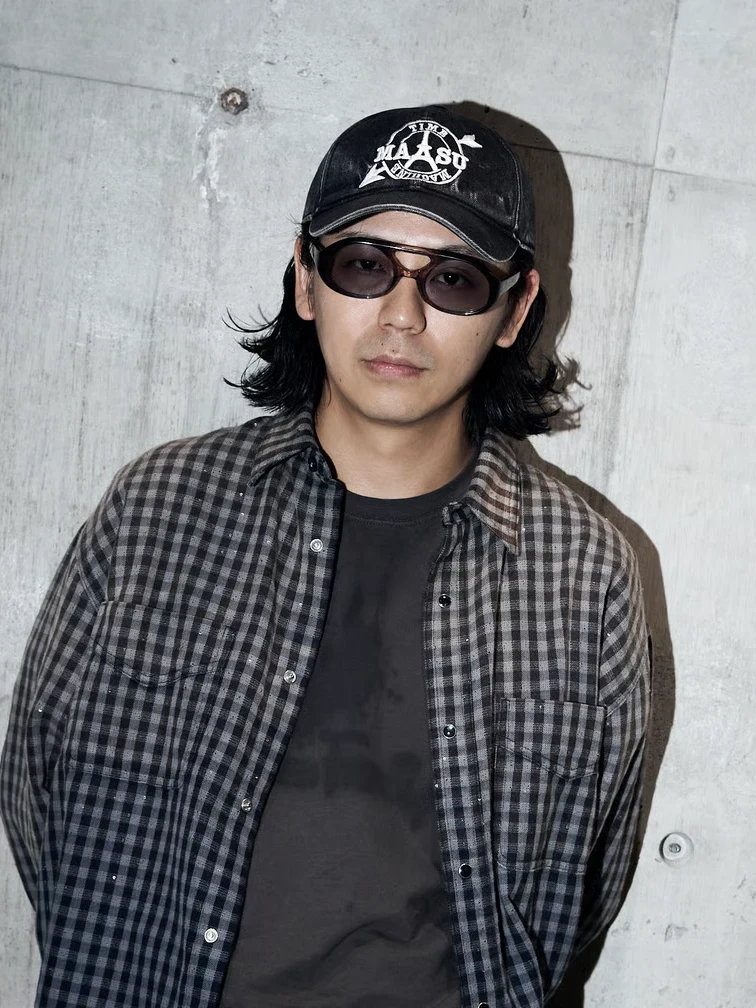
Shinpei Goto
Japanese designer who has led the Tokyo menswear label M A S U since its 2018 rebrand and took it to Paris on the sixth Fashion Prize of Tokyo.
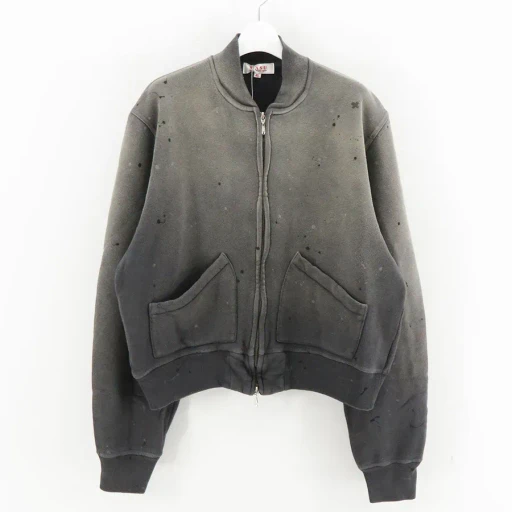
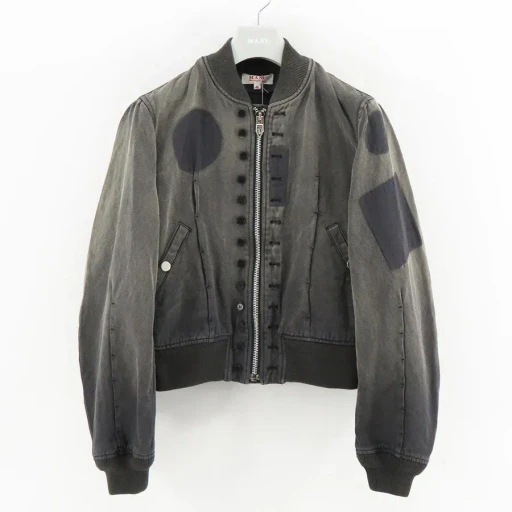
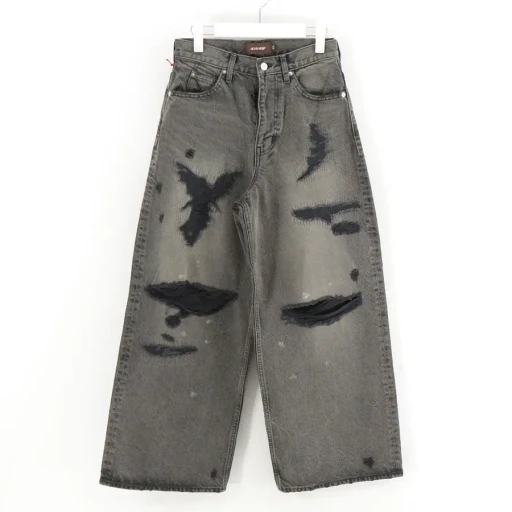
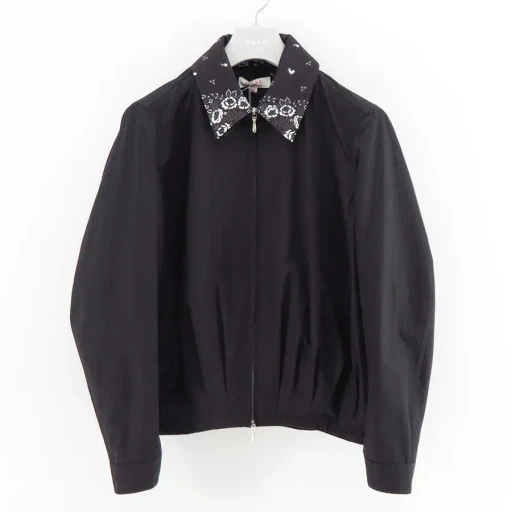
Shinpei Goto is the designer of M A S U, the Tokyo menswear label whose crystal-set denim, angel graphics and wide, high-waisted trousers made it the most closely watched young Japanese brand of the early 2020s. He is routinely described as its founder, and he is not. The label was launched as masu for Spring/Summer 2017 by SOHKI, a Tokyo company whose business was OEM manufacturing and brand operation; Goto joined for the Autumn/Winter 2018-19 season, at twenty-five, and rebranded it into the spaced capitals it carries today. (WWDJAPAN; Fashion Press)
Two small facts are worth fixing before anything else. His given name is written 愼平, with the older variant of the character, not the commoner 慎平 that circulates in English and Japanese listings alike — and he is no relation to 後藤新平, the Meiji-era statesman whose identically-pronounced name dominates any search. The brand's own founding year is also unsettled: Rakuten Fashion Week Tokyo's brand record gives 2016, while the trade press and Fashion Press date the label to the Spring/Summer 2017 season. The 2016 figure most likely records the company's registration rather than the first collection. (Rakuten Fashion Week Tokyo; Fashion Press)
From Aichi to a vintage shop floor
Goto was born in Aichi Prefecture in 1992 and graduated from Bunka Fashion College in Tokyo. He has said his first contact with clothes was his grandmother's wardrobe, and that he was altering garments by middle school; the deeper formation came from Japanese men's magazines and American casual wear, which sent him towards Red Wing boots, Goro's silverwork and eventually to making leather pieces himself. (Honeyee; WWDJAPAN)
He did not go from college into a design studio. He went to LAILA, a Tokyo vintage dealer, where he worked on in-house product and remakes and developed a specific enthusiasm for 1970s craft leather — the Californian label East West above all. He was subsequently involved with SEVEN BY SEVEN, the house's own brand, on planning and production management. Sources split the years differently: a 2021 WWDJAPAN profile gives roughly one year in the shop followed by four on SEVEN BY SEVEN, while later capsule biographies compress the whole period into "four years at LAILA". The sequence is agreed; the arithmetic is not. (WWDJAPAN; Honeyee; QUI)
That apprenticeship explains an unusual balance. Goto arrived at M A S U already fluent in old garments and in the factory-facing work of getting new ones made in quantity — planning, sourcing, production management — rather than in runway presentation. The brand's stated concept is a manufacturing idea rather than a poetic one: MASU / PRODUCT, which the label glosses as "new mass-produced goods born from redefining elements that carry a clear fixed concept". The name itself comes from the Japanese polite verb ending 〜ます (-masu) — the suffix on arigatō gozaimasu — chosen because it is used so constantly that nobody notices it and yet never loses its value. (MASU; WWDJAPAN)
Fixed forms, taken apart
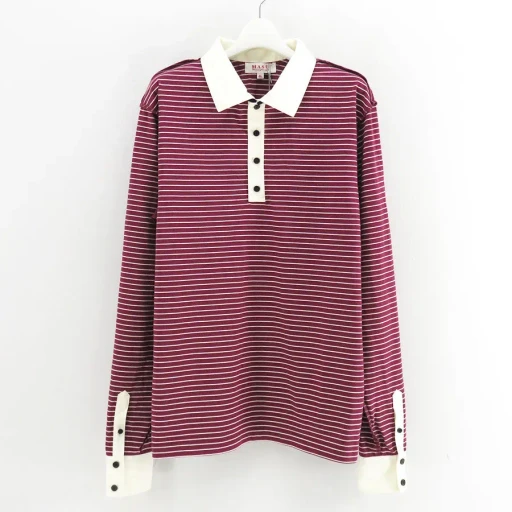
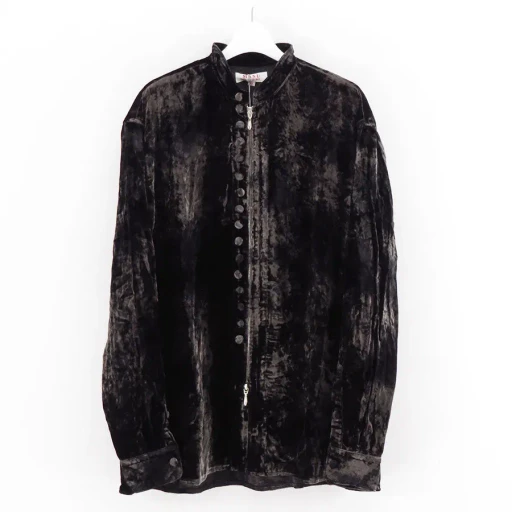
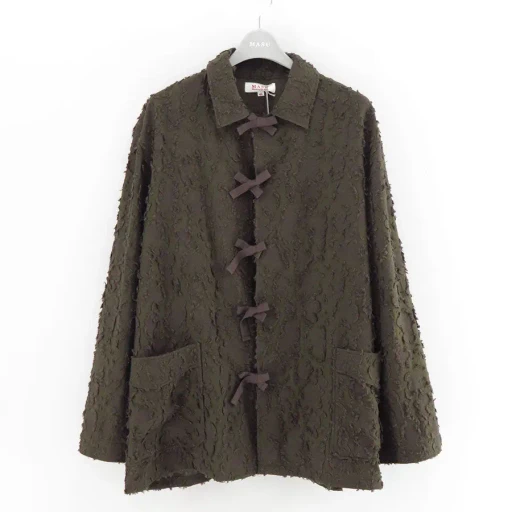
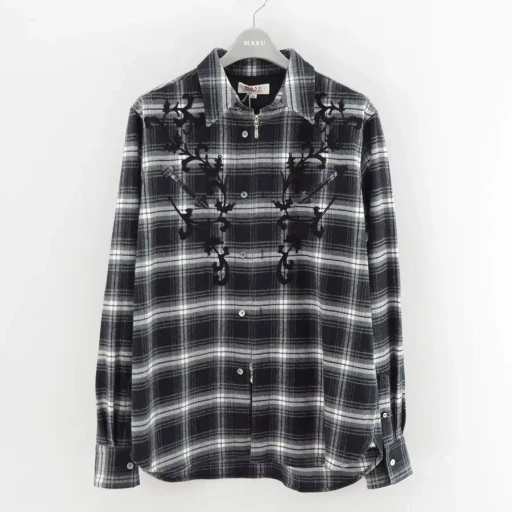
The working method follows from the concept. Goto starts from a garment type with a settled shape — a western shirt, a pair of five-pocket jeans, a track top, a military pyjama — and changes one variable far enough that the type is still legible but no longer settled. A cashmere sweater is dismantled; Bulgarian army pyjamas reappear in lace; a check is distorted until the grid buckles. He has summarised the target as 見たことあるけど、見たことないもの — something you have seen before and have never seen. (Honeyee; QUI)
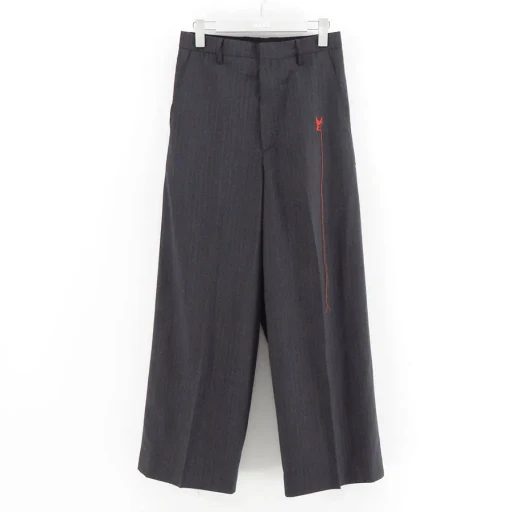
The reference pool is American casual wear, or アメカジ (amekaji), the Japanese term for the domestic tradition of collecting and reconstructing US workwear and sportswear. Goto's relationship with it is combative. The Autumn/Winter 2022-23 collection bet my boots was explicitly an attempt to break amekaji's fixed ideas rather than to honour them, and he has criticised collectors who value a garment's provenance above how it is actually made. The proportions are not American either: he builds high-waisted, wide-legged trousers he traces to kimono cutting, against a European silhouette organised from the head down. (QUI; Fashionsnap)
When M A S U first drew attention, in 2018, the trade press could only place it negatively. Fashionsnap's headline described a brand proposing "something that is not streetwear" — accurate at a moment when Tokyo menswear was largely graphic-led street product, and a useful reminder that the label's vintage-derived tailoring read as contrarian before it read as inevitable. (Fashionsnap)
Graphics that mean what they say
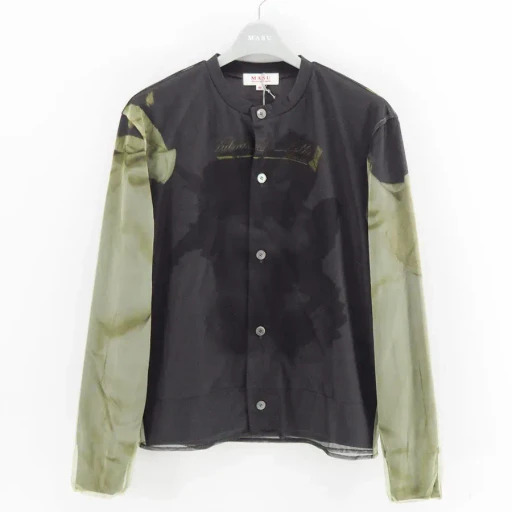
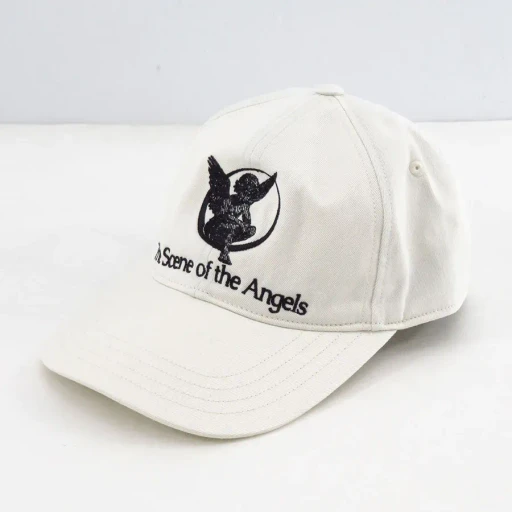
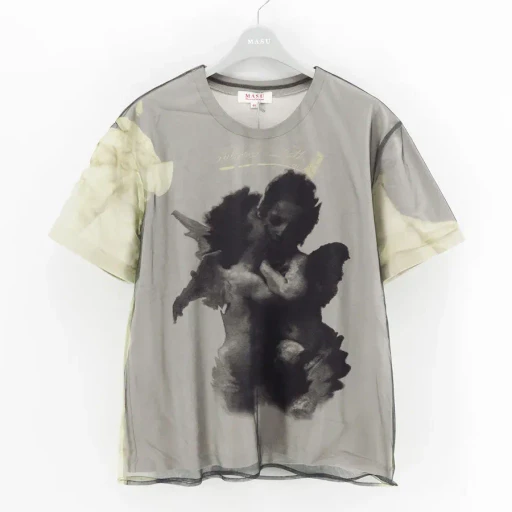
The element that makes M A S U identifiable at a distance is its literalism about decoration. Where most brands abstract a motif, Goto tends to put the thing itself on the garment and let the sentiment stand undisguised: angels, bats, spiders' webs, crystals. Swarovski stones are set into denim rather than onto eveningwear; floral linings are placed where nobody but the wearer will see them. He has described the audience he designs for as 優しい人たち — gentle people — sentimental enough to care about a lining they cannot show anyone. (Honeyee; WWDJAPAN)
The Paris debut made the method explicit. Goto built the Autumn/Winter 2024-25 collection around working alone late at night, and around finding something bright in a dark hour — rain caught on a spider's web. Bat motifs, web graphics, studs and rhinestones ran through the show and grew progressively more reflective as it went on, so the clothes literally brightened towards the finish. The figure he named for it was a gentle dark hero. (WWDJAPAN)
The same habit carries into collaboration. For the brand's first project with Puma, released in October 2025, the Palermo Bless sneaker carried angel icons standing in for mud splashes — dirt recast as individuality — and the accompanying T7 track top and trousers had the sportswear house's signature stripe redrawn to widen towards the hem instead of tapering. Three pieces, one idea per piece. (WWDJAPAN)
Paris, and the prize that paid for it
M A S U's first runway show came in the Autumn/Winter 2021-22 season. Two years later, on 25 August 2023, Goto was named the sixth recipient of the FASHION PRIZE OF TOKYO, the award co-organised by the Tokyo Metropolitan Government and the Japan Fashion Week Organization that selects one Tokyo-based designer a year and funds a Paris show. (WWDJAPAN; Fashionsnap)
The prize is frequently cited as the "Fashion Prize of Tokyo 2023", and that is wrong in a way worth stating plainly: editions are named for the year in which the funded Paris seasons fall, not the year of the announcement. The award made in August 2023 was FASHION PRIZE OF TOKYO 2024, and it paid for two Paris presentations across 2024 plus a homecoming event at Rakuten Fashion Week Tokyo that March. The organiser's own winners table lists it under 2024, between tomokoizumi in 2023 and ssstein in 2025. (FASHION PRIZE OF TOKYO; Fashion Press)
The debut itself took place on 17 January 2024, at seven in the evening, off the official calendar — a slot that WWDJAPAN expected to go half empty and which filled. Mame Kurogouchi and Auralee had reached Paris through the same scheme. (WWDJAPAN; WWDJAPAN)
A readership, not a market
What distinguishes M A S U commercially is the intensity of its following. MASU BOYS LAND, a fan event held at Shinkiba in late 2025, drew roughly a thousand people who queued in the cold for a photograph with the designer — a scale of devotion WWDJAPAN treated as genuinely rare for a contemporary Japanese label. The brand sells through a small stockist list including Isetan Shinjuku Men's, International Gallery Beams, Midwest and Studious. (WWDJAPAN)
Goto is openly uneasy about the mechanism that produced that heat. He has described the industry as a 狂ったファッションサイクル — a deranged fashion cycle — in which new product appears daily, is worn by a celebrity and is consumed at abnormal speed. His stated response was structural rather than rhetorical: he treated Autumn/Winter 2025-26 as a deliberate crouch, revisiting the brand's own signatures, before rebuilding for Spring/Summer 2026 around process and visible irregularity, including deliberately slubby yarns. He names three things he wants in a garment — a reading of the era, quality, and humour. As of September 2026 he remains M A S U's designer. (Fashionsnap)
Reading and dating M A S U
The single most useful dating signal is the name. Product from Spring/Summer 2017 and Spring/Summer 2018 carries the lowercase masu identity and is not Goto's work; the spaced M A S U wordmark begins with Autumn/Winter 2018-19 and is. A listing that offers "early masu" with the modern wordmark has the chronology wrong, and one that credits Goto with the 2017 debut is crediting him with somebody else's collection. (Fashion Press; WWDJAPAN)
MASUBOYS is a separate category within the brand's own retail structure rather than a season or a diffusion label, so a MASUBOYS piece is not evidence of a different production tier. Collaborative product is co-branded and should be read as such: the Puma capsule is dated by its October 2025 release, not by the season of the mainline collection it sits beside. (MASU; WWDJAPAN)
Do not date a garment from its decoration. Crystal-set denim, angel iconography and stud work are continuing signatures, not markers of one collection; they appear across the Paris seasons and in the Puma project alike, and the brand returns to its own motifs deliberately. Establishing a season still requires matching the model against collection imagery. Retail delivery also outlives a season, so a piece bought in 2019 may have been designed in 2018 — a date on a receipt is not a date on a collection. (WWDJAPAN; Fashionsnap)
References
- Yukari Mihara. 「若手筆頭株「M A S U」 世界を見据えた28歳デザイナーの挑戦」 WWDJAPAN, 18 February 2021.
- 「M A S U」パリコレへ 後藤愼平デザイナーが「ファッション プライズ オブ トウキョウ」受賞」 WWDJAPAN, 25 August 2023.
- 「M A S U後藤愼平がFASHION PRIZE OF TOKYO受賞 「新しい存在に」」 Fashionsnap, 25 August 2023.
- 「「M A S U」パリ初陣で輝く 予想を裏切る"キラキラ"の一夜【2024-25年秋冬メンズコレまとめ】」 WWDJAPAN, 23 January 2024.
- 「「M A S U」らしい「プーマ」の独自解釈 初コラボの3型を10月に発売」 WWDJAPAN, 5 March 2025.
- 「3度目の正直で「ヨーク」寺田典夫が栄冠 「ファッション プライズ オブ トウキョウ 2026」」 WWDJAPAN, 2 September 2025.
- 「「M A S U」、ファンイベントには約1000人が来場【独自性が生む、熱いブランドコミュニティー】」 WWDJAPAN, 23 January 2026.
- 「"ストリートではない何か"を提案、新進ブランド「M A S U」が好調」 Fashionsnap, 2 October 2018.
- 「【インタビュー】MASU後藤愼平、"狂ったファッションサイクル"の先へ」 Fashionsnap.
- 「インタビュー:M A S U デザイナー 後藤愼平」 Honeyee.
- 「アメカジへの憧れと破壊 ー MASU 後藤愼平インタビュー」 QUI.
- 「エムエーエスユー:M A S U」 Fashion Press. Accessed 11 September 2026.
- 「WINNERS / 受賞デザイナー」 FASHION PRIZE OF TOKYO, Tokyo Metropolitan Government and Japan Fashion Week Organization. Accessed 11 September 2026.
- 「About Us」 MASU Official Online Store. Accessed 11 September 2026.
- 「M A S U エムエーエスユー」 Rakuten Fashion Week Tokyo. Accessed 11 September 2026.
- Native name
- 後藤愼平
- Also known as
- Shimpei Goto後藤慎平
- Education
- Bunka Fashion College
- Awards
- FASHION PRIZE OF TOKYO 2024