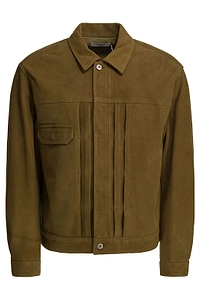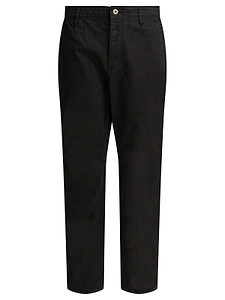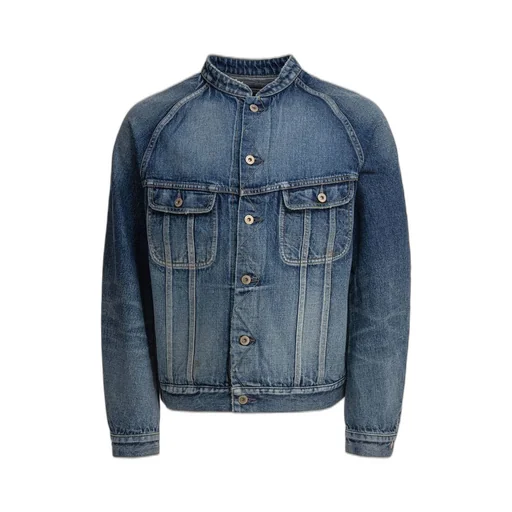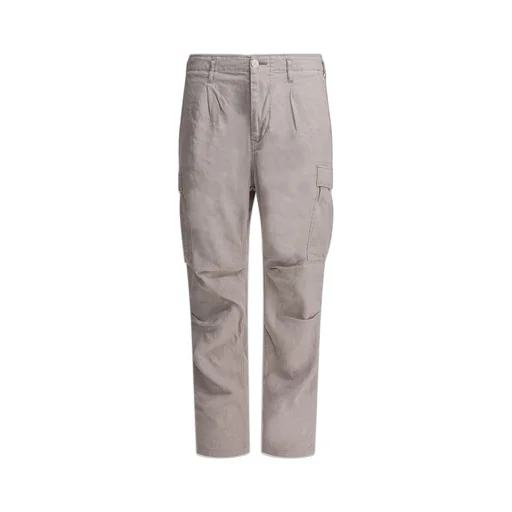
Takayuki Fujii
Japanese designer of the Tokyo label nonnative since 2001, rebuilding work, military and outdoor standards as city clothing.
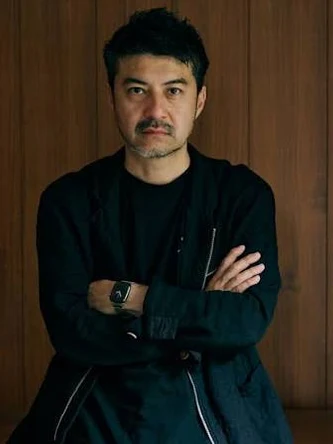
Takayuki Fujii is the designer of nonnative, the Tokyo label whose clothes are built as reconstructions of work, military and outdoor garments for city use. He is not, however, its founder. nonnative was started in 1999 by 「サーフェン智」 — a figure Japanese press names only in that form, the representative of the Tokyo company TNP — and began principally as a T-shirt label. Fujii joined two years later, in 2001, and has designed the collections ever since. (Fashion Press; CC:OLORS)
The distinction matters for anyone reading an old garment. A piece labelled nonnative from the brand's first two years is not Fujii's work, and the brand's own season count reflects the same break: in September 2025 he described the collection then in stores as the label's 47th season, a figure consistent with a run beginning in the early 2000s rather than in 1999. (HOUYHNHNM)
From the shop floor to the design room
Fujii was born in Nara Prefecture in 1976 and left Musashino Art University without completing his degree. He did not train as a patternmaker or pass through a fashion college. He worked instead as a 販売員 (hanbaiin) — a shop sales assistant — across several Tokyo retailers including BEAMS and SILAS, and became nonnative's designer in 2001. (HOUYHNHNM; GORE-TEX Japan)
That route explains a good deal about the clothes. A designer who spent years selling to customers learns which garment a person returns for, where a jacket fails in daily use and what a price tag will bear, before learning how to draw one. Fujii still describes his filter for a new piece in the plainest possible terms: 「まずは自分が着るか、着ないかです」 — first, whether he would wear it himself. (HOUYHNHNM)
The brand name states the same refusal to be placed. nonnative, in the company's own gloss, means 属さない、固有されない — not belonging, not native to any one thing — and the label has carried the concept 「WE LIVE FOR FUN.」 since it was founded. Fujii's work sits deliberately between the categories a Japanese retailer would file it under: neither streetwear nor tailoring, neither outdoor nor mode. (Fashion Press)
A standard rebuilt to one specification
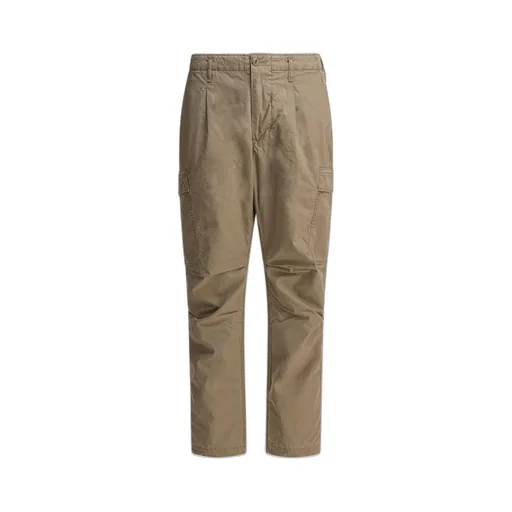
The premise of nonnative is not novelty. It is a standard garment — a chore jacket, a five-pocket jean, a cargo trouser — remade to Fujii's own specification, which usually means a cleaner line, a longer rise, a redistributed pocket and a fabric heavier in technical content than the original ever was. The brand's own statement describes clothing as a tool for reflecting the wearer's life, which is a description of a garment that is meant to disappear into use rather than announce itself. (nonnative)
Fujii's account of his materials is similarly unromantic. He favours GORE-TEX and, increasingly for city wear, WINDSTOPPER, choosing them for 防風性と透湿性 (bōfūsei to tōshitsusei) — windproofing and breathability — on the grounds that these are the properties a person actually needs between a station and an office, not on a mountain. He has also said he is no serious outdoorsman: 「家族と楽しむ程度ですね」, he enjoys it with his family and no further. The technical fabric is a functional choice about Tokyo, not a costume. (GORE-TEX Japan; HOUYHNHNM)
That gives nonnative an unusual relationship to its own city. Asked about being called a Tokyo brand, Fujii has answered with a question of his own — 「『東京ってなんだろう?』って」 — and described his ambition for the label as linking the city and the outdoors rather than choosing between them. (HOUYHNHNM)
Collaboration as a way of getting the object right
nonnative collaborates constantly, and the pattern is consistent: Fujii takes an existing product with a manufacturing history he cannot replicate and alters its proportion and specification. Regular footwear projects with New Balance began around 2007. In September 2016 came a first collaboration with Converse, a PRO-LEATHER HI rebuilt with a centre zip — a device that recurs across later nonnative footwear. Further Converse projects followed in 2019 and 2020, the latter using GORE-TEX. (Fashion Press; Highsnobiety Japan)
The Vans work follows the same logic of going back to the original rather than the current product. For a January 2018 release, Fujii based an SK8-HI not on the modern shoe but on the OG model made in America in the 1970s and early 1980s, reduced its volume, used a long-haired suede and added a military-boot zip at the lacing with a gore band at the tongue so it could be worn with the zip open. A second edition that September reworked the Old Skool, the model that debuted in 1977 as Style 36. (HOUYHNHNM; Hypebeast Japan)
With Gramicci the relationship became a continuing product rather than a one-off drop. The CLIMBER EASY PANTS, built on Gramicci's climbing trouser but cut to a cleaner nonnative line, has been revised season after season, and the two labels were still issuing new easy pants and shorts together in May 2025. Japanese coverage dates the first CLIMBER EASY PANTS to the early 2010s but disagrees on the year, giving both 2011 and 2012; that discrepancy is not resolvable from the published record. (WWD Japan)
The list has since widened to Mizuno, asics, Paraboot, Timberland, KEEN, inov-8, Spingle, Lacoste and Kaneko Optical, among others. Fujii's stated test for a sports-brand partner is whether he can propose something the partner would not have considered: 「そのブランドが意識するものとは違う色づけをしていかないと、自分たちがやる意味がない」 — unless nonnative colours it differently from what the brand itself has in mind, there is no point doing it. (HOUYHNHNM; WWD Japan)
vendor, and running the business around the clothes
One frequent confusion is worth correcting: vendor was not a diffusion line of nonnative. It was a shop. TNP, nonnative's parent company, opened vendor in Daikanyama in 2005 as both a directly-operated nonnative outlet and a select store, moved it to Nakameguro in 2010, and relaunched it in 2015 under the theme EXPANSION with a larger floor, a music, books and gadgets section and commemorative collaborations with N.Hoolywood, White Mountaineering and TAKAHIROMIYASHITA TheSoloist. It did carry a small own-name range, Vendor Things, after the 2010 move. The Nakameguro site has since been rebranded as COVERCHORD Nakameguro. (Fashion Press; WWD Japan)
nonnative's own first flagship, the nonnative shop, opened in Nakameguro on 5 August 2023; a second, the nonnative shop Osaka, opened in Minami-Horie in 2025 with store-exclusive corduroy pieces Fujii had wanted to finish for an earlier collection. (nonnative; HOUYHNHNM)
Fujii has also reorganised the calendar the clothes are sold on, which matters for dating. During 2020 he moved nonnative off the conventional autumn/winter rhythm towards a winter/spring delivery, collapsing the autumn offer into the DWELLER series, and negotiated with retailers to push winter sales from January to February and spring sales to May, so that a garment reaches a customer nearer the weather it was cut for. (HOUYHNHNM)
By 2025 that had left nonnative among the longest-running independent Japanese menswear labels still designed by the same person, a group that includes Undercover and Neighborhood. Fujii treats the longevity as a change in attitude rather than a record: he has described his present relationship to the work as 「服に感謝しているというか」 — something like being grateful to the clothes — and the design process as calmer than it once was, weighing what will sell against what satisfies him without the earlier struggle between the two. For a catalogue, the useful consequence is continuity. One person has specified every nonnative garment since 2001, which is why a pattern introduced fifteen years ago can still reappear, largely unaltered, in a current collection. (HOUYHNHNM)
Reading the labels: nonnative's occupational nouns
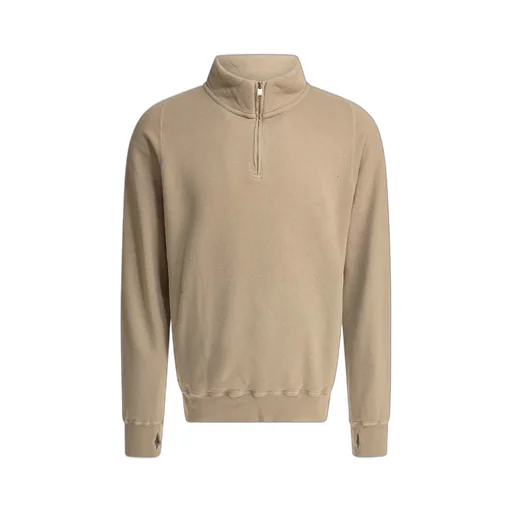
nonnative has almost no visible branding, so the product name is the primary way to identify and place a piece. Its closed vocabulary of occupations and roles appears as a prefix to the garment type, designating a silhouette and set of details that can persist across seasons. (nonnative)
The autumn/winter 2026 collection shows the vocabulary in use — Dweller, Worker, Trooper, Explorer, Officer, Laborer, Hiker, Wanderer, Aviator, Rider, Mariner, Trucker, Rancher, Painter, Coach and Trainer — with each noun attaching to whatever garment it is being applied to that season: Trooper Jacket, Trooper Long Coat, Trooper 4P Trousers, Trooper 6P Trousers. The same list has historically included Coachman and Clerk, and Dweller is old enough to have become the name of a delivery rather than only a cut. (nonnative)
The noun identifies the pattern, not the season: DWELLER 4P CARGO PANTS and a Trooper cargo are different cuts, while a Worker Shirt still needs a tag or season image to supply a date. The names also recur across footwear and accessories, where they indicate a design family rather than a body pattern. (nonnative; Fashion Press)
Collaboration pieces are usually easiest to place because they carry the partner's branding and correspond to a specific release: a Converse centre-zip, a Vans SK8-HI with a lace zip or a Gramicci Climber Easy Pant. Mainline pieces depend more heavily on their full product name. (HOUYHNHNM; Hypebeast Japan; WWD Japan)
As of September 2026, Fujii remains nonnative's designer, and the label continues to show a full seasonal collection. (HOUYHNHNM; Hypebeast Japan)
References
- "ノンネイティブ (nonnative)." Fashion Press. Accessed 11 September 2026.
- "【FOCUS IT.】47シーズン目で辿り着いた境地。デザイナー藤井隆行が語るノンネイティブの現在地と、新たに誕生する大阪のお店について。" HOUYHNHNM, 16 September 2025.
- "nonnative meets inov-8. 藤井隆行が語る都会とアウトドア。" HOUYHNHNM, 10 March 2017.
- "藤井隆行が見つめ直す ノンネイティブの健全なカタチ。" HOUYHNHNM, 14 August 2020.
- "essential designs — あのヒトの欠かせないモノ — Case05 藤井隆行とヴィンテージのスツール。" HOUYHNHNM, 31 March 2026.
- "nonnative 藤井隆行 × JOURNAL STANDARD." HOUYHNHNM, 13 November 2021.
- "nonnative — GORE-TEX ブランドストーリー." GORE-TEX Japan. Accessed 11 September 2026.
- "ノンネイティブとは?ブランドの歴史と魅力." CC:OLORS. Accessed 11 September 2026.
- "Autumn/Winter 2026 Collection" and "Collection Looks." nonnative. Accessed 11 September 2026.
- "ヴァンズの超名作をノンネイティブが料理するとこうなります。" HOUYHNHNM, 5 January 2018.
- "nonnative × Vans Old Skool Zipper." Hypebeast Japan, September 2018.
- "nonnative × CONVERSE 第3弾." Highsnobiety Japan. Accessed 11 September 2026.
- "「ベンダー」がリニューアル." WWD Japan. Accessed 11 September 2026.
- "ミズノとノンネイティブから新作コラボスニーカーが誕生." WWD Japan, 21 April 2026.
- "ノンネイティブ×グラミチのイージーパンツ&ショーツが発表." WWD Japan, 13 May 2025.
- "nonnative × MIZUNO WAVE MUJIN LS MID GTX インタビュー." Hypebeast Japan, April 2026.
</content> </invoke>
- Native name
- 藤井隆行
- Education
- Musashino Art University